Cheap use of adsorbents: beneficial for exporters?
2026-03-25
Here is a question that constantly comes up in negotiations with new clients from the CIS: “Is it possible to do it cheaper?” We are almost always talking about adsorbents - silica gels, molecular sieves, zeolites. Many exporters, especially beginners, see them as just a line in the estimate for packaging that they want to compress. But here lies the main pitfall. Cheap does not mean profitable. Often it’s exactly the opposite. I myself stepped on this rake until I realized that saving 10-20% on sorbent could result in the loss of the entire batch of goods and reputation. Let's understand it without gloss.
What's really hidden behind the "cheap"? adsorbent?
When a supplier offers ?similar? product at a low price, the first thing that comes to the mind of an experienced technologist is quality control. Or rather, its absence. Take the same silica gel granules. It would seem like white balls, what could go wrong? In practice, that's all. Insufficient activation (drying) leads to the fact that the residual moisture content of the adsorbent itself is higher than normal. It is already saturated with water and will not take it from the air in the container. You are loading expensive equipment or hygroscopic chemicals, thinking that you are protecting them, but in fact you are transporting ballast.
The second point is strength. Cheap granules often have a high percentage of fines (dust) due to poor calibration or fragility. During transportation, this dust contaminates the goods and can get into mechanisms and ventilation holes in electronics. We had a case with the export of measuring instruments to Kazakhstan. We saved on the adsorbent and purchased it from an unverified local manufacturer. As a result, a complaint: fine silica gel dust was found on optical elements. We had to compensate for the losses and carry out expensive cleaning of the entire batch on site.
And the third, less obvious factor is sorption capacity. It is measured in a laboratory under standard conditions. For cheap products, the declared parameters are often far-fetched. or achieved under ideal conditions that do not exist in a real container. In practice, this means that a bag with such an adsorbent will exhaust its resource not in 30-40 days of sea transportation, but, say, in 20. The rest of the time the cargo travels without protection. The result is corrosion, mold, condensation.
Practical calculation: price versus risk
Let's look at the numbers, as is usually done when planning shipments. Let's say you export steel parts to Uzbekistan. Container volume 40 feet. The adsorbent loading rate is, say, 10 kg per cubic meter. You need about 60-70 kg. The difference in price between the conditionally ?premium? and the cheapest option on the market can be 1-1.5 dollars per kilogram. Total ?savings? — 70-100 dollars per container.
Now we consider the risks. One corroded part that will have to be replaced or restored costs at least $50-$100. And there can be dozens of them. Plus the logistics of return shipping, time to resolve the complaint, damaged relationships with the buyer. Is this headache worth a hundred dollars? For me, the answer has always been no. But many clients still think in terms of short-term savings on consumables, without seeing the entire chain of ownership costs.
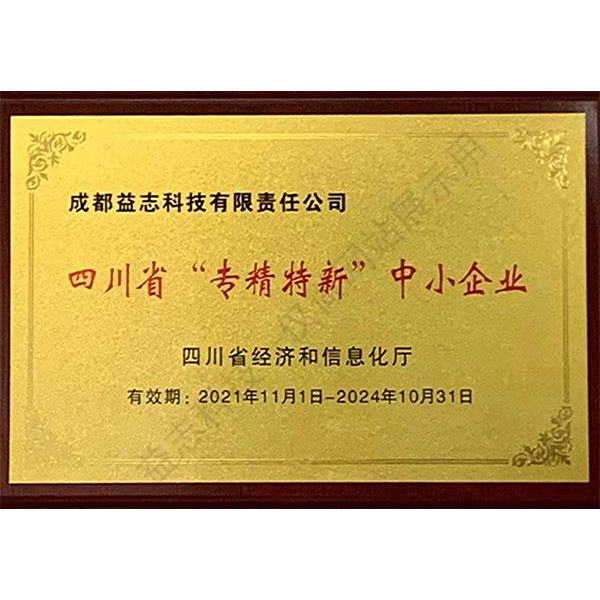
Here it is important to work with partners who think the same way. For example, in projects we often rely on the support of engineering companies that understand the chemical essence of the process. HowChengdu Yizhi Technology Co. (https://www.yzkjhx.ru). It is not just a supplier, but a design institute with a registered capital of 120 million yuan, established by the chemical company Huaxi Technology. With such partners, you can discuss not the price per bag, but the project as a whole: selection of a specific type of adsorbent for the humidity conditions of a certain route, calculation of the dew point for a given cargo. This is a different level of work, where it is ?cheap? fades into the background before “reliability and technology?”.
Case studies: when savings turned into losses
I'll tell you two instructive examples. The first is with the export of cocoa beans to St. Petersburg. The cargo is very hygroscopic. The client, wanting to reduce costs, ordered cheap zeolite adsorbents from an unknown vendor. Zeolite is a good thing, but it needs to be properly regenerated (dried) before use. The supplier did not do this. As a result, the adsorbent not only did not work, but, being saturated with moisture, perhaps even released a little of it into the atmosphere of the container. The batch arrived with high humidity and initial signs of mold. The loss is tens of thousands of dollars.
The second example is more technical. Export of electronic boards to Minsk. For such cargo, not only humidity, but also the gaseous environment are critically important - adsorbents sometimes must absorb not only water, but also vapors of organic substances that can be released from packaging materials. The client bought standard cheap silica gel, which handles water but not organic matter. A light coating appeared on the dresses and required cleaning. A savings of $50 resulted in an additional $2,000 in receiving and service costs.
What follows from this? It is absolutely necessary to carry out or require from the adsorbent supplierlaboratory testsparties. At least the basic ones: residual moisture, bulk density, abrasion resistance. Without these pieces of paper, buying is a game of Russian roulette.
The optimal strategy for an exporter: not cheap, but reasonable
So, how can you act profitably? Advantageous is not to minimize the cost of the adsorbent, but to optimize the entire cargo protection system. The first step is an adequate risk assessment. What are we bringing? What climate zone? What is the seasonality? Duration of transportation? The answers to these questions determine the type and amount of adsorbent.
The second step is choosing a trusted supplier with complete documentation. Not someone who just sells bags, but someone who can provide technical data, MSDS, test reports. It is often more profitable to work not with resellers, but directly with manufacturers or their official engineering representatives, as mentionedChengdu Yizhi Technology Co.. Their website yzkjhx.ru is, in fact, a resource for professionals, where you can find not just a catalog, but calculation methods and case studies. This immediately cuts off non-professional players.
The third step is proper application. You can buy the best adsorbent, but hanging it in a container in one bag in the corner will be of little use. We need a uniform calculation by volume, proper fastening, and the use of humidity indicators for monitoring. Sometimes it is more profitable to invest in a forced ventilation system with a dehumidifier than to lay in tons of granules. This is already engineering.
Conclusion: long-term benefits versus short-term savings
Returning to the main question: is the cheap use of adsorbents beneficial for exporters? Definitely not. This is a false economy, which jeopardizes the cost of the cargo, which is many times greater than the saved pennies. Beneficial isuse of adsorbentswisely: technically sound, calculated and provided with high-quality materials.
The market today offers a huge selection: from classic silica gels to hybrid sorbents with corrosion inhibitor additives. The exporter’s task is not to find the cheapest option, but to find the optimal one for his specific cargo. Sometimes it may not be the most expensive product, but your choice should be based on data, not price.
As a result, the buyer’s trust, the absence of complaints and the safety of the cargo are the real benefits. It's not measured in the dollars saved on a bag of pellets, but in the dollars that continue to come from a satisfied, repeat customer. This is the main argument against the temptation to save on a seemingly trifle like an adsorbent. A little thing on which sometimes everything depends.