Where is a cheap desiccant desiccant for industry?
2026-03-25
Finding a cheap desiccant desiccant is the very question that actually turns out to be a trap. Many people immediately rush to look for the lowest price per ton or cubic meter, and this is the main mistake. The cheapness here is often illusory, because it depends on the resource, selectivity, regeneration conditions and, in the end, what the downtime of the equipment will result in. I’ll try to sort it out based on what I’ve encountered in practice.
What is hidden behind the word “cheap”?
When they say “cheap dehumidifier?”, they usually mean the initial purchase cost. But if you take, for example, cheap low-density silica gel, it can quickly wear out in the adsorber, generate dust and clog the tubes. After just six months, instead of savings, you get additional costs for unscheduled shutdowns, replacement of screens and dust disposal. The cheapness of the material should be assessed in conjunction with its mechanical strength. Sometimes it is more profitable to take a more expensive one, but with a declared resource of 3-5 years, especially for continuous cycles.
The second point is the drying conditions. Do you need to remove water vapor from the air or, say, from ethylene? These are different stories. To dry air during compression, activated aluminum oxides are often used; they are relatively inexpensive and resistant to droplet moisture. And for drying hydrocarbon streams, where there is a risk of coking or deep drying to a dew point of -60°C and below is required, you are already looking towards zeolites. And here the price for zeolite type 4A or 13X can differ significantly, not only on the type, but also on the form - balls, tablets, granules. Tablets are often more expensive, but provide less pressure drop.
I had a case at one of the petrochemical plants near Omsk: they purchased an “economical” one. dryer for fuel gas treatment unit. They saved money at the tender stage, but did not take into account that vapors of heavy hydrocarbons periodically escaped into the flow. The adsorbent was sintered, steam regeneration did not help, the entire load had to be changed ahead of schedule. A cheap purchase resulted in millions in losses due to downtime. So what's ?cheap? - this is always about the full life cycle, and not the price tag in the commercial offer.
Where to look and how to compare
The market is now saturated, from large international brands like BASF or Honeywell UOP to many Asian manufacturers. There are also Russian manufacturers, but they often work for specific segments or use imported raw materials. The key is not just to find a supplier, but to find one who is ready to delve deeply into your technological regulations. Ideally, the supplier has its own engineering team that can request flow parameters (temperature, pressure, composition, inlet/outlet dew point) and calculate not only the amount of adsorbent, but also the regeneration scheme.
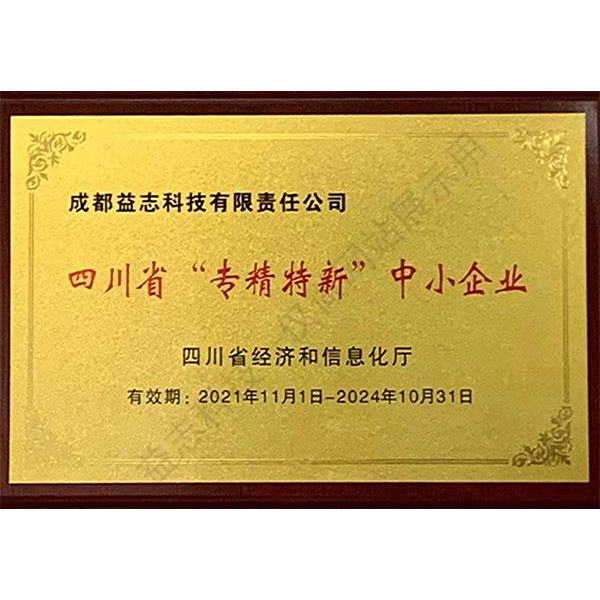
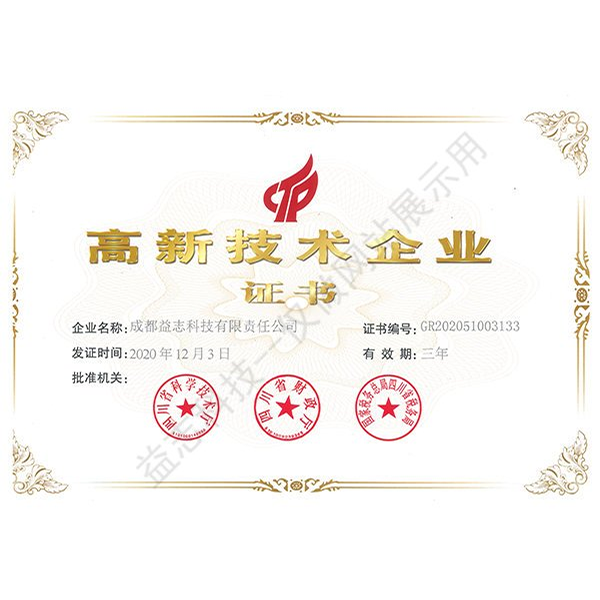
One of the working options is to contact specialized engineering companies that act as integrators. They often have partnerships with manufacturing plants and can offer the best option based on a set of criteria. For example,Chengdu Yizhi Technology Co. (https://www.yzkjhx.ru) is just such a design institute, created on the basis of chemical technology. Their approach is usually not from the position of “I’ll sell what I have?”, but with a calculation for the task. They have a registered capital of 120 million yuan, which indicates serious capabilities in terms of R&D and selection of solutions. With such companies, you can discuss not just the price per ton, but the overall efficiency of the drying installation.
When comparing offers, be sure to request static and dynamic capacity test reports and abrasion resistance data (ASTM D4058 or equivalent). The price often correlates with these numbers. And one more nuance: logistics. Cheap adsorbent from abroad can become “heavier?” by 30% due to delivery, customs and certification. Sometimes it turns out that local inventory with a higher price per kg ends up giving a lower commissioning cost due to the speed of delivery.
About regeneration - an often overlooked expense
What you definitely cannot save on is the design of the regeneration unit. The adsorbent is not a disposable material; it can be regenerated. But the cost of regeneration is energy consumption. If heating with an inert gas (for example, nitrogen) or superheated steam is used for drying, then the cost of this heat goes into operating expenses. A cheap adsorbent with low thermal stability can degrade faster, requiring more frequent replacement, or it needs more stringent regeneration conditions (higher temperature, longer time), which eats up savings.
I remember a natural gas dehydration project where the client insisted on the most affordable zeolite. But its thermal stability was stated to be up to 350°C, while for deep drying of our flow, according to calculations, heating to 280-300°C in an oxygen-free environment was required. The supply was minimal. As a result, after several cycles, partial destruction of the crystal structure began, and the capacity dropped. We had to change the mode and increase the frequency of regeneration cycles, which increased the load on the furnace. In the long term - losses again.
Therefore, when discussing a “cheap adsorbent desiccant”, immediately estimate how much it will cost to restore it. Sometimes a higher initial price is justified by a lower regeneration temperature or the ability to regenerate not by complete heating, but, say, by evacuation or blowing with hot dry gas.
Case study: replacement in a running production facility
The real test of any material is not bench testing, but work in a workshop environment. There was experience in replacing the desiccant in adsorbers at a polymer plant. The task was to reduce costs without losing the quality of drying the propylene stream. We considered several options, including through partners in Asia. It was important not just to buy, but to organize a “turnkey” supply: calculation of volume, delivery, documentation, instructions for loading and launching.
We also worked with the mentionedChengdu Yizhi Technology Co.. Their engineers requested historical data on the operation of old adsorbers and analyzes for impurity content. We offered our own zeolite with modified properties for our specific composition. The price was competitive, but not the lowest on the market. The key argument was that they provided a detailed calculation of the reduction in the adsorption-regeneration cycle time. due to higher dynamic water capacity. This promised direct energy savings.
The replacement took place during a planned shutdown. The material was supplied in big bags, which made loading easier. At the end of a year of operation, the outlet dew point remained stably at the calculated level, and fuel consumption for regeneration actually decreased by about 8%. This is the case when ?cheapness? This was reflected not in the price per kg, but in the reduction of operating costs during the year. But such a result was possible only after careful analysis, and not just choosing the cheapest offer on the list.
Final Considerations
So where is it cheap? The answer is ambiguous. Cheap - from a supplier who understands your technology completely and can offer material optimized for your conditions to minimize the total cost of ownership. This could be a direct manufacturer or an engineering company with a good laboratory base.
Do not chase the absolute minimum in your commercial offer. Request a feasibility study (TES) for your case, where costs will be modeled for 3-5 years. Pay attention to companies that do not just sell chemicals, but are engaged in design, such asChengdu Yizhi Technology Co.— their approach as a design institute is often more systematic.
One last thing: always leave some extra. Both in terms of load volume (preferably +5-10% of the calculated one), and in terms of budget. Because the most expensive is the cheapest? a purchase is one that forces you to stop production ahead of schedule. You need to look not just for an adsorbent, but for a reliable solution for drying, and then the concept of “cheap?” will acquire the correct, economic meaning.