Cheap adsorbent for gas exporters: where to buy?
2026-03-25
I was recently looking for a cheap adsorbent for a project to dry associated gas. Many people immediately go to Alibaba, but it’s often a lottery, especially if you need not just granules, but specific parameters for dynamic moisture capacity and strength. The price is low, and then it turns out that steam regeneration reduces the material to dust in a couple of cycles. Sound familiar? Here it is for me.
Why ?cheap? - doesn’t mean “simple?”
When they talk aboutcheap adsorbent, often simply mean a low price per ton. But in the gas industry, especially for exporters who deal with pipelines or LNG, the key is the total cost of ownership. You bought a bag of silica gel or zeolite for pennies, but it sinteres in the column due to pressure changes or does not maintain a dew point of -40°C. Replacing the sorbent and simple installation are where the real costs lie.
I had experience about five years ago with delivery from China, I won’t name the brand. The material according to the passport is ideal, the price is two times lower than the market price. They were placed in adsorbers at the compressor station. After three months, the pressure at the inlet and outlet crept up. They opened it up and found that the channels were clogged with fine particles formed from abrasion. The manufacturer, of course, referred to operating conditions. And the conditions are standard. Conclusion: saving on material without a deep audit of the manufacturer is a direct path to emergency shutdown.
Therefore, now I have shared the “cheapness” for myself. by category. There is a low price at the procurement stage - this is a risk. And there is an optimal cost, taking into account a long service life, predictable regeneration and, critically, technical support from the supplier. Now this is interesting.
Where to look for a reliable supplier: non-obvious points
Alibaba and other B2B platforms are essentially storefronts. You can find contact there, but you need to dive further. My algorithm: first I look to see if the company has not just a business card website, but technical documentation in Russian or English with detailed specifications and test reports. Then - a request for a trial batch, but not just a sample to “look at?”, but a test load for real, albeit laboratory, conditions.
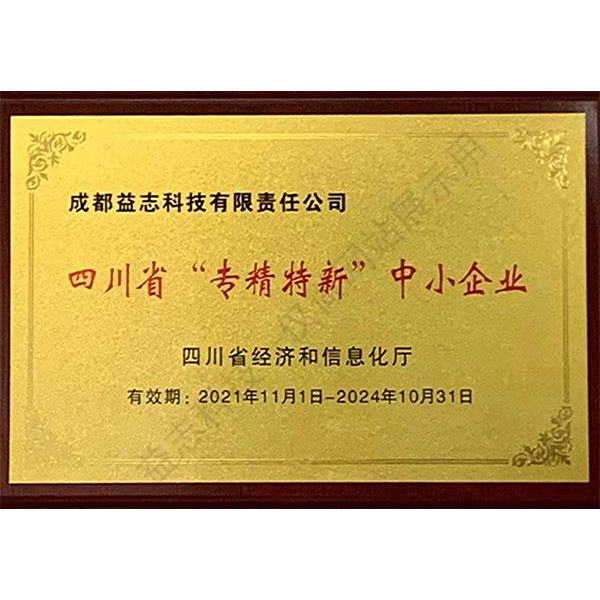
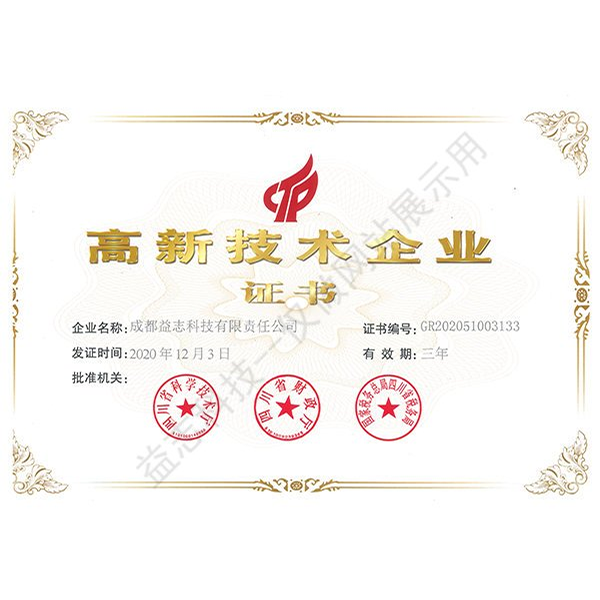
One of the resources that I came across recently ishttps://www.yzkjhx.ru. This is the website of Chengdu Yizhi Technology Co., Ltd., which is positioned as a design institute established by Chengdu Huaxi Chemical Technology Co. I was attracted not so much by the description, but by the fact that in their materials there is an analysis of specific cases on gas drying, with figures for dew points before and after. The registered capital of 120 million yuan is also an indirect sign of seriousness, although, of course, not a guarantee.
An important point: many Chinese manufacturers work through intermediaries in Russia. This adds to the price, but often also liability. Direct supplies from Chengdu Yizhi Technology Co. theoretically they can provide benefits, but there is a question of logistics, customs and, most importantly, who will bear warranty obligations on the spot. This needs to be clearly stated in the contract.
What to look for in the characteristics, besides the price
Price is the last thing I ask about. First I ask specific questions. For gas exporters, it is often not just residual humidity that is critical, but the stability of parameters under variable loads. For example, if the gas flow “jumps”, the adsorbent must withstand this without destroying the granules.
I look at: 1) Crushing strength. The figure should not be abstract, but tied to the test method. 2) Equilibrium moisture capacity not at 25°C, but at a temperature close to the actual operating temperature (often about 10-15°C in the adsorber). 3) Desorption data. Cheap adsorbents may require higher temperatures or more steam for regeneration, which kills savings.
Once I almost got caught with an “optimized” one. zeolite. The seller praised the high capacity. It turned out that it was achieved due to macropores, which were quickly filled with heavy hydrocarbons, and the material lost its effectiveness in water. I had to wash it with a solvent - additional costs. Now I always ask for data on selectivity and resistance to poisoning by heavy fractions.
Case: an attempt to save on drying before gas distribution system
There was a project to modernize the metering station at the gas transmission border. neededadsorbent for dryingin front of chromatographs and turbine counters. The volumes are small, but the dew point requirements are strict (below -60°C). They offered to take “analogues” expensive imported zeolite 4A from a local distributor at an attractive price.
They took it and installed it. The first two weeks - everything is fine. Then the chromatograph readings for hydrocarbons began to drift. It turned out that the cheap analog had a higher proportion of zeolite 3A, which is known to adsorb not only water, but also some methane/ethane at high pressure. This distorted the analysis. I had to urgently change to a proven brand. Savings resulted in costs for re-commissioning and reputational risks.
Hence the conclusion: for process gases going for analysis, saving on adsorbent is an extremely risky business. It is better to overpay for a material with a guaranteed pure composition and certificates, which indicate not only that it is zeolite 4A, but also the percentage content and control methods.
So where can you buy it?
So that's my current approach. For one-time, non-critical tasks, you can take a risk and search on sites, but with mandatory testing in real conditions. For serious projects, especially those related to gas export, where the responsibility is high, a proven channel is needed.
Now I am looking at companies such as the mentioned Chengdu Yizhi Technology Co. Their status as a design institute at a chemical holding company hints at the presence of their own R&D, and not just repackaging someone else’s product. This is important. I requested from them through their website detailed technical bulletins on zeolites for natural gas dehydration. I'm waiting for an answer. If they are ready to provide data on already operating installations under similar conditions, this will be a strong argument.
And lastly: never buycheap adsorbentonly by passport. Agree on a trial delivery, load it into a test adsorber, simulate the “adsorption-regeneration” cycles. See how the strength of the granules changes and whether there is dust. This is the only way to understand what is hidden behind the attractive price. Sometimes it is backed by competent optimization and in-house production, and sometimes by a banal lack of quality control. You will feel the difference immediately as soon as you start working with the material.