Cheap use of adsorbents in products?
2026-03-25
When you hear “cheap adsorbents?”, the first thing that comes to mind is silica gel in a shoe box. But in industry everything is more complicated. Many people think that they can take any available sorbent, add it and forget it. This is the main mistake, which then results in quality problems, or even a recall of the batch. Cheap doesn't mean easy. This often means “requires a deep understanding of the process.”
What is hidden behind the “cheapness”?
For example, activated carbon. It would seem like a classic, a lot of suppliers, a cheap price. You take the most accessible one, made from wood, and use it to purify the syrup. But if you don’t check its ash content and fractional composition, it will not only not clean it, but will also give the product an extraneous taste, that same “coal” taste. shade. I already encountered this at one juice production - I had to remove the entire line, clean it, and incur losses. The cheap sorbent turned out to be an expensive pleasure.
Or another example - zeolites. They are often seen as a panacea for drying gas streams. The price per ton can be very attractive. But if you do not take into account the moisture capacity of a particular brand and do not calculate the contact time correctly, the system will run idle. The adsorbent will become saturated too quickly, it will have to be regenerated or replaced more often, and all savings on purchases will disappear due to increased operating costs.
Here's the key point -life cycle cost. Cheap material with low capacity or poor regenerability will last less, you need more of it, and more work is required with it. Sometimes it is more profitable to take a more expensive but effective adsorbent that will last several cycles without loss of characteristics. It’s like with water filters - you can change the cartridge every week, or once every six months.
Where can you really save money without risk?
There are niches where it’s “cheap” justified. For example, as carriers for catalysts or in preliminary (rough) purification. Let's say you need to remove large organic impurities from process water before fine membrane purification. Here you can use inexpensive natural clays or modified flasks. Their task is to protect expensive membranes and take the brunt of the blow. Yes, they need to be changed frequently, but their cost is not comparable to the cost of repairing a membrane unit.
Another sector is construction materials. Adding adsorbents, for example based ondiatomite, in plasters or paints to regulate humidity. The requirements for cleanliness here are not as stringent as in the pharmaceutical or food industry. The main thing is stable adsorption properties and the absence of harmful emissions. Here you can really look for the most budget-friendly options, working directly with quarries or primary processors.
But there are pitfalls here too. I remember a project to produce “breathable?” paints We purchased a batch of cheap modified perlite as a desiccant. In laboratory tests everything was fine. But in real conditions, when applied to the wall, the material began to clump and gave an uneven structure. The reason is the variation in particle size distribution in the batch. The supplier skimped on control. I had to quickly look for a replacement.
Practical experience: when theory diverges from the workshop
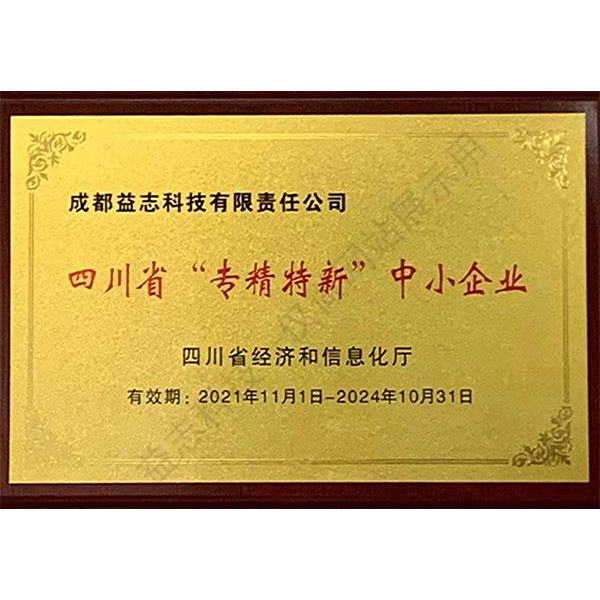
Working on projects, for example, with an instituteChengdu Yizhi Technology Co.(their website isyzkjhx.ru), you often see how important it is to test in conditions close to real ones. This company, as a design institute created by Huaxi Technology, is often faced with the task of selecting effective, and not just cheap, solutions for large chemical production.
There was an incident at a methanol production plant. It was necessary to select an adsorbent for drying process gas at one of the intermediate stages. According to the passport, cheap aluminum oxide was suitable. We calculated everything according to textbooks and installed the columns. And in the work - the pressure drop turned out to be higher than calculated, it was necessary to increase the power of the compressors. Savings on sorbent led to an increase in energy costs. As a result, after six months of torment, we switched to a more structured, expensive, but low-hydraulic resistance material. Lesson: You can't just look at the price per kilogram, you need to model the whole system.
Another aspect is logistics and packaging. It would seem like a small thing. But if you buy cheap adsorbent in bulk, and not in big bags, there are costs for storage in special conditions (so as not to become damp), for dust suppression, and for precise dosing. Dust from the same activated carbon is an additional risk for personnel and equipment. Sometimes packaging in 25 kg bags with a valve is ultimately more profitable than a ton on a pallet under film.
Unobvious costs: recycling and ecology
This is the part that is often overlooked when choosing the ?cheap? option. Spent adsorbent is waste. If it is saturated with organic compounds or heavy metals, its disposal can cost a lot of money and sometimes become an environmental headache.
Worked with one plant for processing vegetable oils. They used very cheap bleaching grounds. After the adsorption cycle, these soils, saturated with oils and pigments, were formally considered class 4 waste. But in order to dispose of them legally, it was necessary to conclude contracts, pay, and keep logs. The cost of disposal over several years exceeded all savings on the purchase of sorbent. Now they are considering options with regenerable adsorbents or even with systems where waste material can be used, for example, as an additive to building mixtures (after appropriate processing).
Therefore, now, when discussing projects, we at Chengdu Yizhi Technology always include the “last mile” analysis stage. — what will happen to the material after its service. This immediately cuts off many “cheap” but problematic options.
The future: smart economy and hybrid solutions
Now the trend is not to find the cheapest, but to find the most optimal solution. Sometimes these are hybrid systems: the first, coarse stage of purification is with a cheap sorbent, the second, fine stage is more expensive, but with high selectivity. This extends the life of the expensive stage and reduces overall costs.
Another way is smart dosing, smart dosing. The introduction of sensors and automatic control systems that add exactly as much adsorbent as needed in real time, and not by eye? or with a reserve. This allows you to use even relatively expensive materials, but very economically, minimizing waste. I have seen such systems at pharmaceutical factories - accuracy down to grams, but the stability of product quality is impeccable.
Returning to the main question... Cheap use of adsorbents is not a myth. This is a reality, but it requires high qualifications, calculations and understanding of the full picture. This is not about “buying something cheaper,” but about “calculating where you can afford savings without compromising the process.” Blindly choosing the lowest price is a sure way to additional costs, or even to an emergency stop. The main principle that I learned from practice: do not consider the price per ton, but the cost of the result obtained. And this result must be stable, predictable and, ultimately, cost-effective.