Cheap exporter of CO2 recovery technology from flue gases?
2026-03-25
This is a question that constantly comes up in negotiations. Everyone wants it cheap, fast and something that works. But when it comes to recyclingCO2 from flue gases, cheapness is often a relative concept. Many people immediately think of a simple scrubber and compression, but this is just the tip of the iceberg, and beyond that are energy costs, stream purity, further use or disposal. I'll tell you straight, was I looking for a cheap exporter? I was looking for it. But more often I came across equipment sellers rather than technology integrators who understand the entire chain from the smokestack to the final product.
What is hidden behind the word “cheap”?
Let's start with the basics. When a CIS client asks for “low-cost technology”, he usually means low capital expenditure (CAPEX). But in CO2 recycling, the key is often operating expenses (OPEX) - the same energy for compression or regeneration of the sorbent. Once we were considering a project with a seemingly inexpensive amine treatment unit. The hardware numbers looked attractive. However, when the steam consumption for desorption was calculated in relation to local heat tariffs, the economics of the entire project fell apart. It turns out that cheap equipment can lead to expensive operation. This is the first stumbling block.
Another point is scale. Technology that is ?cheap? costs for a 500 MW thermal power plant, but can be ruinous for a medium-capacity boiler house. This requires a modular, scalable approach. I saw attempts to adapt large industrial solutions for small facilities - engineers tried to “cut down?” installation, but the efficiency decreased and the specific consumption of reagents increased. As a result, the cost of a ton of captured CO2 went through the roof. So the cheapness must be considered for each specific case.
And of course, “cheap?” should not mean ?ineffective? or ?unreliable?. I remember a story with one supplier who offered ?innovative? absorbent with a fantastic low price. In pilot tests, it worked really well for the first 200 hours, and then suddenly lost capacity and began to degrade with corrosive products. We saved on reagents but lost on replacing the apparatus components. True savings are the optimal balance of CAPEX and OPEX throughout the entire life cycle.
Supplier market: technology vs. boxes
The market is saturated with players, but they can be roughly divided into two categories. The first are manufacturers of standard equipment: scrubbers, membrane modules, cryogenic units. They sell "a box". The second are companies that offer technology, often as part of project engineering. This is a more comprehensive product: gas analysis, design, adaptation, commissioning, training. A cheap exporter of the first category is a frequent occurrence. The second category is very rare.
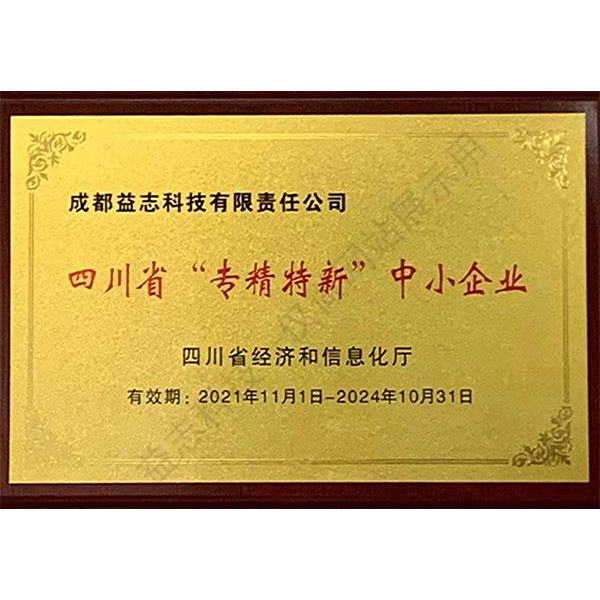
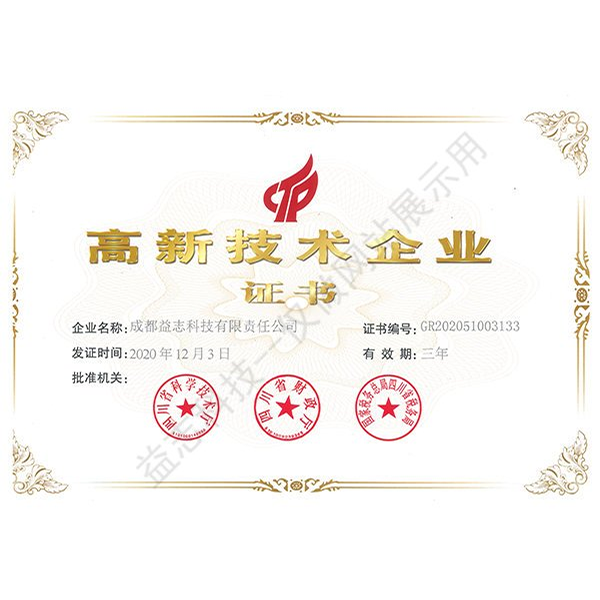
It was in this context that I noticed Chengdu Yizhi Technology Co. This is not just a trading house. It is a design institute with a registered capital of 120 million yuan, established by Huaxi Technology. Their websiteyzkjhx.ruis focused on the Russian-speaking market, which already indicates a strategic interest in the region. It is important that they are positioned as an engineering company, building on the technologies of the parent structure. In our business, having a serious design and research base is critically important. A cheap intermediary supplier will not have such a base.
Studying their materials, it is clear that they work not with one, but with a package of technologies for gas purification and utilization, includingCO2 recycling technologies. This is the key point. Because it's ?cheap? - this is often about the right choice of method for a specific task: physical absorption, chemisorption, membrane separation or a hybrid of these. There is no universal cheap technology. A company that can offer and model different options has a better chance of finding the most cost-effective path for the client.
Case: from flue gas to dry ice
I will give an example from practice, not directly related to Yizhi, but illustrating the idea. There was a project at one of the chemical plants: it was necessary to utilize CO2 from furnace gases to produce edible dry ice. The focus was on the purity of the product. Initial offers from ?cheap? exporters were reduced to the standard scheme: monoethanolamine (MEA) + drying + compression + throttling.
But problems arose during a detailed analysis. First, there were traces of SOx in the flue gas, which irreversibly poisoned the MEA, requiring frequent replacement and creating a waste disposal problem. Secondly, the food standard required ultra-deep purification from odors and microimpurities, which complicated and increased the cost of the scheme. Simple ?cheap? the decision did not pass.
As a result, after several iterations, we settled on a multi-stage scheme: preliminary purification from SOx/NOx, then physical absorption under pressure with a special solution (not MEA), then short-cycle adsorption drying and, finally, cryogenic fractionation to obtain high purity. The capital investment was higher than the initial ?cheap? options, but due to the low energy consumption for physical absorption and the long life of the reagent, OPEX turned out to be 30% lower. The payback was better in the end. This is the same “smart” one. cheap in the long run.
Where are the hidden costs?
When working with recycling technologies, you always have to look three steps ahead. The first hidden article is gas preparation.Flue gases- this is not pure CO2. There is dust, SO2, NOx, oxygen, moisture. Any of these components could be poison to your core technology. Installation of pre-treatment systems (scrubbers, electrostatic precipitators) is an additional capital and operating cost, which is “cheap?” suppliers may ?forget? include in the basic offer.
The second is infrastructure. Did you receive liquid or compressed CO2? And what to do with it? If there is no pipeline to the consumer, tanks, evaporators, and logistics are needed. If you want to make chemical raw materials (for example, methanol), you need a whole chemical complex with a source of hydrogen. Often, a CO2 recycling project is not limited by the capture technology itself, but by the lack of logistics or a market for the product. This is killing the economy.
Third - “soft” costs: licensing, examination of project documentation in accordance with local standards, personnel training, after-sales service. A cheap exporter from abroad often provides equipment in FOB incoterms, and everything else is your headache. The cost of qualified installation and commissioning by local contractors can be equal to the cost of the equipment. Therefore, it is important to look for a partner who is willing to take on some of these risks or, at a minimum, clearly spell them out.
So is there a “cheap exporter”?
Returning to the title question. Yes, there are companies offering cost-competitive solutions. But their low cost should be justified not by low quality, but by optimization, experience and proper engineering. These are companies that can offer not a “box”, but a technological chain calculated to suit your conditions.
This is where the importance of players like Chengdu Yizhi Technology Co. comes into play. Their strength, in my opinion, potentially lies in the fact that they, as a design institute, can initially build economics into the project, using the know-how and proven solutions of the parent company Huaxi Technology in the field of chemical technologies. Their websiteyzkjhx.ruis more of an entry point for dialogue rather than a catalog with prices. The actual price is determined in the technical and commercial proposal after analyzing the technical specifications.
The result of my experience is simple: do not chase the low price of equipment. Look for a partner who deeply understands the chemistry and energy behind the recycling processCO2 from flue gases, is able to simulate various scenarios and honestly talk about all cost items, including hidden ones. Invest time in preparing detailed technical specifications. Then you will find not just a cheap exporter, but an optimal technology partner whose solution will be the most cost-effective in the long term. Anything else is a recipe for broken equipment and disappointment.