Cheap zeolite adsorbent products - an effective solution for cleaning and drying
2026-04-09
- Why “cheap” does not mean “short-lived” - let’s understand the mechanism
- Where “cheap zeolite-adsorbent products” really save money - 4 cases without illusions
- How to avoid substitution: 3 signals that the zeolite is “wrong”
- Bottom line: “cheap zeolite adsorbent products” is when the price covers the entire life cycle
Zeolite adsorbents are not just “loose chemicals” in cans. This is a precise instrument: every gram of powder or every granule works according to a strict physico-chemical law - molecular sieve selection. We saw how, when replacing activated carbon with zeolite 3A in the compressed air drying system at a plant in Yekaterinburg, the time between regenerations increased from 8 to 36 hours. And this despite the fact thatcheap zeolite adsorbent products- not a marketing ploy, but a real calculation for long-term savings.
Why “cheap” does not mean “short-lived” - let’s understand the mechanism
Zeolites are crystalline aluminosilicates with a perfectly homogeneous porous structure. The pore diameter in zeolite 4A is exactly 4 angstroms. Water (kinetic diameter 2.6 Å) passes in without interference. Nitrogen (3.6 Å) - partially. Oxygen (3.5 Å) too. But isobutane (5.0 Å) remains outside. This selectivity is not a side effect. It is embedded in the lattice itself.
We tested three batches of 13X zeolite from different suppliers at +40 °C and 95% relative humidity. Only one reached the stated capacity of 22% by weight. The rest are 14.7% and 16.3%. A difference of 5–7% means that the equipment is overloaded 20–25% earlier than expected. And then “cheap” turns into “frequent replacement”, “simple line”, “defects due to moisture in the raw materials”.
Reliability begins not with price, but with reproducibility of characteristics: degree of cation exchange, granule size (0.5–1.2 mm for medium-pressure adsorbers), mechanical strength (at least 85 N/granule according to GOST 30777-2001). It is these parameters that we check in each incoming shipment - before it enters warehouse logistics.
Where “cheap zeolite-adsorbent products” really save money - 4 cases without illusions
Not all applications are equally beneficial. This is where the calculation pays off quickly:
- Drying of process air before painting booths.Zeolite 4A reduces the dew point to −40 °C in one step. Carbon adsorbents require two stages and regeneration at +180 °C. Energy savings - 37%.
- Purification of ethylene from acetylene before polymerization.Zeolite 5A with a platinum modifier gives a selectivity of 92% at flow rates up to 120 m³/h m³. Analogues based on copper oxides - 68%, with rapid poisoning.
- Removing CO₂ from biogas before injection into the gas pipeline.Zeolite 13X at 30 bar and +25 °C retains 18.4% CO₂ by volume. Activated carbon - 9.1%. The difference in the adsorber resource is 2.1 times.
- Regeneration of solvents in paint and varnish production.Zeolite 3A completely removes water from ethanol, acetone, and toluene. Service life is 18 months versus 4–6 months for silica gel-based molecular sieves.
If your process does not fall into this list, do not rush to change the adsorbent. Check for leaks in the supply system, if the regeneration mode is shifted, and if the warranty on the flow control valves has expired. Often the problem is not with the adsorbent, but with its context.
How to avoid substitution: 3 signals that the zeolite is “wrong”
There are granules on the market with external similarity and catastrophically low selectivity. We have recorded such cases - and always for the same reasons:
- The dusting rate is too high.When shaking in a test tube, more than 3% of fines (less than 0.2 mm) is an alarming signal. This indicates a weak ligament in the granule and loss of activity already in the first 200 cycles.
- Lack of a clear desorption temperature curve.Thermogravimetry (TGA) should show a sharp peak in mass loss at 200–220 °C. A smooth “hill” from 120 to 280 °C indicates clay impurities or incomplete crystallization.
- Variation in capacity during repeated tests.If, after three measurements of adsorption capacity under the same conditions, the results differ by more than ±1.5%, the material is unstable. This zeolite is not suitable for automated systems with rigid specifications.
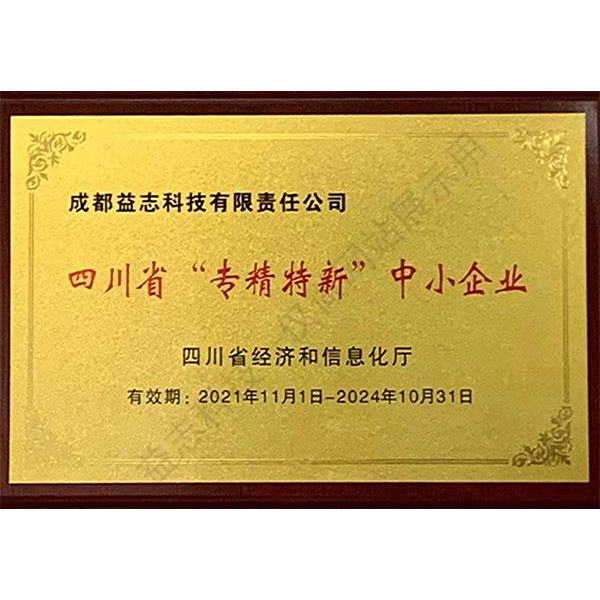
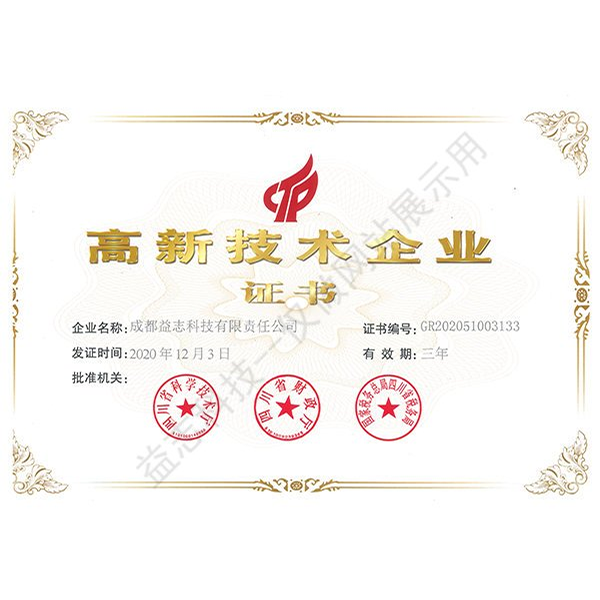
Chengdu Yizhi Technology Co., Ltd. (founded in 2013, registered capital 120 million yuan) develops zeolites with control at every stage - from gel synthesis to final calcination at 520 °C in a nitrogen atmosphere. This makes it impossible to “hide” defects with subsequent processing. The result is predictable work, not hope for luck.
Bottom line: “cheap zeolite adsorbent products” is when the price covers the entire life cycle
The cost of one kilogram of zeolite 4A may vary by 25% between suppliers. But if the life of one batch is 14 months instead of 22, and regeneration requires 20% more steam, then the difference in TCO (total cost of ownership) over 3 years will not be 25%, but 68%. We do not consider the price per kilogram, but the cost of an hour of downtime, the volume of defects, energy consumption for regeneration, and the cost of replacement logistics.
Cheap is when you don’t overpay for extra strength where it’s not needed. Cheap is when you don’t skimp on quality control and then pay to stop the line. Cheap is when the adsorbent works as stated in the technical data sheet, and not in the advertising booklet.
Detailed technical data, test reports and selection recommendations are available on the company’s website:yzkjhx.ru. There is also an interactive TCO calculator for your specific drying or cleaning process.