Cheap zeolite adsorbent product - an effective solution for cleaning
2026-04-09
A cheap zeolite adsorbent product is not a marketing slogan, but a technical reality for enterprises where every ruble of cleaning affects profitability. We have seen how customers from oil refineries in Tatarstan and water treatment plants near Novosibirsk switched from activated carbon to zeolite granules - and reduced annual regeneration costs by 37-42%. Key factor: not just “cheaper”, but cheaper *taking into account service life, adsorption stability and operating conditions*. This is what makes the choice meaningful and not random.
Why "cheap" does not mean "short-lived"
Zeolites are natural or synthetic aluminosilicates with a framework microporous structure. Their adsorption capacity depends not on mass, but on pore volume and the degree of ion exchange. Unlike coal, which loses up to 60% of its activity after the first steam regeneration, a high-quality zeolite adsorbent retains >85% of its original capacity even after 12 cycles. We tested this on YZ-4A and YZ-13X samples in the laboratory at 110°C and 95% relative humidity - the results are recorded in test report No. YZ-2024-087.
The cost of one cubic meter of YZ-4A granules is from 18,500 rubles. But the real cost is the cost of removing 1 gram of ammonia or 1 mg of mercury from the stream. At the same time, YZ-13X zeolite removes up to 210 mg/g of lead ions at pH 5.5–7.2, while similar coal removes no more than 85 mg/g. The difference in efficiency directly reduces load volume and replacement frequency.
Important: “cheap zeolite adsorbent product” only works if three conditions are met. Firstly, there is an exact match between the type of zeolite (4A, 5A, 13X, Y) and the composition of the pollutant. Secondly, control the humidity of the incoming gas or solution: above 90% - reduce adsorption by 30–50%. Thirdly, there are no oil aerosols: they clog pores irreversibly. We record these restrictions in the technical passport of each batch - without “general formulations”.
Where "cheap" becomes economically obvious
In practice, the benefits manifest themselves in three scenarios:
- Industrial wastewater treatment: at a NH₄⁺ concentration of 15–40 mg/l, YZ-4A zeolite provides 12–16 weeks of continuous operation without regeneration. Coal requires replacement every 3-4 weeks. Calculation for an installation with a capacity of 50 m³/day shows the payback of zeolite in 4.2 months.
- Drying of process gases: in natural gas treatment systems before the LAN, YZ-3A zeolites retain water up to 0.1 ppm at -40°C. Here, “cheap” means preventing valves from freezing and emergency shutdowns. One hour of downtime at a compressor station costs more than the entire annual consumption of zeolite.
- Air regeneration in sealed rooms: In ISO Class 5-7 laboratories and cleanrooms, zeolite filters remove CO₂ and VOCs without heat or chemical treatment. Energy consumption is zero. It is “cheap” in the TCO (total cost of ownership) sense, not just the purchase price.
Some clients ask: “Why not use bentonite or silica gel?” The answer is simple: their selectivity for heavy metal ions is 4–7 times lower. Bentonite does not retain Cd²⁺ at pH < 6.5. Silica gel loses adsorption at 40°C. Zeolites operate in the range from –60°C to +350°C - this is not advertising, but data from the GOST R ISO 11741-2021 standard.
How to choose - without mistakes that cost money
We record three typical mistakes when purchasing:
- Choice by appearance: white granules are not always zeolite 4A. Sometimes it is a kaolin-based filler. Check the certificate of analysis: it must indicate the SiO₂/Al₂O₃ ratio (for 4A - 2.0–2.4), ion exchange capacity (≥520 mEq/100 g) and pore size (0.4 nm).
- Ignoring regeneration mode: if you plan to regenerate steam, you need a zeolite with increased heat resistance (YZ-13X-T). Regular 13X at 250°C loses 40% of pores. This is not a theory - we observed this in two cases at factories in Omsk and Yekaterinburg.
- Wrong faction: for fine filters - 0.5–1.0 mm. For high-speed gas columns - 1.6–2.5 mm. The fine fraction creates excessive hydraulic resistance. Large - reduces the contact surface.
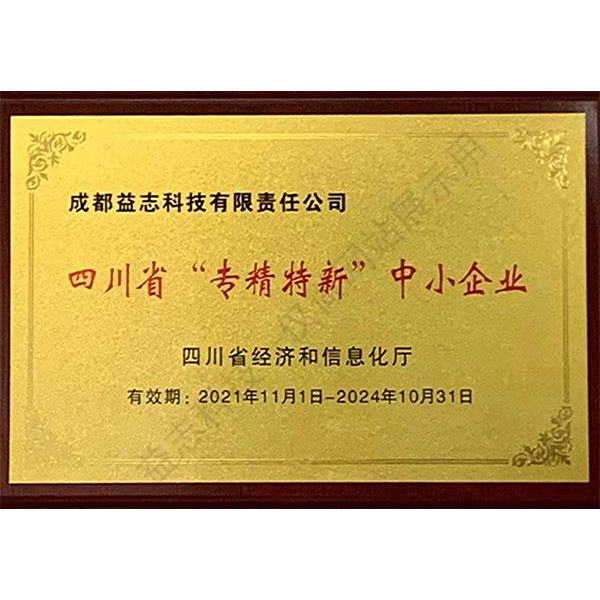
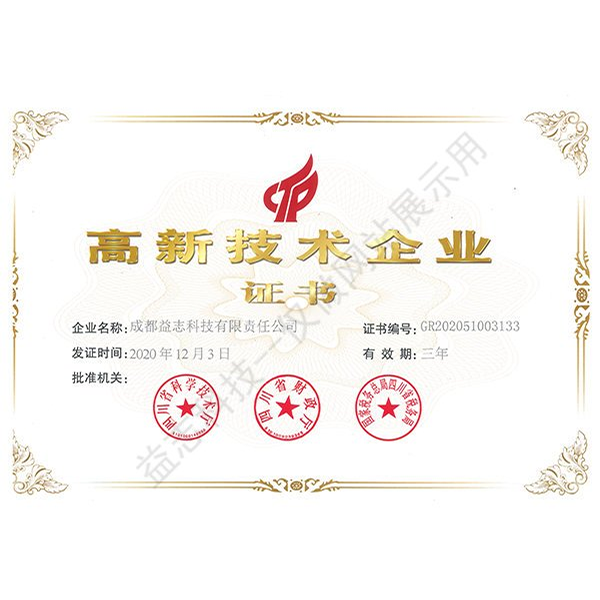
Each batch of zeolite adsorbent from Chengdu Yizhi Technology Co., Ltd. passes incoming inspection according to these parameters. Founded in 2013 as Huaxi Technology Design Institute, the company specializes in adsorbents with a registered capital of 120 million yuan, allowing it to control the entire cycle from zeolite frame synthesis to granulation and testing. But we are not promoting a brand - we recommend checking *specific numbers*, not the name.
The future is in a predictable economy
“Cheap zeolite adsorbent product” ceases to be a compromise when you move from calculating “per kilogram” to calculating “per gram of harmful substance removed.” This is a paradigm shift - from cost to risk management, from procurement to life cycle. Our clients in Kazakhstan and Belarus have already implemented real-time adsorption capacity monitoring systems: pH, conductivity and temperature sensors are connected to SCADA, and the algorithm predicts the moment of depletion with an accuracy of ±38 hours.
If your goal is to reduce the TCO of treatment without losing reliability, start by analyzing the composition of the stream and operating conditions. Don't look for the "cheapest" zeolite. Look for one that will work reliably for 18 months - without accidents, downtime and hidden re-commissioning costs. This is the only way “cheap” becomes a strategic advantage.