Cheap water adsorbents: trends?
2026-04-01
When they talk aboutcheap adsorbents, many people immediately think about activated carbon or, say, sand. But the trends have moved on. Cheapness now is not about low-quality raw materials, but about optimizing the entire chain: from the search for industrial waste to logistics and regeneration. A common mistake is to chase the low price per ton in a warehouse, forgetting about capacity and speed, and then wonder why the cleaning system can’t cope. From my own experience I came across: we bought a batch of oneadsorbentat a super price, and after two washing cycles it turned to dust. That's all the savings are.
Where does “cheapness” come from: raw materials and logic
Now the main players in the marketcheap adsorbents for waterlook towards secondary resources. This is not new, but approaches are changing. Previously, they took any ash residues or slags and tried to activate them. Nowadays there is more attention to the consistency of the composition of raw materials. If today the slag is from one plant, and tomorrow from another, the adsorption properties will fluctuate. I had to work with a material based on metallurgical waste - in one batch everything was fine, it bound iron, but in the next batch the phosphorus began to wash out. Stability is a hidden cost that is often overlooked.
Another point is geography. The mostcheap adsorbentmay turn out to be golden if taken far away. Therefore, the trend is to localize production for specific regions with their waste. In China, for example, this is highly developed. I have seen projects where modified waste from the same production was used to clean wastewater from textile mills. The price is a pittance, the logistics are zero. But it won’t be possible to repeat this somewhere in Siberia, there is not the volume of suitable waste.
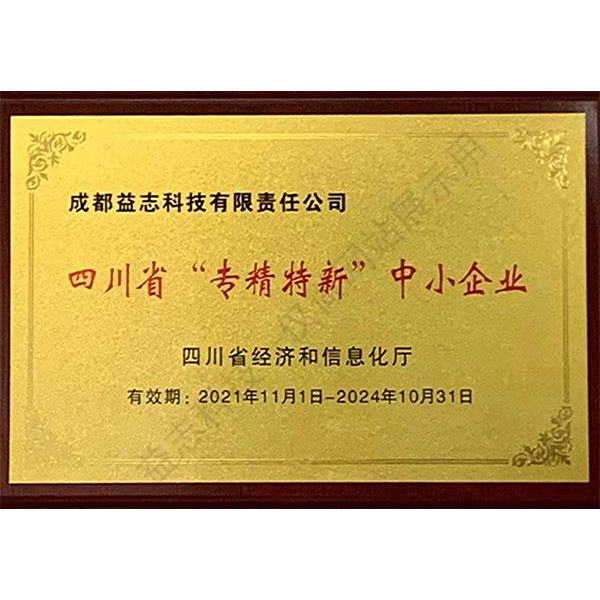
Here you can remember about Chengdu Yizhi Technology Co. Their approach, judging by their projects, is often based on deep processing of available raw materials. Don’t just take waste, but modify it for specific pollutants - heavy metals, organics. On their websiteyzkjhx.ruit is clear that they position themselves as a design institute, which means that they work not with one type of material, but with the search for solutions to the problem. For the marketcheap adsorbentsthis approach is key. Cheap does not mean universal. Sometimes it's better to pay a little more for a material that's sure to get your pollutant than to replace tons of useless powder.
Failures and lessons: when savings fail
I would like to tell you about one incident. The customer needed to purify water from traces of dyes. They offered himcheap adsorbentbased on acid activated clay. Everything worked perfectly in the laboratory. We launched a pilot installation, and after a week the sorption capacity dropped significantly. It turned out that in real wastewater, in contrast to the laboratory model, small organic matter floated, which clogged the pores of this very adsorbent. It was cheap, but only for ideal conditions. I had to urgently look for a replacement, taking into account the actual composition of the water. Lesson: cheap materials are often very capricious to their neighbors. in the water.
Another common failure is ignoring the issue of recycling. Let's say you poured a ton of cheap sorbent, it worked. What next? If it has captured heavy metals, it cannot simply be thrown into a landfill. The cost of disposal as hazardous waste can outweigh the initial savings by tens of times. Nowadays, trends are increasingly talking about sorbents, which after use can, for example, be safely buried in cement or used in road construction. But this is already the next price category. For now for manycheap adsorbents for waterquestion ?after life? - dark forest.
There was also a story with natural zeolite. It would seem a classic, relatively inexpensive. We purchased a batch for ammonium removal. But natural zeolite is a fickle thing. In one batch the ion exchange capacity was decent, in the other it was almost zero. The supplier shrugged his shoulders, saying that the deposit was different. It was necessary to implement strict incoming controls for each batch, which negated all the benefits of the low purchase price. Now I look at natural materials with great caution.
Where the market is heading: not price, but cycle cost
In fact, the main trend that I see is a shift in focus from price per kilogram to total cost of ownership. Smart customers are already asking not “how much does the sorbent cost?”, but “how much will it cost to purify a cubic meter of water, taking into account replacement and disposal?” This is a game changer. Hybrid materials are appearing, the samecheap adsorbents, but with additives that allow them to be regenerated right on the spot, albeit with the loss of part of the capacity. Or composites, where a cheap base serves as a carrier for a more expensive, but high-capacity active component.
Great hopes are associated with nanoscale modifications of surfaces. It sounds expensive, but if you apply a thin layer of the active agent on a cheap carrier like expanded clay, you can get a material with interesting properties for reasonable money. True, for now these are more laboratory stories. Implementation is limited by the difficulty of quality control during mass production. I saw attempts from Chinese colleagues, including the mentioned Chengdu Yizhi Technology Co., Ltd. Their strength as a design institute with a solid authorized capital lies precisely in the ability to bring such developments to pilot and then industrial stages. But for the mass marketcheap adsorbents for waterthis is the future for now.
Another direction is smart adsorbents, which change properties depending on pH or temperature, allowing for better control of the process. But this is definitely not about cheapness today. Although, if they learn to make these based on waste, everything could change.
Practical Choices: What to Look for Now
So, if you need to choosecheap adsorbentfor water here and now, what to do? The first thing is to forget about versatility. Clearly identify the main pollutant. The second is to require data not for distilled water, but for water that is as close as possible to yours. It is desirable that the tests be carried out in dynamic mode, in a column, and not in a glass. Third, immediately consider logistics and disposal. Sometimes it is more profitable to buy a more capacious material, even if it is more expensive, because you need less of it, change it less often, and recycling will take not 100 tons, but 10.
It is worth taking a closer look at manufacturers who offer not just a product, but a technological scheme. The same Chinese companies, for example, are often ready to provide calculations for their sorbent. This is an indicator of seriousness. If the site is likeyzkjhx.ru, deep elaboration of projects is visible - this is a good sign. This means they are faced with real problems and know where their pitfalls may be.adsorbents for water.
And one last thing. Don’t be shy about asking for samples and conducting your own tests, even primitive ones. Pour into a bottle of your water, stir, let sit, see what happens. Often the simplest experiments show more than beautiful graphs in a catalog. Personal experience: somehow this is how they sifted out material that showed miracles in the laboratory protocol, but in reality stuck together into clumps and sank without having time to adsorb anything.
Instead of a conclusion: a trend towards common sense
So where are the trends heading? In my opinion, to greater meaningfulness.Cheap adsorbentscease to be synonymous with “low quality”. Increasingly, these are smart solutions where low cost is achieved through optimization rather than performance degradation. The focus shifts to the full life cycle and application specifics.
Areas related to fine-tuning materials for regional waste and pollution will be developed. Manufacturers who can not just sell a bag of powder, but offer an engineering solution, will be in demand. And, of course, there will be an eternal struggle between the stability of parameters and price. The ideal and cheapest adsorbent does not exist. There is an optimal one for specific conditions, and finding it is always a compromise and working with data, and not with advertising slogans.
Therefore, to answer the question from the title: the main trend is the abandonment of the pursuit of abstract cheapness. The trend is for adequate cost, predictability of material behavior and a clear understanding of what you pay every ruble for. Everything else is just technological details that will change. But this principle seems to be becoming permanent.