Cheap adsorbents: how to choose for air purification?
2026-04-01
Cheap adsorbents: how to choose for air purification?
When it comes to cheap adsorbents, many people immediately have a picture in their minds of bags of coal somewhere in the basement. And this is perhaps the first and main mistake. Cheap doesn't mean useless, but it doesn't mean universal either. Often clients come with a request for “the most inexpensive” for a workshop or warehouse, and then wonder why the smell returned after a month. Here it all comes down not to the price tag, but to the understanding of what, in fact, to clean from. Solvent vapors, hydrogen sulfide, just high humidity - each case has its own ‘cheapness’.
What is hidden behind the word 'cheap'?
Look here. Activated birch carbon, packaged in bags of 20-25 kg - this is, conditionally, the base. It costs relatively little and is available everywhere. It is often taken as the first line of defense. But if you unload it from the bag, you can see a lot of dust and fine particles. For a stationary adsorber, this is a problem - dusting, an increase in pressure drop. This means it’s cheaper to purchase, but may be more expensive to maintain. Or you will have to buy additional pre-cleaning filters, which is no longer so ‘cheap’.
There are also options like inexpensive zeolite or aluminum gel. They work well for moisture, but their organic capacity may be lower. I remember an incident at one small coatings production: they supplied cheap zeolite from an unverified supplier against xylene vapors. After two weeks - zero effect. It turned out that the bulk density was low, the adsorber was literally blown out. I had to urgently refill it with more structured coal, but with better strength characteristics. A cheap attempt turned out to be just wasted time and money.
Therefore, my first advice: ask not only the price per ton, but the technical passport. Specific surface area, particle size distribution, abrasion resistance. Sometimes for a 15-20% surcharge you get an adsorbent that will last one and a half times longer. And this is another arithmetic.
Key selection options: past tables
Everyone has seen these tables on the Internet: ‘BAU-A coal – organic vapors, zeolite – drying’. This is true, but only partly. In practice, it is important what kind of organic matter it is. For example, cheap coals based on coal can poorly retain highly volatile compounds with low molecular weight, such as methanol or formaldehyde. They just skip by. They require an adsorbent with a certain pore distribution, often these are more expensive coconut coals or special impregnated compounds.
Another nuance is air humidity. If it goes off scale, say, above 70-80%, then the majoritycheap adsorbentsbased on active carbon quickly lose capacity. Water occupies active sites. Here either preliminary drying (money again) or the initial choice in favor of hydrophobic zeolite. But it will no longer be the cheapest in the line. Do you see how it all comes full circle?
Flow temperature is often forgotten. Cheap adsorbents can simply begin to desorb (give away) what they have accumulated when the temperature in the room jumps. In the summer it became hot in the workshop - and everything that was collected went back. Therefore, for unstable conditions, I would not recommend chasing the absolute minimum price. You need to look at heat resistance.
Stories from objects: where they saved and where they made a mistake
I’ll tell you about one project to clean the air from traces of hydrogen sulfide in a mini-production. The customer wanted it to be as budget-friendly as possible. They advised him to buy inexpensive impregnated coal soaked in alkali. It worked well, but with a caveat: at low concentrations. Six months later, the technology was slightly changed, the concentration increased, and the adsorbent began to exhaust its service life many times faster. Replacing cartridges ate up all the initial savings. Conclusion: a cheap option can be a point solution for stable, well-known conditions. If the parameters ‘float’, a reserve is needed.
Here's a positive example. To dry compressed air at a small car wash, it was necessary to remove excess moisture from the receiver. Expensive dehumidifiers were out of our budget. We selected a simple aluminosilicate adsorbent, one might say, of the lowest price segment. They poured it into two simple cylinders, working alternately. It has been working for three years now and is regularly regenerated by blowing hot air. The task is narrow - the adsorbent copes with it. Here savings were appropriate.
It happens that, under the guise of a cheap adsorbent, they simply sell substandard products or waste products from large production facilities. One day they brought coal, which, as it later turned out, had already been used in water treatment and was reactivated. Its adsorption capacity was almost zero. Unfortunately, they didn’t do a control check for bulk density and iodine value then—they were in a hurry. I had to redo it. Now I always insist on test backfilling and test measurements for a specific pollutant, if volumes allow.
The role of supplier and engineering
A bag of coal by itself is not a solution. The correct design of the adsorber is critical: flow rate, layer thickness, uniformity of distribution. You can buy the most affordable but effective coal, but put it in the wrong machine. The result will be disastrous. Sometimes it is worth directing part of the budget not to a more expensive sorbent, but to competent calculation and production of a contact container. This is the same situation when systems designed for a specific task outperform standard solutions.
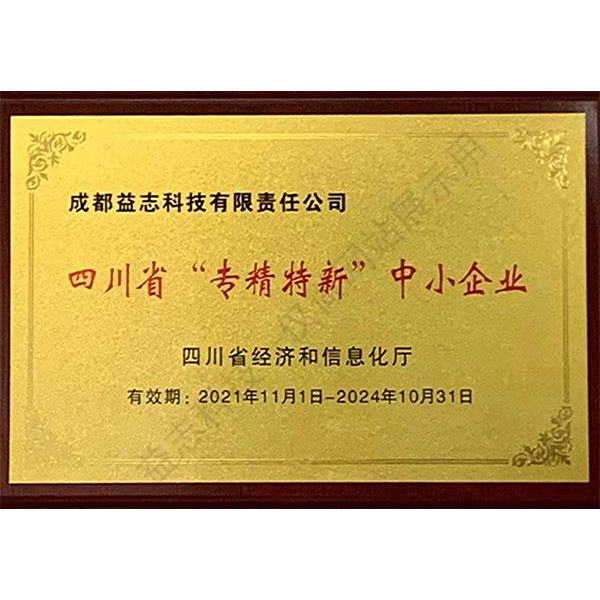
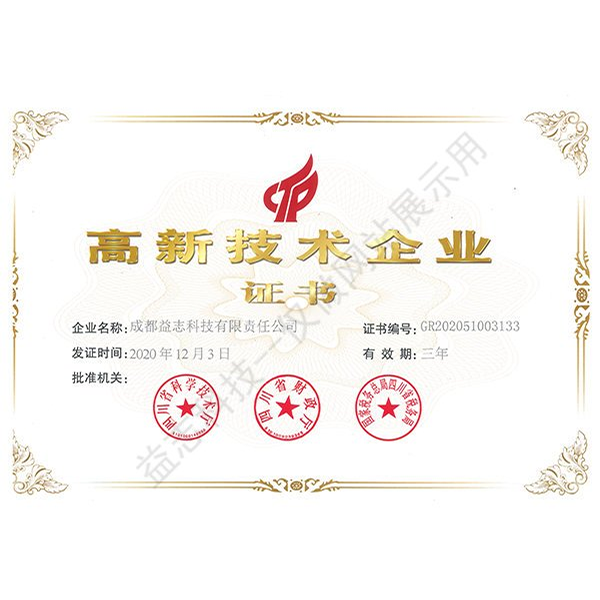
In this context, it is worth mentioning companies that take an integrated approach. For example,Chengdu Yizhi Technology Co. (yzkjhx.ru), as a design institute created on the basis of a chemical technology company, usually does not consider the issue of adsorption in isolation. Their specialists can offer an option where an inexpensive adsorbent is part of an optimally calculated scheme, which ultimately results in overall savings. The registered capital of 120 million yuan, by the way, indicates serious opportunities for conducting research and selecting materials. For the end user, this approach is often more reliable than independently searching for “what’s cheaper” on the Internet.
When working with a supplier, ask questions about the origin of raw materials, activation method (steam, chemical), availability of certificates. A normal manufacturer or distributor will provide this data. If they deny or speak in general phrases, that’s beautiful.