Cheap adsorbents: examples and applications?
2026-04-01
Cheap adsorbents: examples and applications?
When people talk about cheap adsorbents, they often immediately think about low quality. This is not always the case. Sometimes we are talking about affordable materials that, under certain conditions, work no worse than expensive analogues, but in some cases their use is the only economically viable option. The key is to understand what is 'cheap' for a specific application: low price per kilogram or low cost per unit volume of contaminated media? These are different things, and confusion here leads to unnecessary expenses. I encountered it myself when we purchased a ton of the most affordable coal at a price, but it turned out to be low-porous for our emission of solvent vapors, we had to change it three times more often - the savings turned into a loss.
What is generally considered a cheap adsorbent?
Here we need to separate. Firstly, these are natural or by-product materials that require minimal processing:activated carbonsbased on wood or shell waste, some zeolites, sawdust, peat, ash. Their price is often determined by logistics, and not by the production technology itself. Secondly, these are regenerable adsorbents, where the cost per cycle becomes low. For example, silica gel or some zeolites that can be dried. And thirdly, these are specialized but mass-produced products, such as aluminum oxide or simple ion exchange resins for rough cleaning.
An important point is that the scope of application immediately cuts off many options. To clean up oil spills on site, it is cheaper and more effective to use peat or sawdust impregnated with a hydrophobic composition than to use highly porous synthetic material. But for post-purification of drinking water using a municipal filter, the cheapness of coal from coconut shells can be conditional - strict certificates are needed, and here the question of the reliability of the supplier arises.
Sometimes spent adsorbents from other industries are also considered cheap. Let's say, a spent catalyst carrier based on aluminum oxide. You can try to use it for the sorption of heavy metals from wastewater. But this is always a lottery: you need to know exactly the history of the material, otherwise instead of cleaning you can get secondary contamination. We once tried it with zeolite from waste - the porosity seemed to be preserved, but the analysis showed residual organochlorine compounds, so we had to abandon this idea.
Practical examples: what works and where
Let's take the classics -activated carbonAG-3 or its analogues. Coal is cheap and produced in large quantities. Ideal for capturing organic vapors in ventilation systems of paint shops, where the concentrations are not prohibitive, but the requirements for maximum permissible concentrations are strict. Its advantage is that it can be regenerated by blowing with hot steam, although with a loss of activity. We did this at one of the factories: the adsorption cycle is 2-3 weeks, then regeneration. After 5-6 cycles, the coal was still changed, but the total cost of ownership decreased noticeably.
Another example is bentonite clays. A very cheap material for creating impermeable screens at landfills or for sorption of heavy metal ions in the form of a suspension. But there is a nuance: its sorption capacity strongly depends on the pH of the environment. In acidic wastewater it may hardly work, but in neutral wastewater it can show good results. It is always necessary to first test on a real environment, and not on a model solution.
Fly ash from thermal power plants. Almost a waste, the cost is cheap. Research, and our experience, show that it can absorb, for example, phenols or some dyes quite well. But the problem is heterogeneity: the composition of the ash varies depending on the coal burned and the season. If there is no stability, there is no predictable technological process. Therefore, it is not used for critical tasks, but for local purification of some wash water with a variable composition, it is sometimes used as a temporary solution.
Limitations and hidden costs
The biggest mistake is to look only at the price tag per bag. A cheap adsorbent often has low mechanical strength. The same granulated charcoal made from walnut shells is stronger than from wood, but also more expensive. Cheap charcoal in a moving bed or backwash filter quickly grinds into dust, which then becomes a problem. It is necessary to install additional traps for this dust, which negates the initial savings.
The second point is capacity. Cheap material may have a smaller specific surface area. This means that it needs to be larger in weight, changed more often, and a larger volume of waste. Disposal of spent adsorbent is a separate cost item, and if it is also classified as hazardous waste (for example, after the sorption of heavy metals), then the cost of its disposal can be many times higher than the cost of the material itself.
The third aspect is selectivity. Inexpensive, broad-spectrum adsorbents often ‘grab’ everything, including what does not need to be sorbed. As a result, their capacity for the target component drops sharply. For example, when purifying groundwater from chlorinated hydrocarbons, cheap activated carbon can quickly become clogged with natural organic substances (humates) present in the water. And instead of billing months, he will work for weeks.
Case: application in gas cleaning
There was a project to capture vapors of volatile solvents (acetone, toluene) in a small furniture production. The customer wanted it as cheap as possible. We considered the option of using domestic NaA zeolite - the price is attractive. But modeling and passport data showed that for water vapor, which was also abundant in the emissions, it has an even greater affinity than for organic matter. That is, it will quickly become saturated with moisture and stop working on the target components.
We settled on a compromise: not the most expensive imported impregnated coal, but with a clearly calculated cycle time and a system for pre-drying the air using a simple refrigeration method. Yes, we had to add a drying unit, but this made it possible to increase the inter-regeneration run of coal by 4 times compared to using cheap zeolite without drying. In the long run, the system turned out to be more economical. This is a typical example where the immediate cheapness of the material leads to a dead end.
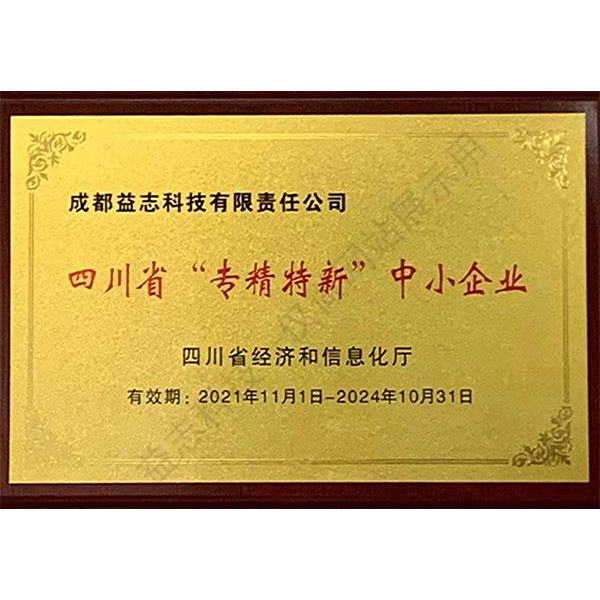
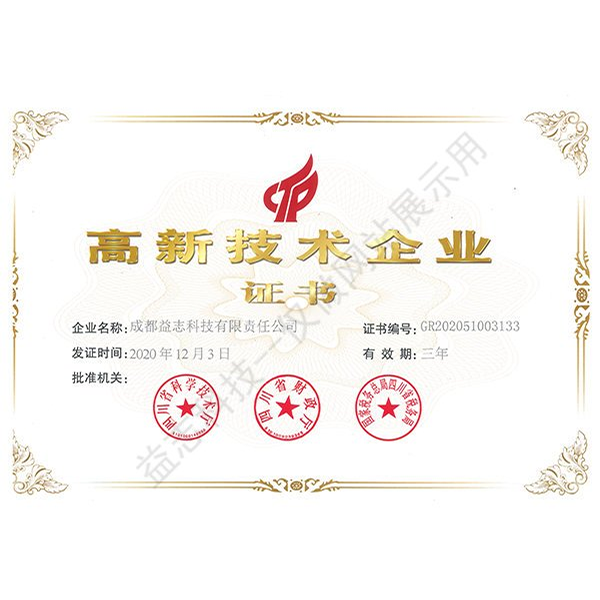
Interesting experience with the companyChengdu Yizhi Technology Co.. On their resourceyzkjhx.ruI came across information on modified inexpensive mineral-based sorbents.Chengdu Yizhi Technology Co., Ltd. is a design institute established by Chengdu Huaxi Chemical Technology Co., Ltd., and they often work on customizing adsorbents for specific emissions or effluents.