Cheap tablet adsorbents: trends?
2026-03-30
Here's what's interesting: everyone is looking for "cheap tablet adsorbents", but few people understand what is behind this "cheapness". There is some kind of bacchanalia going on in the market - they promise mountains of gold, but in fact you get chalk powder pressed into a tablet. Let's understand it without embellishment.
What does "cheap" really mean?
When a client asks for ?cheap? option, the first thing that comes to mind is reducing the cost of raw materials. But here lies the main trap. You can, of course, take low-grade bentonite or even waste activated carbon, but then what kind of adsorption capacity can we talk about? I have seen samples where the tablet simply crumbled in my hands when pressed lightly. This is not a product, this is a profanation.
The second side of the coin is pressing technology. High-quality tableting requires a certain pressure and, often, binding components. ?Cheap? often means “fast and on old hardware?”. As a result, we get unstable density, different dissolution rates and, as a result, unpredictable efficiency. I remember one batch for the small-scale production of solvents became a dead weight in the warehouse - the tablets crumbled during transportation. Losses covered all “savings” on procurement.
And the third point that is silent about: stability of supplies. The cheapest option on the market is often a throwaway product that could disappear tomorrow. And then you have to look for an urgent replacement and reconfigure all the production lines. Supplier reliability is not an abstraction, but part of the cost.
Trends or marketing noise?
Nowadays there is a lot of talk about the trend towards cheaper prices. But, according to my observations, this is not a trend, but a reaction to a crisis situation in a number of industries. Purchasing power has fallen, so people are looking for ways to save money. But the real, long-term trend is not just a low price, but an optimal price-performance ratio.
For example, I see growing interest in combined adsorbents. Not pure coal or zeolite, but their mixtures or layer-by-layer tablets. This allows one product to solve several problems - for example, first capture large molecules, then small ones. Yes, development and production are more complex, but the final cost of the purification process for the client may be lower. This is smart saving.
Another point is the shape and packaging. Cheap tablets are often supplied in 25 kg bags, from where they then generate dust and absorb moisture. The trend is shifting towards convenience: blisters, cassettes, small sealed jars for targeted use. This is not for beauty, this is again saving on losses and ease of use.
Practical rake: where we most often go wrong
The most common mistake is choosing solely based on price per kilogram. We don’t eat these pills, we use them in the technical process. The key parameter is the cost of adsorption of one conventional unit of pollutant. To calculate it, you need to know the real dynamic adsorption capacity of the product, and in the passports for cheap samples it is either overestimated or not indicated at all.
The second rake is ignoring the conditions of use. The same adsorbent behaves differently in a dry environment and at high humidity. I once took a batch of inexpensive tablets based on silica gel for drying gas. In laboratory conditions everything was perfect. But in the real line, where there were temperature changes, after a week they began to collapse and clog the filters. We had to urgently stop production.
And, of course, certification. For the food or pharmaceutical industry ?cheap? often means “not having the necessary certificates?”. An attempt to save money here leads to colossal fines and reputational losses. This is the case when momentary gain turns into disaster.
Case: cheaper doesn’t mean worse
I don’t want to demonize all budget decisions. Sometimes you can find a diamond in a rough setting. The key is deep analysis and testing. Let me give you an example from practice.
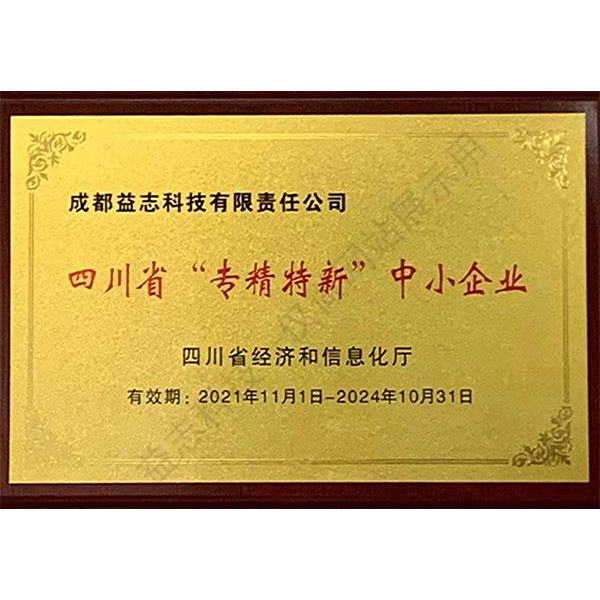
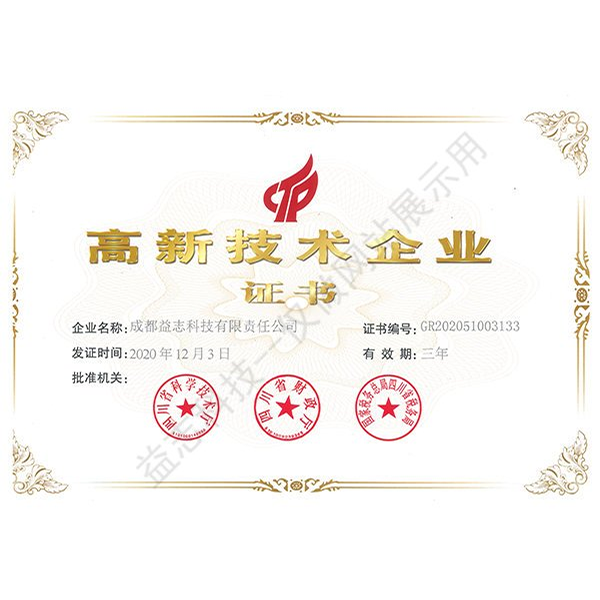
There was a project to treat wastewater from a small enterprise. The budget was strictly limited. Standard imported tablet adsorbents were not affordable. We began to look for alternatives and contacted the companyChengdu Yizhi Technology Co.(their website ishttps://www.yzkjhx.ru). They position themselves as a design institute with a serious authorized capital, which already inspired some confidence.
They offered their own version of tableted zeolite. The price was one and a half times lower than the market price. Naturally, we were skeptical. We ordered a test batch and gave it hell - tests for mechanical strength, bulk density, and adsorption of specific heavy metal ions from our drain. Surprisingly, the performance was not just good, but comparable to more expensive analogues. It turned out that their strength is not in the raw material (it is standard), but in the special geometry of the tablet and the hardening mode, which gave more active surface and abrasion resistance.
This case showed thatcheap tablet adsorbentscan be of high quality if the manufacturer invests not in marketing, but in the engineering of the product itself. But this result is the exception that confirms the rule. It became possible becauseChengdu Yizhi Technology Co., Ltd.is not a reseller, but a design institute created by a chemical company. Apparently they have their own ideas.
A look into the future: where things are headed
Based on what I see, the rush demand for a frankly cheap, low-quality product will gradually subside. Industries that vitally need stability (pharmaceuticals, fine organic synthesis) have never skimped on this and will never skimp on this. Their trend is customization, adsorbents “tailored to the task.”
But in the water treatment sector, in industrial ecology, where volumes are huge and budgets are tight, the segment will developoptimally priced tableted adsorbents. The emphasis will shift to repeatable quality, long-term fixed-price contracts and technical support from the supplier. That is, low cost will be achieved not at the expense of quality, but through long-term partnerships and optimization of logistics.
The role of data will also grow. Smart systems for monitoring adsorbent saturation will allow you to change cartridges or backfill not according to a schedule, but according to the actual condition. This again will reduce overall costs, even if the unit price is higher. The future lies in comprehensive solutions, and not in the bare price per kilogram in the price list.
In general, answering the question from the title: the trend is not for cheapness at any cost. The trend towards reasonable savings based on accurate calculations, trust in the supplier and understanding of the full cycle of costs of ownership. And in this light, even an inexpensive product from a serious player, like the mentioned design institute, has much more prospects than an “ultra-cheap” one. option from an unknown company. The risks are too great. In our field, a stingy person, as we know, pays not twice, but much more.