Cheap exporter of adsorbent-drying agents?
2026-03-30
When you hear this question, the first thing that comes to mind is yes, there are plenty of such proposals. But what does “cheap” mean? in our market? Often behind this lies either low-grade zeolite, which crumbles after six months, or a supplier who saves on logistics so that the bags arrive torn. I went through this myself.
Where to look and what the price actually hides
Previously, it seemed that China was automatically low cost. But this is only at first glance. I took a batch of gas dryers based on 4A molecular sieves from one provincial plant. The price was attractive, 15 percent below average. But when I received the cargo, it turned out that the heat resistance did not correspond to the declared one - after two regeneration cycles in the oven at standard 250°C, the adsorption capacity sank. The client complained about the dew point rising. I had to look into it, and it turned out that the manufacturer saved money on the calcination stage and reduced the time. So much for a “cheap exporter”.
Now I look not only at the number on the invoice. The full cycle is important: raw materials (especially the quality of kaolin for the synthesis of zeolites), control at the activation stage, drying conditions. Cheapness is often achieved due to this. Another point is packaging. For refrigerant dryers, for example, moisture resistance is critical. Once I received a batch in seemingly normal bags with a plastic liner, but there was a temperature difference in the container, condensation formed inside, and some of the upper bags gained moisture. Lost on reactivation.
Therefore for mecheap exporter- this is not the one who offers a low price per ton, but the one whose price for the full operating cycle of the adsorbent is lower. I consider everything: resource, dew point stability, energy costs for regeneration, even equipment downtime due to unscheduled replacement. This is real savings.
Case: working with a design institute, and not just with a plant
I changed my approach after one bad experience. I began to look not just for a factory, but for companies with an engineering focus. Why? Because a desiccant is not a piece product; it is often needed for a specific process. For example, to dry ethylene, certain pore parameters are needed, while drying air in compressor rooms requires different parameters. A ready-made solution is not enough.
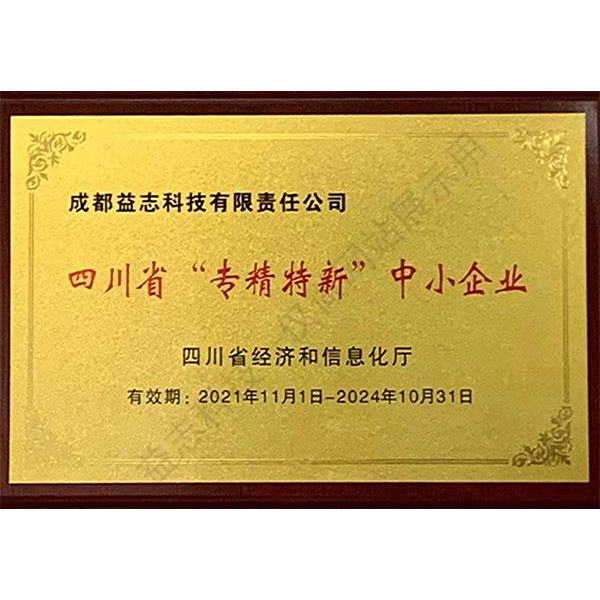
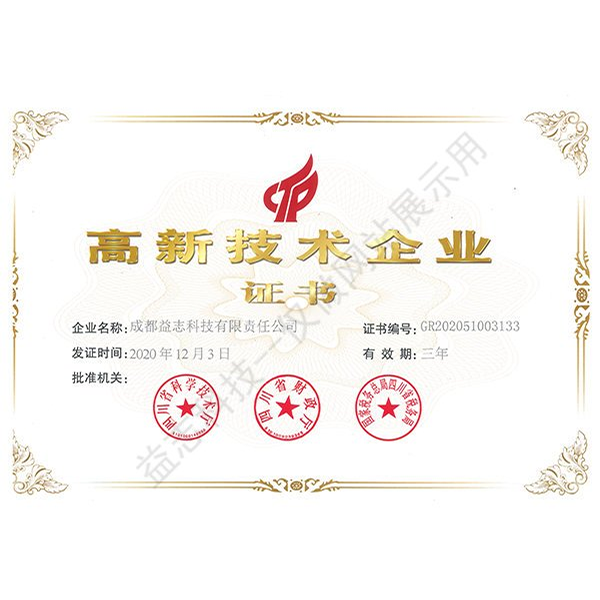
Here I encounteredChengdu Yizhi Technology Co. (yzkjhx.ru). It's not just trading, it's them claiming to be a design institute created by Huaxi Technology. Initially I was skeptical - another beautiful sign. But in the terms of reference he described a problem with the cyclic stability of the desiccant in a short-cycle heatless adsorption (PSA) installation.
They sent not just a commercial proposal, but requested details: temperature charts, carrier gas composition, even the history of replacing cartridge filters in front of the adsorbers. Then they offered a trial batch of modified zeolite 13X with an additive. The price was not the lowest on the market, but they justified it by modifying it for our cycle. As a result, the resource increased by approximately 18-20%. For me this became an indicator thatcheap adsorbent exporter- this is a myth. What is needed is a “technically competent supplier?”.
Logistics and hidden costs - what everyone forgets
When discussing the FOB price, many people forget what will happen next. There is a nuance with adsorbents: they are hygroscopic. If a container travels by sea from China to the port of Ust-Luga, and then by rail, the risks of getting wet are enormous. I saved on delivery once by choosing the cheapest logistics option without humidity control in the container. As a result, I received lumps in bags that had to be dried - additional costs and missed deadlines.
Now I always negotiate the terms of transportation. Ideally, containers with desiccant and sensors. Yes, it's more expensive. But a cheap exporter usually offers “how is everything being transported?” - that is, on general terms. This is a risk. With the same Yizhi Technology, we managed to agree on packaging in big bags with double laminate and silica gel bags inside, although this increased the cost of the cargo space. But the delivery arrived in perfect condition.
Another hidden expense is customs clearance. With adsorbents based on zeolites, there may be questions regarding HS codes. A cheap supplier often issues a universal code, and then at customs it turns out that additional certificates or examination are needed. Downtime costs money. Reliable partners who have been exporting for a long time immediately provide a complete package of documents with the correct codes. This is also part of the cost that is not visible in the price per kg.
Raw material quality problem and how to track it
The basis of any desiccant is raw materials. For synthetic zeolites these are, roughly speaking, aluminosilicates. The quality and purity of the starting components determine everything: capacity, mechanical strength, stability. Working with small factories, I often came across the fact that they change suppliers of raw materials depending on the price situation. In one batch the desiccant is excellent, in another it begins to generate dust.
How to fight? Request not only a quality certificate for the finished product, but also certificates for raw materials. More serious manufacturers, like Chengdu Yizhi Technology Co., Ltd., which is positioned as an institute with a registered capital of 120 million yuan, usually have long-term contracts with quarries or chemical plants. This gives stability. In their case, as part of Huaxi Technology, they apparently have access to their own or verified sources. This is not a guarantee, but it reduces the risks.
For me personally, one simple test became an indicator. Please send not only a sample, but also data on the change in abrasion strength (standard test) after, say, 50 cycles of “adsorption-regeneration?” in laboratory conditions. A cheap supplier either refuses or sends “standard” ones. data. Those who are in the know provide a report on a specific batch of raw materials. This shows the level of control.
Results: so what does “cheap” mean? in the long term?
I return to the original question. If you need a one-time, non-critical purchase for a non-critical process, perhaps chasing a low price makes sense. But for permanent, technologically important applications - such as oil and gas dehydration, polymer production, where the dew point is critical - the word “cheap”? should be alarming.
Experience shows that it is more reliable to work with suppliers who can conduct dialogue at a technical level. Those who ask about the conditions of the process, and not just about the volume of the order. Yes, their price per kilogram may be higher. But if you calculate the cost of the cycle, the number of years of replacement, the absence of downtime and complaints from end consumers, it often turns out that suchexporter of adsorbent-drying agentsin the end “cheaper?”.
I identified several points of control for myself: technical support (not only the sales manager), willingness to make trial batches for the task, transparency in the matter of raw materials and logistics, the presence of our own or a partner laboratory for tests. This is not an advertisement, but a conclusion that was reached after several years and both successful and failed deliveries. And yes, companies like the mentioned design institute from Chengdu are one example of this approach, but not the only one. The main thing is not the price in the price list, but the total cost of ownership and reliability. That's probably all.