Chinese adsorbents: export leaders?
2026-01-01
When you hear this question, the first thing that comes to mind is, of course, yes, where would we be without China? But in reality, everything is not so clear. Many people immediately imagine mountains of bags of activated carbon being loaded into containers. This is just the tip of the iceberg, and often this is where the main misconception lies: that leadership is determined only by tonnage. In fact, the key now is the technological complexity of the product and the ability to solve non-standard problems, and not just sell raw materials. I have been observing this market from the inside for many years, and I can say that Chinese manufacturers have gone from simple suppliers to serious engineering partners. Although, to be fair, not all at once.
From ?made in China? to ?designed in China?
Previously, about ten years ago, the main argument was the price. And it worked. Factories around the world, especially in developing countries, purchased Chinese zeolites or coals in bulk for standard drying or cleaning processes. But competition grew, and the requirements became more stringent. Simply pouring adsorbent into the column was no longer enough. Customers began to ask: what modification exactly? What are the sorption kinetics? How will the material behave under pressure fluctuations in our particular installation? This is where the screening began.
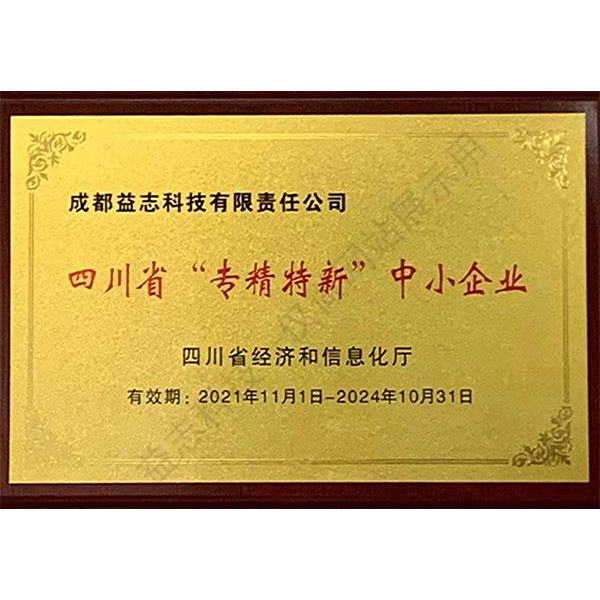
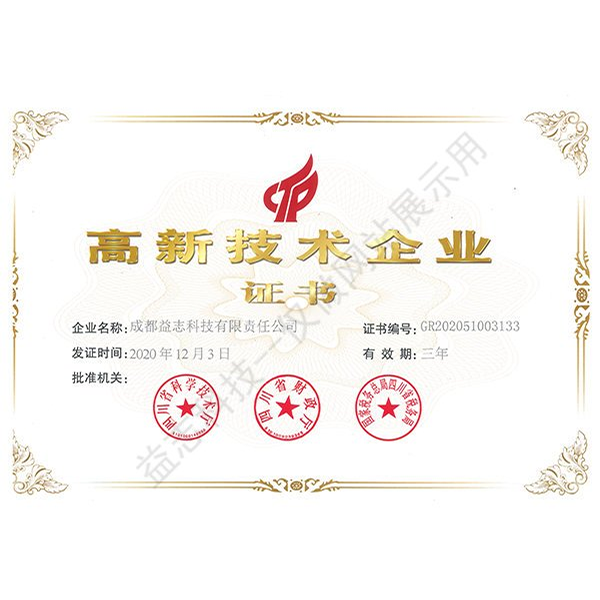
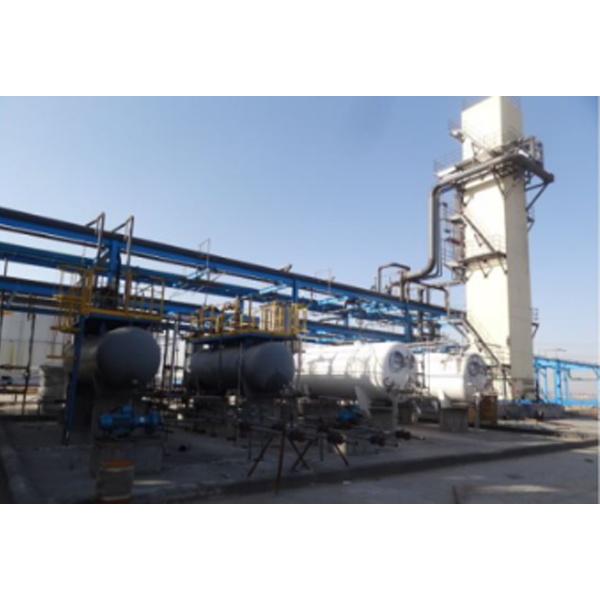
Those companies that invested in R&D and, importantly, in engineering, pulled ahead. They stopped being just factories, and began to provide solutions. A striking example -Chengdu Yizhi Technology Co., a subsidiary of Huaxi Technology. If you go to their websiteyzkjhx.ru, it is clear that this is not just a product catalog. This is a design institute that focuses on development and implementation. The registered capital of 120 million yuan is a serious bid for the long game, and not for speculation in raw materials. Their approach is precisely the transition from production to the design of complete technological chains using adsorbents.
How does this translate in practice? Let's say a request comes from a petrochemical plant in the CIS to purify a stream from specific mercaptans. The standard package is not suitable. Somewhere in Europe they will give you a project in six months and at an exorbitant price. And the Chinese team, the same Yizhi, can quickly simulate the process, select or even modify the composition of the adsorbent in its experimental installation, and offer a pilot solution. Speed and flexibility are their new strong point, besides price.
Strengths: not only volume, but also variety
Yes, in terms of total exports, China is undoubtedly the world leader. But if you dig deeper, it is interesting to look at the structure. Previously, these were mainly simple oxide adsorbents and basic activated carbons. Now the export basket is highly diversified.
Zeolites of various types (A, X, Y, ZSM-5), specially synthesized for the tasks of catalysis and separation - their share is growing. Silica gels with controlled porosity for chromatography. High-silicon materials for drying aggressive media. These are already high-margin products. Their production requires deep chemical culture and quality control at every stage. Chinese laboratories have learned to do this, often bringing in specialists from abroad and actively purchasing patents.
But there is a nuance that is little talked about in advertising brochures. The quality of the batch may fluctuate. Not always, but it happens. Especially for medium and small manufacturers. We once encountered the fact that three batches of 13X zeolite from the same supplier showed different dynamic moisture capacity. The difference is 7-8%. This is a disaster for the critical drying process. Cause? Possible deviations in synthesis or activation. Therefore, now serious buyers always require not only a certificate of analysis, but also conduct their entrance tests on representative samples. Trust takes a long time to gain, but it is lost because of one unstable party.
Weaknesses and barriers to growth
Despite all the success, there are areas where Chinese manufacturers still find it difficult to compete. First of all, these are ultra-high-tech specialized adsorbents for pharmaceuticals or microelectronics. It is dominated by several Western companies with decades of history and proprietary know-how. China is trying to catch up, but the gap is still noticeable. This is not so much a question of chemistry as of purity, traceability of raw materials and impeccable particle control.
Another barrier is logistics and after-sales support for complex systems. Putting down the bags is one thing. But providing prompt technical support, an engineer’s visit to launch or diagnostics of a problem in a remote region, say, in Siberia or Africa, is another matter. Here, European and American competitors have networks that have been established for decades. The Chinese are just building this infrastructure. Companies likeChengdu Yizhi Technology Co.They solve this through partnerships with local engineering companies, but the integration process is not always smooth due to cultural and management differences.
And, of course, “anti-dumping” investigations and political risks. Successful export is always in sight. An increase in market share in Europe inevitably leads to protective measures. Chinese companies have to be very careful with pricing and prepare for possible trade disputes, which adds complexity and cost.
Case study: not everything went according to plan
I would like to give an example of not an ideal, but a real project, where there were problems. The task was to modernize a natural gas drying unit at a small field. The Chinese partner (I will not name the name, this is not Yizhi) offered a very attractive price for the supply of a tandem of adsorbents: molecular sieves for deep drying and a layer of aluminum oxide for protection against dripping moisture. Everything is according to calculations, everything is beautiful.
The adsorbents arrived and were loaded. At the start everything worked fine. But after 4 months the drying cycle began to “sag”. The dew point at the outlet crept up. They began to figure it out. It turned out that in real conditions the gas contained trace amounts of compounds that were not indicated in the customer’s initial data (they were simply not measured regularly). These impurities irreversibly poisoned the sieves. Standard Chinese material turned out to be sensitive to them.
Solution? I had to urgently order a specially modified zeolite with increased stability. The situation was saved, but the deadlines and reputation suffered. The conclusion that everyone made: a cheap standard solution can be expensive. Now, for complex projects, we always insist on extensive analysis of raw materials and, if possible, on long-term pilot tests on a real flow, and not in the laboratory. After such cases, Chinese suppliers also became more careful and more detailed in developing technical specifications.
What's the result? Leadership is conditional, but the trend is obvious
So are they leaders in exports or not? If we count them as carriages, no doubt. If you look at value, technological complexity and profit - here they are already at the top, but not yet at all the tops. Leadership is now fragmented. In the mass segments, China dominates. In niche and super-complex ones, there is still competition.
The main strength of Chinese players today is the ability to quickly learn, adapt and offer a package: from material development to plant design. As is the case withChengdu Yizhi Technology Co., Ltd.– their design institute model reflects this trend. They do not sell an adsorbent, they sell a guaranteed result - clean gas, dry air, isolated product. This is another level.
Will they be the absolute leaders in five years? Most likely, yes, but in a different capacity. They won't just fill the world with cheap sorbents. They will set standards for entire industries in developing countries by offering affordable high-tech solutions. There are risks, but the direction of movement is clear. Exporting now is not about quantity, but about the quality of engineering. And here China has a very serious argument.