Chinese adsorbents: technologies and applications?
2026-01-01
When people talk about Chinese adsorbents, many people immediately have the image of something cheap and of average quality. Sound familiar? In reality, everything is much more complicated and interesting. Over the past ten years, the picture has changed dramatically, but the stereotypes are tenacious. I’ll try to sort it out based on what I saw and worked with personally - without gloss, with reservations and specifics.
Evolution from raw materials to complex systems
Previously, about 15 years ago, the main export was really just activated carbon raw materials, often of unstable fractions. Now the emphasis has shifted tofunctional adsorbentswith specified properties. We are talking not only about traditional coals, but also about zeolites, silica gels, and polymer sorbents. The key point is adaptation to the process. Chinese engineers have learned how to modify surfaces well and select the pore structure for a specific task: trapping organic vapors, dehydrating gas, treating wastewater from heavy metals.
But there is a nuance here that is often overlooked when ordering. The technology is there, but batch control at the output can “float”, especially for medium-sized manufacturers. I once ordered zeolite for drying compressed air. The first batch has excellent dew point performance. The second one, with the same code, is worse. It turned out that raw materials from another quarry were used, and the calcination algorithm was not adjusted. We had to agree on specifications for a long time, literally writing down tolerances for iron content. So the very fact of the presence of technology does not negate the need for strict input control.
What's really impressive is the scaling. The ability to quickly launch tonnage production for a growing project. For large industrial installations, such as petrochemicals, this is critical. An industry acquaintance ordered large quantities of coal from China for the recovery of benzene vapors - production time and logistics turned out to be a decisive argument against European suppliers, although the price difference was not so dramatic.
Application in real conditions: where it shoots and where it doesn’t
One of the most illustrative cases isindustrial emissions treatment. Here Chinese solutions are very competitive. I saw adsorbers with activated carbon blocks in operation at a plastic processing plant. The task is to capture organochlorine compounds. The design of the device is simple but effective. The main advantage is that replacing bulk cartridges is done quickly, and the coals themselves, which is important, have a sufficiently high mechanical strength so as not to generate dust. But there was also the opposite experience with the purification of pharmaceutical waste. They needed a specific polymer sorbent to extract antibiotics. The Chinese analogue, ideal on paper, in practice showed a lower capacity and lost activity faster after regeneration. I had to return to more expensive Japanese material. Conclusion: for complex, highly selective tasks, selection needs to be ten times more careful.
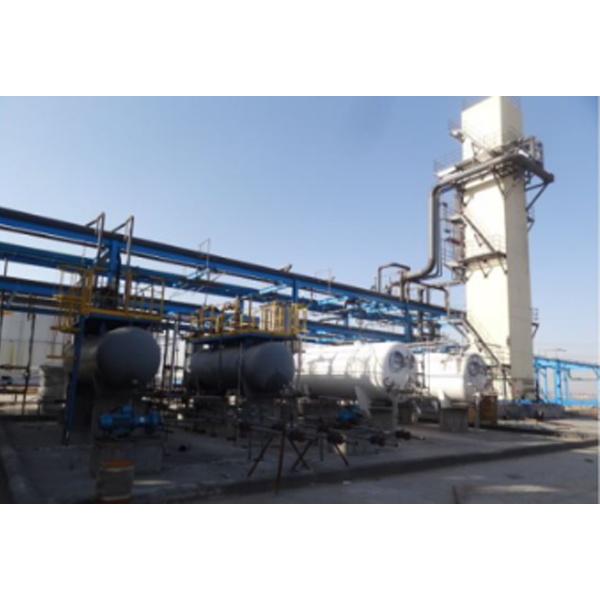
Another field to use isgas separation. In particular, the production of nitrogen from air using short-cycle heat-free adsorption (SCA). Chinese manufacturers make excellent zeolite molecular sieves for these purposes. Their service life, with proper drying of raw air, is comparable to global brands. But there is a pitfall - the pre-adsorber. If you skimp on the pre-drying stage, the same zeolite is “poisoned?” moisture and fails in a year, not five. I came across a situation where a client tried to cut the budget on an air treatment system. As a result, the costs of replacing the sieves “ate up” everything.
Separately, it is worth mentioning the drying area. Silica gels and aluminum gels—China has long played a leading role here. The product is debugged and stable. Especially for drying tasks of transformer oil or process gases. Price/quality are optimal. But again, you need to clearly separate brands. Blue indicator silica gel is one thing, and highly porous, for deep drying, another. Confusing them is guaranteed to cause problems.
Technological nuances and pitfalls
When talking about technology, one cannot help but touch on the topic of regeneration. This is the Achilles heel of many projects. Chinese suppliers often offer ready-madeadsorption plants?turnkey?. Structurally, they are often good, but the regeneration control algorithms (blowing with hot gas, vacuum stripping) are sometimes too simplified. I saw a solvent recovery plant where regeneration was carried out with too hot steam. This led to partial destruction of the activated carbon pores and loss of capacity. We had to modify the temperature control system on site. So what's "boxed"? the solution requires validation under specific conditions.
Another point is packaging and transportation. It would seem like a small thing. But somehow we received a batch of molecular sieves in big bags that were not airtight enough. The material has collected moisture from the atmospheric air during sea transportation. Partial loss of activity was inevitable. Now we always specify in the specification a three-layer polyethylene insert with an oxygen absorber. It’s a small thing, but it has a critical impact.
An interesting area that is actively developing is hybrid adsorbents. For example, coals impregnated with specific reagents for binding hydrogen sulfide or mercury. Here Chinese R&D shows good results. But commercial samples may lag behind laboratory data. I always ask for not just a passport, but a report on pilot tests in a real environment, as close as possible to ours. Without this, I don’t take data on dynamic capacity on faith.
The role of engineering and design institutes
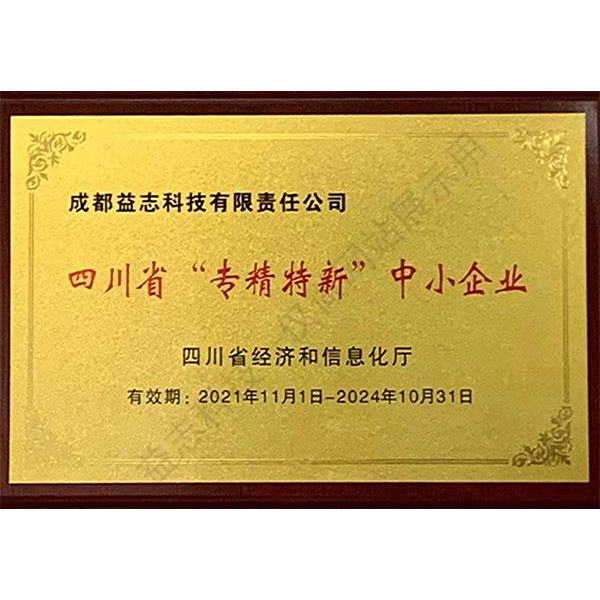
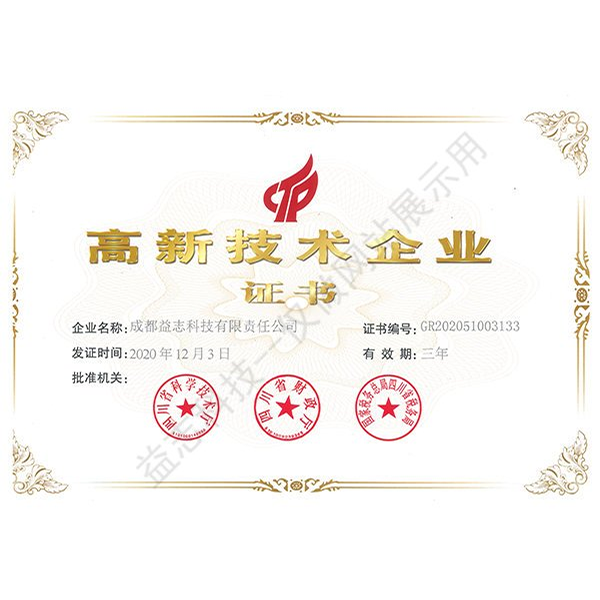
Actually, the success of using any adsorbent depends on competent engineering. This is where the power of specialized companies comes into play. For example, let's takeChengdu Yizhi Technology Co.- this is not just a seller, it is a design institute created on the basis of a chemical technology company. This structure says a lot. When you have behind you not only a trading platform, but also serious design capacity with a registered capital of 120 million yuan (and this is an indicator of solidity), the approach changes. They are able not only to sell bags of granules, but also to calculate the technological scheme, select the optimal type of adsorbent for the composition of the gas mixture, and design the adsorber itself and its operating modes. This is a different level.
Their websitehttps://www.yzkjhx.ru- this is, in fact, a window into such complex engineering. By working with such partners, there is a chance to avoid that very fatal mistake - the inconsistency of the sorbent with the process. They usually have their own testing laboratories and can carry out simulations. This dramatically reduces risks. I remember how we needed a special sorbent for a project to clean exhaust gases from sulfur dioxide. Standard solutions were not suitable. Just contacting such an institute made it possible to select a modified zeolite, which successfully passed pilot tests. Without deep expertise, it would be a lottery.
An important point: such companies are often a link between advanced academic developments (the same Tsinghua University or the Chinese Academy of Sciences) and industry. They know how to turn laboratory research into commercial products. Therefore, looking through their portfolio, you can see not only standard, but also rather exotic solutions for specific tasks, say, in the electronics or pharmaceutical industries.
A look into the future and practical advice
Where is everything going? In my opinion, the trend is toward smart, manageable systems. Adsorption with predictable breakthrough time, sensors and adaptive regeneration cycles. Chinese manufacturers are actively investing in this. But for the end user, it seems to me, the basis for success remains the same: a deep analysis of the original task.
My practical advice, learned from my own mistakes: never order an adsorbent based only on a technical datasheet. Request a sample (not 100 grams, but a full-size cartridge or at least a few liters) and test it in your real-world environment as a pilot. Simulate the complete cycle, including regeneration. Yes, it's time and money. But this insures against multimillion-dollar losses on a full-scale installation that does not meet parameters.
And the second piece of advice is to look not just for a supplier, but for a technology partner. One who is ready to delve into the essence of the process, like the sameChengdu Yizhi Technology Co.. The difference in approach is colossal. One will sell you what they have in stock, and the other will first ask for chromatograms of your flow, then do a test load, and only then offer a solution. In the long term, this is the only true path, especially for non-standard tasks. In the end, adsorption is not about purchasing a material, it is about solving a technological problem. And the approach must be appropriate.