Chinese adsorbents: technologies and market?
2026-01-01
When people talk about Chinese adsorbents, many people immediately think about cheap activated carbon in bags. This, of course, is a market, but if you dig deeper, there is a whole universe out there, from traditional zeolites to MOFs that are synthesized in laboratories. And the main paradox: technologically, China has long been not only catching up, but in some niches setting the pace, especially in scaling production. But there is confusion on the market: hundreds of manufacturers, from artisanal workshops to giants with their own R&D, and figuring out where the real quality is and where it’s just repackaging is a separate art.
From zeolites to MOFs: what they actually produce
Let's start with the base. China produces traditional adsorbents - zeolites, silica gels, aluminum oxide in enormous volumes. The quality, let's say, is very different. You can buy zeolite for gas drying, which will work no worse than the European one, or you can run into a batch with such an ash content that it will clog all the pores in a week. I personally came across this: we ordered VPSA for one installation, saved money, and took it from an unverified supplier from Shandong. As a result - a 30% drop in productivity per month, replacement of the sorbent, downtime. Dear lesson.
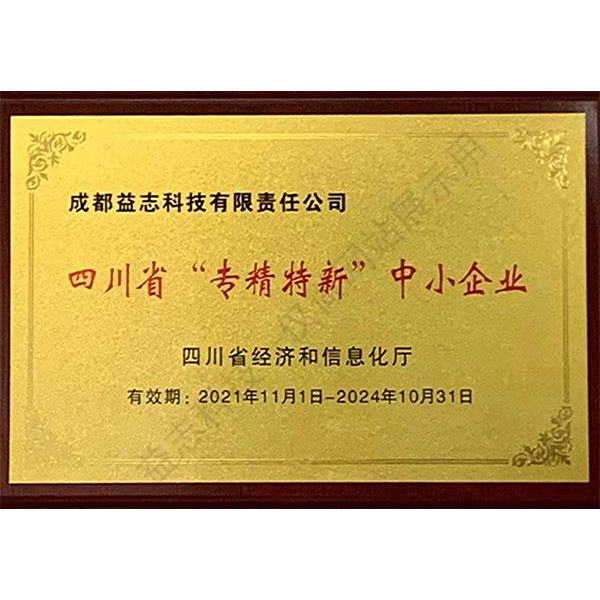
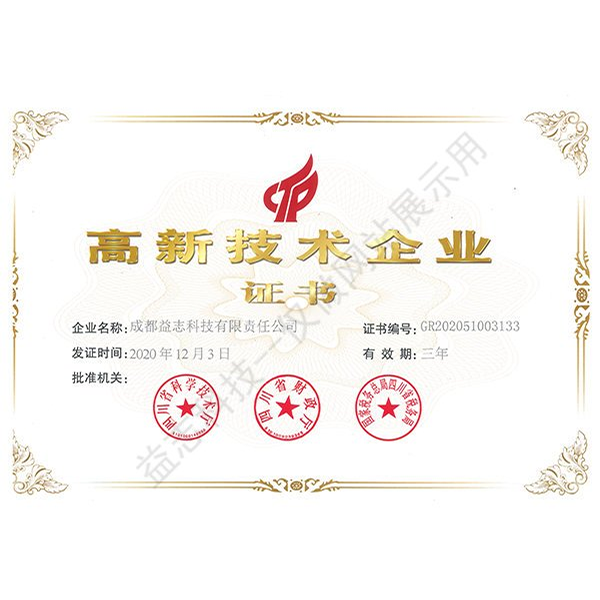
But where it gets really interesting is modified and synthetic materials. Chinese scientific groups, especially those associated with large chemical holdings, are actively working on targeted pore design. I won’t talk about patents, but, for example, the same Chengdu Yizhi Technology Co., which is a design institute of the Huaxi group, does not just sell adsorbents. They often come from a task: you need to capture a specific volatile organic component at high humidity. They can offer not standard coal, but a composite based on it with a hydrophobic modification. This is no longer a commercial product, but engineering.
MOFs (metal-organic frameworks) and covalent organic frameworks (COFs) are a separate discussion. In scientific articles, China is the leader in publications. But commercialization is a different world. There are several startups trying to bring MOFs to market for hydrogen storage or CO2 capture. For now, this is a piecemeal, expensive product, more for pilot installations. But the very fact that they are no longer in the laboratory, but are trying to scale the synthesis to hundreds of kilograms, speaks volumes. I think that in 5-7 years they will begin to displace traditional materials in high-margin niches.
Market: between price war and premium segment
The adsorbent market in China is a classic pyramid. The basis is a huge number of small factories that make activated carbon from coconut shells or coal, simple zeolites. Their weapon is price. They flood Alibaba and other B2B platforms with offers. Working with them is like playing Russian roulette. The consistency may fluctuate from batch to batch, and the certificates are often fake. But for unpretentious applications, where you can often change the load, they are taken.
The middle segment consists of more reputable manufacturers, often with their own raw material bases (mines, plantations) and at least a basic QC laboratory. They can already provide the stable characteristics required for industrial processes: abrasion resistance, particle size distribution, static capacity. This is where you can build long-term relationships. Many of them are actively developing exports, creating websites in Russian, such ashttps://www.yzkjhx.ru– this is just a platform for the design institute to enter the CISChengdu Yizhi Technology Co., which already indicates the seriousness of intentions. This is not just selling bags, this is an attempt to come up with engineering solutions.
The top are companies that are integrated into the full cycle: from R&D and design of installations to the production of sorbents for them. Huaxi Technology, the parent company of the mentioned institute, falls into this category. They have a registered capital of 120 million yuan - this is not a simple factory, this is a technology holding. They sell not just an adsorbent, but a working separation or purification technology, where the sorbent is a key, but not the only component. Their clients are large chemical, oil and gas, and pharmaceutical enterprises. Price competition here is minimal; they compete on efficiency and reliability.
Technological driver: ecology and green trends
The main growth driver for high-quality adsorbents in China now is environmental legislation, which is being tightened by leaps and bounds. The plant cannot simply release solvent vapors into the atmosphere. You need to catch it. And this is where the room for maneuver begins. Old methods such as simple absorption are not always effective. Adsorption on purposefully selected materials is often the best option.
I have seen many projects to capture VOCs (volatile organic compounds) in paint and chemical industries. Chinese engineers often propose hybrid schemes: concentration on cheap zeolite, and then additional purification on special activated carbon with a given porosity. The key point is the correct calculation and selection of the adsorbent-desorbent pair. An error in selection leads to a sharp increase in operating costs due to high energy costs for regeneration.
Another trend is CO2 capture. So far, mainly pilot projects at thermal power plants or cement plants. Both amines and, of course, adsorbents are tested. Chinese developments in the field of amine-containing mesoporous silica or the same MOFs are very active here. While the economics of the process are poor, government grants are spurring research. I think that it is in such green niches that the next qualitative leap in adsorbent technology will occur.
Export and perception abroad
How are Chinese adsorbents perceived outside China? The stereotype of cheap and cheerful is still strong, but it is eroding. There is a large flow of standard products to the countries of Southeast Asia, the Middle East, and Africa. But they make their way into difficult markets, such as Europe or America, either through a very aggressive price (which often causes anti-dumping investigations) or through a demonstration of real technological advantages.
An interesting tactic is the creation of design and engineering departments that work directly with the customer. Example withChengdu Yizhi Technology Co., Ltd.indicative. This is not just a business card website. This is a tool for attracting complex projects that require calculation, selection, and possibly development of material for the task. For the CIS markets, where there is an understanding of the importance of the fundamental approach, but also sensitivity to price, this model is a compromise between technology and cost.
What problems does export face? The first is logistics. Adsorbents are often fragile, afraid of moisture, and they are transported by sea. It has to be packaged in multi-layer bags with desiccant, which increases the cost. The second is trust. To win it, companies take potential clients to factories, show laboratories, and test benches. Without this, a major contract cannot be concluded. The third is adaptation. A material that works ideally under the conditions of the raw material flow of a Chinese refinery may behave differently at a Russian enterprise due to impurities. Adaptation is needed, and these are additional tests.
A look from the inside: pitfalls and the future
If you decide to purchase adsorbents in China, get ready for detailed work. The request for activated carbon 4 mm is a path to nowhere. You need technical specifications: raw materials (coconut shell, coal, wood?), ash content, iodine number, hardness, bulk density, fractional composition. And demand test reports from an independent laboratory. It’s better to come and take a sample for testing yourself.
The future, in my opinion, lies in further segmentation. There will be fewer and fewer universal soldiers-adsorbents. There will be a growing demand for materials with intelligence - high selectivity for a specific molecule, resistance to toxic impurities, with the possibility of repeated regeneration without loss of capacity. And here, Chinese companies, with their strong research base and ability to quickly scale, have every chance.
The result is simple. The Chinese adsorbent market is not a monolith. This is a wild mixture of outdated technologies and breakthrough developments, price dumping and high-tech solutions. You can understand it only by immersing yourself, asking the right questions and understanding what is behind the company name: a repacking workshop or, as in the case ofChengdu Yizhi Technology Co., a design institute with a registered capital of RMB 120 million, capable of technology partnership. The choice determines not only the price per ton, but also the success of the entire project where this adsorbent will work.