Chinese adsorbents: where are they used?
2026-01-02
When people talk about Chinese adsorbents, many people immediately think about cheap silica gels in small shoe bags. This is, of course, funny. The real picture is much deeper and more serious. I have been working with materials for separation and purification for ten years, and during this time Chinese manufacturers have gone from simple suppliers of raw materials to developers of solutions for complex technological problems. Now their products are not just “activated carbon”, but entire lines for specific processes: gas dehydration, hydrogen purification, organic vapor capture, even fine finishing in pharmaceuticals. But there are also plenty of pitfalls - not every declared “molecular sieve” indeed he is. Let's go in order.
Not only silica gel: the main range of materials
Let's start with the basics. If previously they imported mainly aluminum oxide and simple silica gels from China, now the range is amazing. Zeolites are actively being developed, especially for drying and separation. And not just 4A or 13X, but modified ones, with selected pore sizes. I have seen samples that, in terms of capacity for acetone or toluene, are not inferior to their European counterparts, and in price - one and a half to two times lower. The key word here isstability. Batch to batch must be the same, otherwise the technological regime will “float”.
A separate story is carbon molecular sieves and activated carbons of a specific structure. The Chinese learned to make them from various raw materials: coconut shells, coal, even bamboo. Everyone has their own profile. To capture benzene, for example, one porosity is needed, for methane - another. Often suppliers send catalogs with adsorption isotherms for dozens of substances - this is already a level. But you can’t blindly trust these graphs; you always ask for a trial batch for testing.
And one more point that many people miss is the form factor. In addition to standard beads and tablets, it is now possible to order special profile rotary adsorbents for rotary volatile organic compound (VOC) concentrators, or, for example, granules with increased mechanical strength for pressure swing applications (PSA). This suggests that manufacturers no longer just make powder, but understand in which apparatus their material will work.
Key Applications: From Petrochemicals to Electronics
Where does all this business actually work? The largest volume, of course, is in the oil and gas and petrochemical industries. Dehydration of natural gas before transportation is a classic. Mainly used heremolecular sievesor aluminum oxide. Chinese materials have taken root well here, especially in fields in Asia and Africa, where price is a critical factor. But there is a nuance: with a high content of hydrogen sulfide, some cheap adsorbents quickly lose their capacity and are “poisoned”. You need to look at the specification.
The second major niche is chemical production. Purification of hydrogen-containing streams in hydrotreating units, separation of normal paraffins from hydrocarbon fractions, drying of ethylene or propylene before polymerization. Here the requirements for cleanliness are prohibitive. I know of a case where at one Russian polypropylene production plant they could not reach a stable quality of raw materials for a long time. The problem turned out to be traces of moisture. We switched from European zeolite to a Chinese analogue with a slightly narrower pore distribution - the problem went away, and the cost of loading decreased by 40%. They took a risk, but it worked out.
And the third segment, growing by leaps and bounds, is ecology and renewable energy sources. Adsorption units for capturing gasoline vapors at gas stations, purifying emissions from VOCs in paint and varnish industries, and drying biogas. Hybrid loadings are often used here: a layer of silica gel, a layer of activated carbon. Chinese suppliers here often offer ready-made technological schemes, which is convenient for small projects.
Practical difficulties and how to avoid them
Now about the sad stuff. The biggest risk when working with Chinese adsorbents is the discrepancy between the stated characteristics and the actual ones. It happened that you received a sample - excellent results. You order an industrial batch - and that’s it, the adsorption capacity is 15-20% lower. Apparently, in the laboratory they use selected raw materials, but in the workshop they use the “hospital average”. Therefore, now we always specify in the contract not only the passport data, but also the test methodology by which we will check the goods at acceptance. It is better if according to ASTM or GOST (if the project is for the CIS).
Another common problem is dusting. An unscrupulous manufacturer saves on the granule hardening stage. As a result, after loading into the adsorber, there is a lot of dust in the first weeks, and the filters become clogged. You have to do frequent purging. Now we always require data on attrition loss and insist on providing a certificate of analysis from the exact production line from which the supply will come.
Logistics are a separate headache. Adsorbents are hygroscopic material. If it is transported in a container without proper moisture protection, you can end up with a lump of sticky granules. A trusted supplier always packs the material in multi-layer bags with a polyethylene liner and a moisture indicator. Once we received a shipment where half of the bags were torn. We had to urgently organize drying and sifting. Lesson learned.
Case: working with a design institute
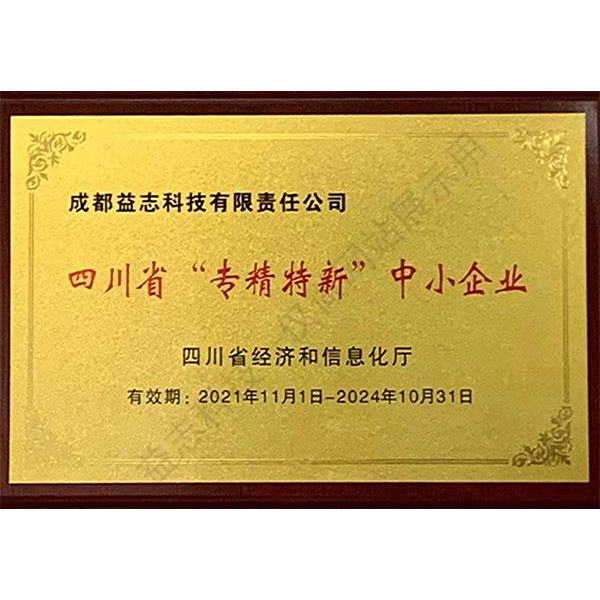
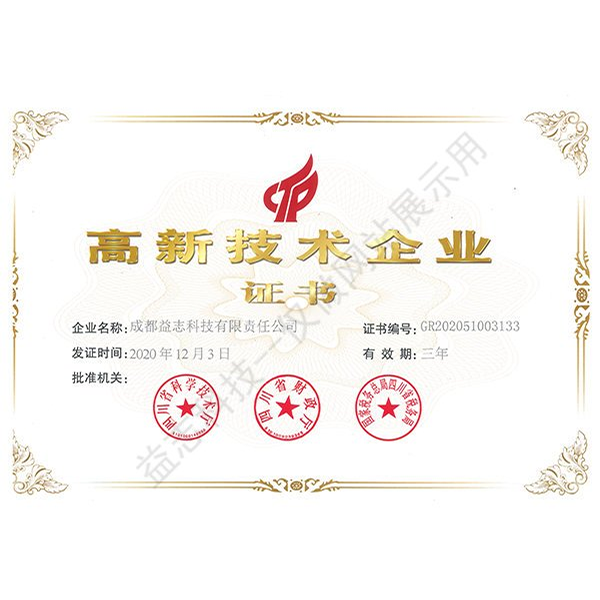
In recent years, it has become more common to encounter the fact that behind the materials there is not just a trading company, but a serious engineering company. This changes things. As an example, I can giveChengdu Yizhi Technology Co.This is, in fact, a design institute created by a chemical company. Their websiteyzkjhx.rumade for the Russian-speaking market, which already speaks of intentions. They don’t just sell bags of zeolite, but offer adsorber calculations, process flow diagrams, and selection of materials for a specific gas mixture.
We worked with them on a compressed air drying project for a food production facility. It was necessary to achieve a dew point of -40°C. They sent not just a commercial offer, but a detailed calculation: what height the layer should be, what the flow rate is, what brand of zeolite is suitable for them, and a forecast for replacement. Moreover, they recommended not the most expensive brand, but the one that is optimal in terms of resource and price. After startup, the installation reached its parameters the first time. This is an indicator.
Companies likeChengdu Yizhi Technology Co., Ltd., with a registered capital of 120 million yuan, is no longer a handicraft company. They invest in R&D and have their own adsorption testing laboratories. You can discuss modification of the material with them, for example, increasing the capacity for a specific substance. This is already a level of partnership, and not just “buy and sell”. For complex problems, this is the only right way.
Looking Ahead and Final Thoughts
Where is everything going? I see a trend towards specialization. There will no longer be an “adsorbent for everything”. There will be materials tailored for a specific molecule: for capturing CO2 from flue gases, for selective separation of xylenes, for purifying medical oxygen. Chinese manufacturers are actively joining the race here because they have a strong research base and relatively cheap testing resources.
One more point - are they “smart”? adsorbents whose properties can be slightly changed (for example, using temperature or a weak electric field) for regeneration. For now, these are laboratory developments, but Chinese scientific articles on this topic appear regularly. I think in 5-7 years we will see the first commercial samples.
So, to sum it up. Chinese adsorbents are no longer a horror story and not a one-time economical option. This is a wide range of materials for different tasks, from rough drying to high purification. The key to success is choosing not by price, but by technical compliance. Find a trusted supplier who is willing to provide complete data, test samples and technology support. Like the sameChengdu Yizhi Technology. Then the risks are minimized, and the economic effect can be very significant. The main thing is not to be afraid to try, but to do it wisely and with a full set of documents on the table.