Chinese adsorbents: technologies and market?
2026-01-02
When people talk about Chinese adsorbents, many people immediately think of cheap silica gel or activated carbon in bags. This is, of course, reality, but only the tip of the iceberg. Much more interesting is what happens below the surface - where technologies are no longer just “catching up”, but in some niches they are setting the tone. And the market here is not abstract numbers, but specific plants that could make a catalyst base yesterday, and today reorient themselves to zeolites for medical oxygen, because demand has soared. I’ll try to break down what it looks like from the inside, with the reservations and doubts that always exist in real work.
Technological landscape: not just copying
Yes, basic technologies were actively borrowed. But about ten years ago a qualitative shift began. We are not talking about scientific breakthroughs in academic institutions (although this does exist), but about applied engineering in production. Chinese engineers have learned to modify installations very flexibly. A standard molecular sieve production line can be quickly converted from 13X to 5A or even LiLSX if the contract requires it. This is not magic, but often the result of trial and error - I know cases when, due to the desire to save money at the sintering stage, they received a batch with strength below any criticism, then spent months sorting it out.
The key point is working with raw materials. Local kaolins, bauxites, and diatomites vary greatly in composition from region to region. Therefore, there is no single recipe. Each major manufacturer “licked” it for itself. cleaning and preparation technology. For example, for high-silica zeolites such as ZSM-5, stability of parameters is a constant headache. One batch may show excellent adsorption capacity for toluene, while another may “float”. And often the reason is not in synthesis, but in microimpurities in water or alkali. This is rarely noted in reviews, but in practice it makes all the difference.
A separate story is the functionalization and creation of composites. Here Chinese laboratories and pilot industrial sites are really active. Coatings based on metal-organic frameworks (MOFs) on activated carbon supports, hybrid materials for the selective removal of heavy metals from wastewater—patents are pouring in like a cornucopia. But commercialization is difficult. Beautiful laboratory data is limited by the cost of precursors and scaling. I saw a project on an adsorbent for capturing mercury vapor at coal-fired thermal power plants - in the pilot installation everything was perfect, but with an increase in volume by 100 times, the sorption kinetics dropped sharply. I had to revise the entire geometry of the adsorber.
Market: price pressure and search for niches
The adsorbent market in China is a classic story of gigantic volume and fierce competition. The price per kilogram of basic activated carbon can be indecently dumped. Those who survive are those who go either into ultra-pure varieties for pharmaceuticals and electronics, or into complex custom solutions. It’s not the price that matters here, but compliance with specifications and technical support.
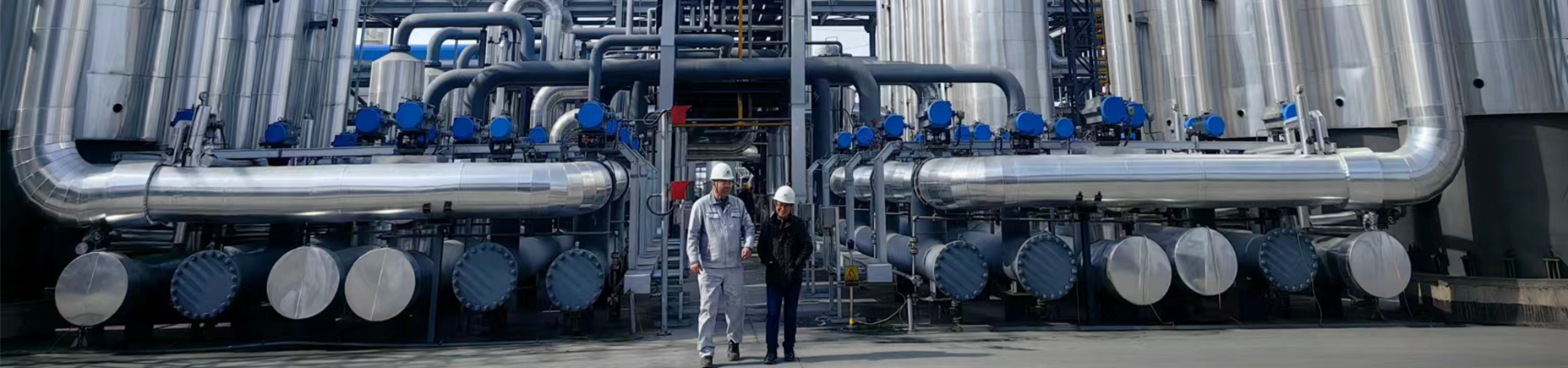
An interesting trend in recent years is the consolidation and emergence of full-cycle players. They control everything: from the extraction of raw materials (their own coal mines or kaolin quarries) to the design of turnkey adsorption plants. This is a game changer. The client does not buy bags of powder, but a guaranteed result in terms of gas purity or degree of dryness. This approach requires not just salespeople, but serious engineering teams.
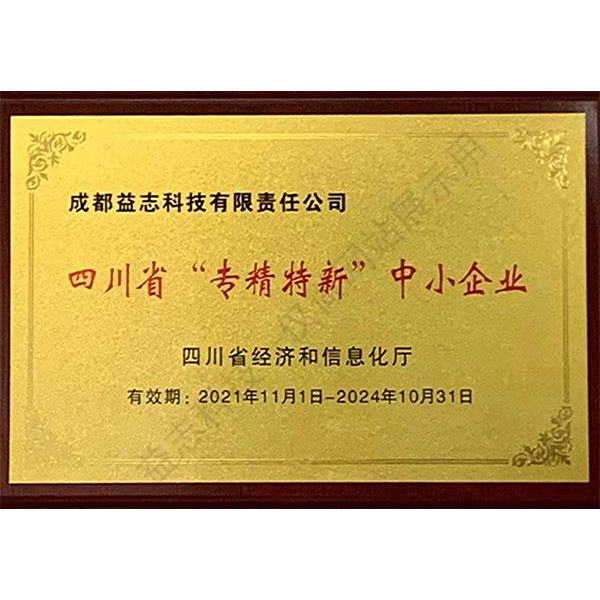
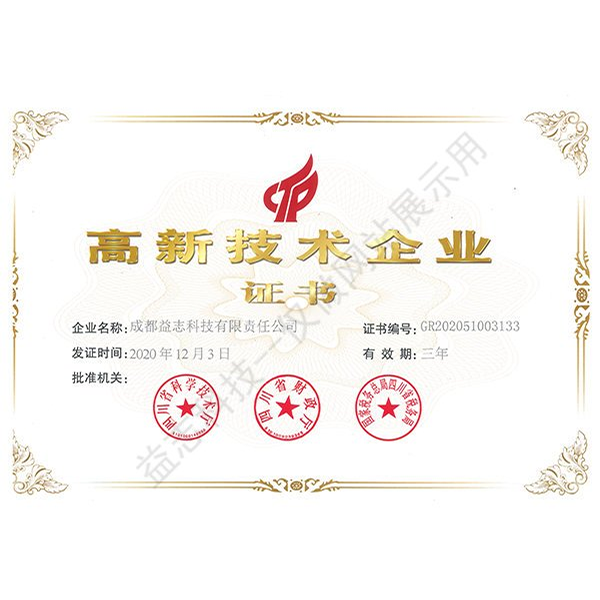
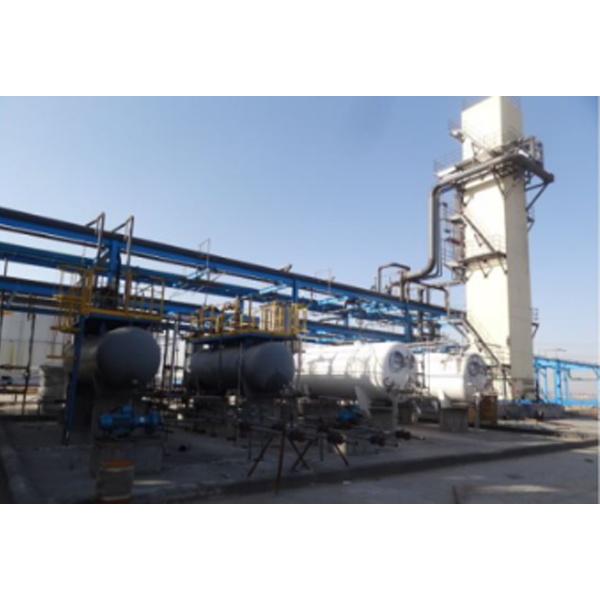
Just an example of such a structure isChengdu Yizhi Technology Co.This is not just a plant, but a design institute created by a chemical company. Their websiteyzkjhx.rufocused on the Russian-speaking market, which in itself is significant - they are purposefully entering complex projects in the CIS. The registered capital of 120 million yuan is a signal of serious capacity and, more importantly, investment in R&D. Such companies do not sell goods from Alibaba. Their product is a technology in the form of a specific adsorbent, designed to meet the parameters of the customer’s specific technological process.
Export and perception abroad
Exporting is not easy. Europe and the USA have their own leaders like BASF or Grace. It is almost impossible to break into the market for standard products. Therefore, Chinese exports follow two paths. The first is substitution in the countries of Asia, Africa, and the Middle East, where price matters. The second, more subtle way is the supply of specific products that large Western players make in small batches or not at all.
For example, zeolites for adsorption refrigerators or special desiccants for transformers. Here Chinese manufacturers can offer a very competitive price-quality ratio. But the trust barrier is high. It takes years to prove stability, conduct tests in independent laboratories, and provide access to production. I remember how, for one project in Kazakhstan, three pilot batches of adsorbent for drying natural gas had to be shipped before a long-term contract was signed. Each batch was tested inside and out.
Another point is logistics and packaging. Adsorbents, especially activated ones, are hygroscopic. Poor-quality multilayer packaging can kill the entire shipment during sea transportation. I had to learn the hard way: now many serious suppliers use vacuum packaging with a violation indicator and a mandatory desiccant. This is a small thing, but it is critical to maintaining the potency of the product.
Raw material base and ecology
China's strength is access to its own raw materials. Charcoal, rice husk, bamboo for activated carbons; rich deposits of kaolin and diatomite. This allows you to control costs. However, this is also where the main problem of the last decade lies - environmental pressure. Many small activated carbon plants, using outdated furnaces without flue gas cleaning systems, have been closed.
This, oddly enough, benefited the market. The remaining players were forced to upgrade. Now modern production is not just a reactor and a furnace. These are closed water cycles, heat recovery from reactivation, and systems for capturing volatile compounds. Yes, this increased capital costs, but it allowed us to reach higher standards of purity of the product itself. For the same pharmaceutical or food activated carbon, the ash content and content of heavy metals are now controlled at a level comparable to the best global manufacturers.
An interesting side effect: tightening emission standards at consumer enterprises themselves (metallurgy, chemistry) has created a huge domestic market for adsorption purification systems. And here demand creates supply - many developments of zeolites and coals, specifically “sharpened”, have appeared. for the capture of sulfur dioxide, nitrogen oxides, volatile organic compounds. These are no longer universal sorbents, but highly selective materials, and their development is precisely the area where Chinese technologists are now very active.
Looking to the future: which way is the wind blowing?
If you try to look ahead, several vectors are obvious. The first is further specialization. There will be fewer and fewer universal adsorbents. There will be increasing demand for materials with programmed properties: for example, to extract lithium from brines or to capture CO2 from specific production streams. Here, synthesis technologies and computer structure modeling will play a key role.
The second vector is integration. As I already mentioned in the exampleChengdu Yizhi Technology, the future belongs to companies that offer not a product, but a technological solution. This means close work with the client at the design stage, development of adsorbents for a specific column and specific regeneration mode, and service. These are long and complex projects, but they create strong barriers to entry for competitors.
And the third, perhaps most important point is energy efficiency. The most advanced adsorbent is useless if its regeneration requires enormous amounts of steam or electricity. Therefore, more and more research is aimed at materials with a reduced heat of adsorption, on the development of hybrid processes such as TSA/PSA (temperature-pulse/pressure-pulse adsorption), allowing for savings. In this, by the way, Chinese engineers are very strong - in optimizing processes, in “squeezing out” the last percent of efficiency from the installation. This is not always noticeable from the outside, but it is this that often becomes the decisive argument in the fight for a contract.
So, returning to the initial question... Chinese adsorbents are no longer a topic for jokes about low quality. This is a complex, multi-level market with a gigantic volume, fierce competition that forces us to constantly move forward, and with the emergence of players capable of discussing complex engineering problems on an equal footing at the international level. Another thing is that it is almost impossible to understand this diversity without direct contact and without understanding a specific technological task. General reasoning does not help much here. You need to look at the specifications, request samples for tests and be prepared for a long dialogue.