Chinese adsorbents: technologies and applications?
2025-12-31
When people talk about Chinese adsorbents, many people immediately think about cheap activated carbon in bulk. But this is just the tip of the iceberg, and such a simplification greatly interferes with truly assessing what is happening in this market now. Over the past ten years, Chinese manufacturers have made a serious leap from simple sorbents to complex functional materials, and this process is not always linear - it has its own dead ends and unexpected breakthroughs.
From "powders" to structures: evolution of technology
Previously, the main product was indeed powder and granular adsorbents based on carbon or zeolites. Technology was often ?imported? or adapted. Now the focus has shifted towards control over the porous structure. We are not just talking about the specific surface area, say, 1000 m2/g, but about how micropores and mesopores are distributed. Chinese laboratories have learned to manage this process quite well for zeolites such as ZSM-5 or 13X, selecting the gel composition and crystallization conditions for a specific task - say, for drying natural gas with a high CO2 content.
But here lies a common mistake when choosing. Do you see in the specification “high adsorption capacity?” on nitrogen, but in practice the material in the real process, for example, when cleaning organic vapors with high humidity, “chokes”. Because that same capacity was achieved due to the pores, which are the first to fill with water. I had to deal with it from my own experience - they purchased a batch, it would seem, according to excellent passport data, but the efficiency dropped by half. It turned out that the manufacturer optimized the material for “dry” conditions. laboratory tests.
A separate story is the synthesis of carbon molecular sieves (CMS). Chinese companies, especially those that grew out of research institutes, have made major strides here. They can quite accurately calibrate the pore size at a level of 0.3-0.9 nm, which is critical for the separation of, for example, nitrogen and oxygen. But the technology is capricious: the slightest deviation in the carbonization temperature or the composition of the precursor - and the entire batch is rejected. I know of one plant in Shandong that spent three years bringing this process to stability, losing a bunch of raw materials.
Key Applications: Where They're Really Strong
If previously the main exports went to metallurgy or for simple water purification, now the niches have become much thinner. One of the growth points ispetrochemistry and gas processing. Chinese zeolites for the recovery of para-xylene or the separation of normal and iso-paraffins are no longer copies, but often materials with modified properties, for example, with increased resistance to sulfur poisoning. They are actively used at domestic refineries.
Another promising direction isenvironmental protection, but not in a general sense, but specifically the capture of volatile organic compounds (VOCs) from complex multi-component streams. Here, impregnated carbon fibers and specific polymer sorbents are combined. The efficiency is high, but there is a nuance with regeneration. Some composite materials after 5-7 cycles of steam-heating lose structural integrity and begin to gather dust.
It is interesting to observe the development of adsorbents for the electronics industry - for drying and purifying inert gases used in the production of chips. The requirements are prohibitive. Chinese manufacturers are not leaders yet, but there are already several companies whose products are being qualified at second- and third-tier factories. It is a matter of time and investment in cleaner production.
Practical aspects of choosing and working with materials
Working with these materials, you understand that a passport is just the beginning of a dialogue. Dialogue with the manufacturer’s technologists is critically important. It’s a good sign when they start asking clarifying questions about the flow composition, temperature, pressure, cycle. If they simply throw out a price list, this is an alarm bell.
One of the practical lessons is mechanical strength. Chinese granular adsorbents often “lost” in the early 2010s. on abrasion and crushing. Now the situation is better, but it is necessary to check. We once placed zeolite in a tall adsorber with frequent pressure cycles. After six months, the pressure drop increases. Upon opening, it was discovered that the lower layers had turned into fine particles and dust. The manufacturer then corrected the mistakes by adding a stage of special hardening of the granules.
Another point is packaging and logistics. A high-quality adsorbent is hygroscopic. A bag with an incorrect or damaged inner layer can result in the material arriving with high humidity and will have to be dried before loading, which is not always convenient. This seems like a small thing, but in the field it creates a lot of problems.
The role of specialized institutes and companies
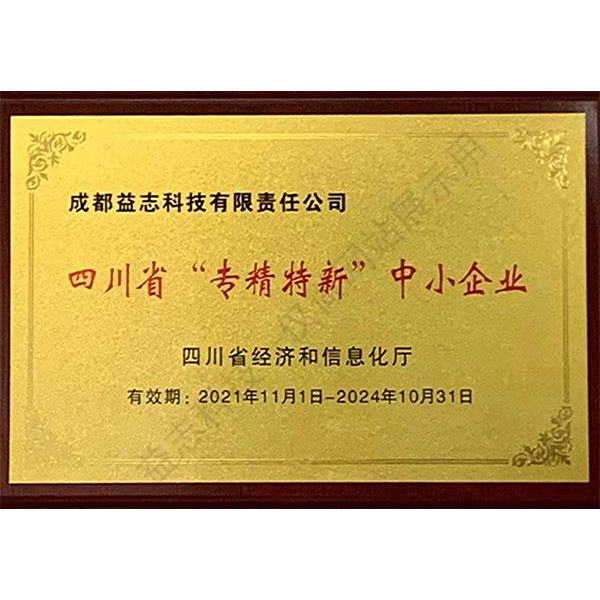
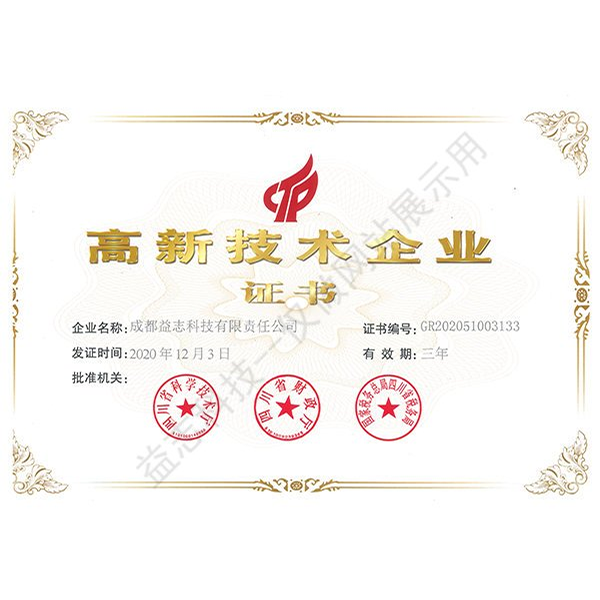
The driving force behind progress was not giants, but highly specialized design and technology companies, often spun off from universities or government research centers. They are more flexible and ready to develop for a specific order. Just an example of such a structure isChengdu Yizhi Technology Co.It is a design institute established on the basis of Chengdu Huaxi Chemical Technology Co. Judging by their activities and portfolio on the siteyzkjhx.ru, they focus not on mass production, but on engineering and developing solutions using adsorption technologies, including PSA (pressure-driven adsorption) and TSA (temperature regenerative adsorption).
Such institutes usually have their own research base and pilot facilities. They may offer not just to “buy zeolite,” but to work out the entire technological scheme: selection of sorbent, calculation of adsorbers, regeneration modes. This is an important transition from selling a product to selling a solution. For the end customer, especially when creating a new production, this approach is often preferable.
According to the information,Chengdu Yizhi Technology Co., Ltd.was founded in 2013 with a registered capital of 120 million yuan, which shows the serious intentions and support of the parent company. Such organizations often act as a bridge between basic research at academic institutions and industry, developing laboratory samples into commercial products.
Looking to the future and current challenges
Where is everything going? An obvious trend is hybrid and multifunctional materials. For example, an adsorbent catalyst that not only captures a substance, but also decomposes it in situ during regeneration. Chinese researchers actively publish in this area. The second is increasing selectivity for complex mixtures, which requires delving into supramolecular pore design.
The main challenge, in my opinion, is not technological, but reputational. After the era of “cheap and cheerful” It takes a long time to prove the stability of quality and reliability batch after batch. This is a matter of production discipline and control system. Those companies that have invested in this have already taken the lead.
And the last thing is the ecology of production itself. The methods for synthesizing some adsorbents themselves can be quite “dirty”. Pressure from both domestic regulation and international customers is growing. Therefore, the future belongs to those who can combine high product characteristics with green principles of its production. This is perhaps the next frontier for the entire industry.