Chinese adsorbents: technologies and applications?
2025-12-31
When people talk about Chinese adsorbents, many people immediately have the image of something cheap and of average quality. This is perhaps the biggest stereotype we come across. In reality, everything is much more complicated and interesting. Yes, there is a segment in the low price range, but where specific properties, batch stability or work under harsh conditions are required, Chinese manufacturers have long been not just copying, but offering their own, sometimes very effective, solutions. I’ll try to sort it out based on what I saw and what I worked with.
Evolution from silica gel to zeolites and carbon fibers
It started, of course, with the classics - silica gels and active carbons. Early deliveries often suffered from instability: one batch had 2% moisture content, another – all 5%, which is death for some processes. But about 10 years ago the situation began to change dramatically. The key driver, in my opinion, was the development of China’s own chemical and oil and gas industries, which required adsorbents for specific technological chains.
The breakthrough in the field of modified zeolites has been particularly impressive. We are not talking about simple molecular sieves 4A or 13X, but about purposefully “sharpened” ones. for the separation of xylene isomers or purification of gas streams from specific sulfur compounds. I saw laboratory reports on materials from Shandong province - the selectivity was at the level, and the price was 20-30% more profitable than European analogues. True, there were problems with scaling back then: a laboratory batch was one thing, and an industrial batch was another; it could “float?” mechanical strength.
Nowadays, the direction of fiber-based carbon adsorbents is being actively developed. They have a huge surface area and high adsorption kinetics. But here Chinese manufacturers are faced with a classic problem - the reproducibility of porous structure parameters from batch to batch. I know of a couple of cases when a customer from Russia, working in the field of solvent recovery, received two batches with different dynamic capacities. It took a long time to figure it out, but it turned out that the supplier had changed the raw material (the precursor for the fiber). This is a common pain for many, not only Chinese ones, but due to the scale of production, such risks are higher for them.
Application: where they are really strong, and where you should think about it
To generalize, Chinese adsorbents today are not a “panacea everywhere”, but rather a “very strong player in certain niches”. They perform well in large-scale processes, where the overall economics of the project is important, and not the extreme characteristics of the material. For example, dehydration of natural gas or air on an industrial scale. Zeolites and silica gels for these purposes are produced in colossal volumes, the technology is well-established, and the price per ton is very competitive.
Another strong point is the willingness to work on customization. Unlike large Western concerns, which often offer a catalog of 10-15 standard products, many Chinese factories, especially engineering companies, are open to dialogue. Let me give you an example: an adsorbent was needed to remove vapors of a certain ether from emissions. Standard coals were not very suitable in terms of kinetics. We contacted one enterprise in Chengdu through intermediaries. They sent three variants of promoted coals for testing. As a result, we selected an option that solved the problem. Yes, the approval and testing process took three months, but the result was worth it.
But for high-precision analytical applications or in pharmaceuticals, where ultra-high purity and documented traceability of each stage of adsorbent production are required, I would still recommend it with caution. Not because they cannot do it cleanly, but because the system of quality control and, more importantly, documentary evidence of this quality, is often built to meet the needs of the domestic market. Compliance with GMP or similar strict standards is not yet a mass practice, but rather an exclusive thing that needs to be looked for separately and paid for separately.
Production technologies: what's inside the ?black box?
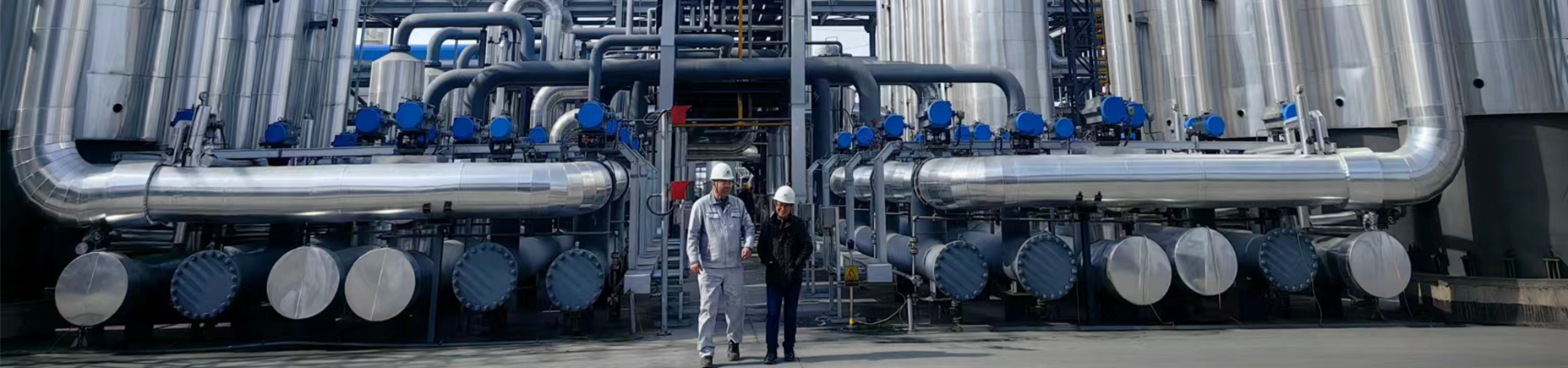
From a technological point of view, progress is obvious. If previously the main emphasis was on volume, now many serious players are investing in process control. I saw modern coal activation lines - control of temperature, steam, and holding time is fully automated. This gives stability. But there is a nuance: raw materials. The quality of the same coal or coconut charcoal from which the precursor is made may vary. Therefore, the best manufacturers strive to control the entire chain, from raw materials to packaging.
An interesting trend is hybrid and composite adsorbents. For example, impregnation of zeolites or coals with oxide nanoparticles to increase selectivity to heavy metals or specific organic molecules. This is no longer just adsorption, but chemisorption. Chinese research institutes are very active here and publish patents regularly. The question, as always, is commercialization: going from grams in the laboratory to tons in the factory is a huge distance.
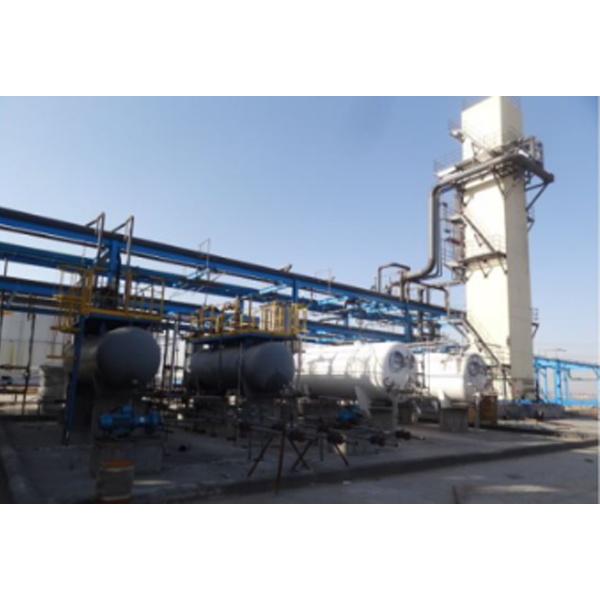
It is worth mentioning separatelyadsorbentsfor PSA (pressure-strained adsorption) systems. The requirements for them are the most stringent: in addition to high capacity, they need phenomenal abrasion resistance, since compression-expansion cycles occur constantly. Chinese manufacturers have greatly improved in this segment over the past 5-7 years. There are materials that work successfully in air separation plants (production of nitrogen, oxygen) for 5-7 years without significant degradation. The secret is often in the binders and pellet forming methods.
Practical aspects of working with suppliers
There's no water here. First and foremost, never work “blindly”. Order according to specification ?like last time? may turn out to be a surprise if the supplier has changed technologist or source of raw materials. Be sure to request a passport with specific data for the batch: not just “specific surface area ~1000 m2/g,” but the exact value, determination method (BET for nitrogen or something else), particle size distribution, bulk density, ash content. The best providers provide this data seamlessly.
The second is test samples. Always insist on receiving a sample batch (5-10 kg) to carry out your own or accredited laboratory testing under conditions as close as possible to your process conditions. This is especially critical for dynamic adsorption. A material may have excellent static performance, but exhibit too much flow resistance or premature breakthrough in the column.
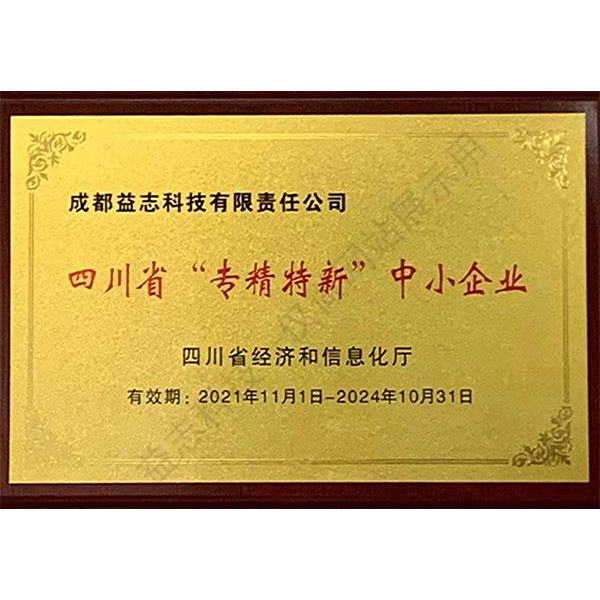
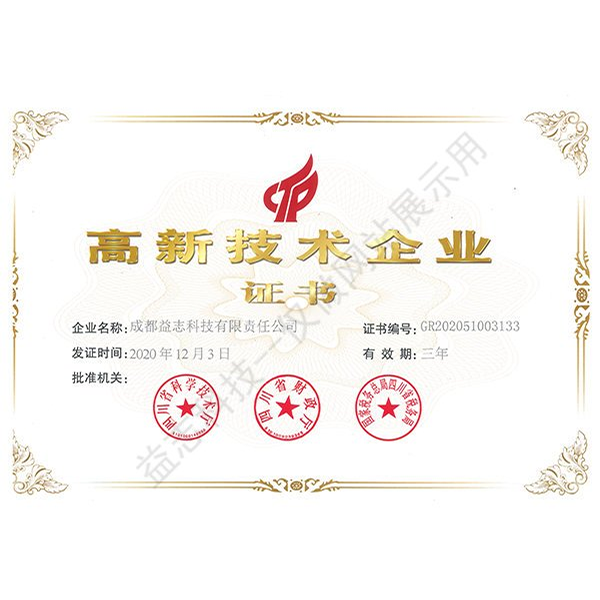
And third - logistics and packaging. It would seem like a small thing. But how many times have I seen an excellent adsorbent arrive in torn bags, wet or compacted into a monolith due to improper packaging. This negates all of its properties. Be sure to specify the type of packaging (multilayer bags with a polyethylene liner, big bags), storage and transportation conditions. Reliable partners understand this. For example, when working with an engineering companyChengdu Yizhi Technology Co.(a design institute established by Chengdu Huaxi Chemical Technology Co., Ltd.), noticed that they pay special attention to this point, which is logical for an organization with a registered capital of 120 million yuan and experience in complex projects. Their websiteyzkjhx.rumay be useful for an initial understanding of their competencies in the field of adsorption technologies and more.
Looking ahead and personal conclusions
Where is everything going? In my opinion, the main trend is intellectualization. Not just selling a bag of granules, but providing a comprehensive solution: calculating the adsorber, selecting the optimal material for a specific mixture, modeling the process, service. In this, Chinese companies, especially such as the aforementioned Yizhi Technology, are becoming increasingly stronger, adopting the world's best practices in the project approach.
Another vector is ecology. Demand for effectiveadsorbentsfor volatile organic compound (VOC) capture and wastewater treatment will only increase. And here Chinese manufacturers have an advantage - they can quickly scale up the production of materials that have shown effectiveness in pilot projects.
I sum it up. Chinese adsorbents are no longer just a cheap alternative. This is a wide range of products at different levels - from budget workhorses to high-tech, competitive materials. The key to successfully working with them is careful selection of a supplier, deep technical communication and mandatory testing. You can’t blindly trust the catalogue, but discounting this market is a big mistake. Sometimes this is where the most economically feasible solution for a complex industrial problem comes from.