Chinese adsorbents: technologies and market?
2025-12-31
When you hear “Chinese adsorbents?”, the first thing that comes to mind for many is cheap silica gel or activated carbon in bags, something basic and mass-produced. This is perhaps the most enduring stereotype. In fact, if you dig deeper, the picture is much more complex and interesting. Yes, the voluminous low-tech segment has not gone away, but in parallel, ten years later, a completely different story has been developing - with a focus on specific tasks and even attempts to set trends. I went through this myself when I was looking for materials for a complex gas drying system: standard proposals were not suitable, and Chinese engineers from one provincial laboratory suddenly rolled out a prototype of zeolite with modified porosity, which in terms of selectivity was superior to its then European analogues. True, there were questions then about the reproducibility of parameters from batch to batch, but the fact itself made us look at the industry differently.
Evolution is not for show: from raw materials to formulas
Previously, everything depended on access to good raw materials - kaolin, bauxite. The quality of the adsorbent was determined primarily by the purity of the source. Now the vector has shifted. Keyword -formulaand the activation/modification process. The same base material can be “stretched” for different characteristics. I saw how at one plant in Shandong two lines of products were made from fairly average-quality coal: a cheap sorbent for wastewater treatment and a much more expensive one, with a precisely calibrated mesoporous structure, for the recovery of volatile solvents in pharmaceuticals. The difference is in temperature, steam activation and subsequent rinsing. The technology is not space-age, but the know-how is in details and control.
This is especially noticeable in the segment of molecular sieves (zeolites). Chinese manufacturers have long mastered the synthesis of common types (A, X, Y), but are now actively working on modifications - ion exchange, the introduction of specific cations to increase selectivity for specific molecules, for example, for water in the presence of CO2. This is no longer copying, but adaptation to market demands. True, there is a nuance: fundamental research into new zeolite structures still more often comes from the USA or Europe, and Chinese companies brilliantly commercialize them and optimize them for large-scale production.
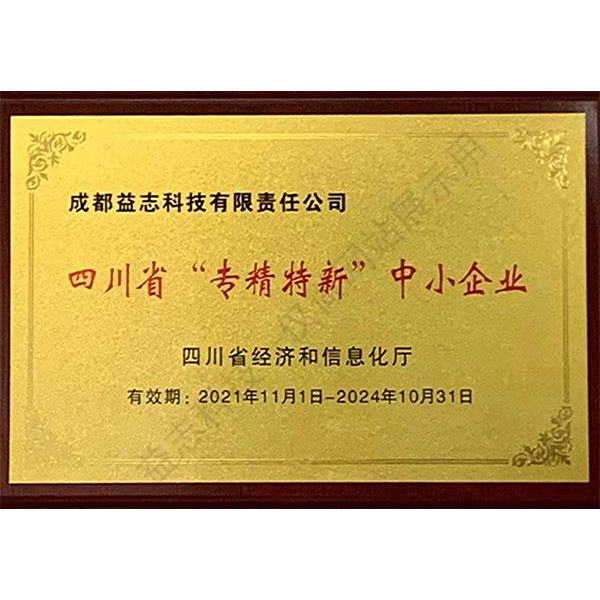
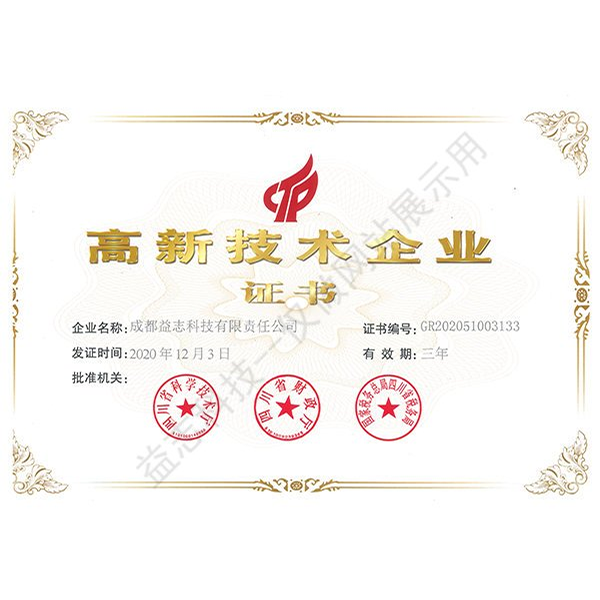
It is worth mentioning here such a player asChengdu Yizhi Technology Co.This is not just a trader, but a design institute with serious authorized capital, created by the chemical company Huaxi Technology. Their website (yzkjhx.ru) is a good example of how Chinese engineering companies are positioning themselves today: not as a factory, but as a technology partner capable of developing and delivering a turnkey adsorption system, including the selection and, possibly, adaptation of the sorbent itself. This is an important trend - moving away from selling tons of powder to selling solutions.
Market: pressure from within and opportunities from without
The Chinese domestic market is a gigantic testing ground and at the same time the main driver. Strict environmental regulations (for example, on VOC emissions or wastewater treatment) have created enormous demand for adsorption systems. This gave rise to a wave of local sorbent manufacturers. The competition is fierce, prices in the mass segment are squeezed to the limit. Either giants with economies of scale survive, or those who retreat into niches. For example, the production of adsorbents for oxygen concentrator systems for medical and home use has its own requirements for durability and sorption kinetics.
For the foreign market, especially the CIS and developing countries, Chinese suppliers offer a very balanced ratio of price and technology. European sorbent can be 10-15% more effective, but 2-3 times more expensive. For many projects, this difference in efficiency is not critical, but the savings are significant. However, it is more difficult to reach such suppliers: there is little information in English, and without direct contact with the engineering department you can buy a “pig in a poke”. I personally encountered it when I ordered “zeolite type 13X for air drying”. The material arrived, generally working, but with slightly different adsorption dynamics. It turned out that to reduce the price, they partially replaced the binder, which affected the macropores. It was not fatal, but the technological regime had to be adjusted.
Another growing segment is specialized adsorbents for new energy: for hydrogen purification, for natural gas storage systems (ANG). Here, Chinese companies are actively investing in R&D, sensing the global trend. So far these are more pilot projects and small series, but the potential is huge.
Practical pitfalls and what to watch for
When working with Chinese adsorbents, you cannot simply choose according to the technical data sheet. The numbers there may be honest, but taken under ideal laboratory conditions. The first thing to require is test reports using standard procedures (e.g. ASTM for coals, ISO for zeolites). The second is to request data on bulk density and abrasion strength (attrition index) for bulk adsorbers. There was a story when they saved on strength, and after six months of operation of the adsorber, the pressure in the system dropped due to the formation of fine dust that clogged the mesh.
The issue of packaging and logistics is very important. Adsorbents, especially modified ones, are afraid of moisture. Bags must have a reliable inner polyethylene layer. Once we received a batch where some of the bags had microcracks - we had to dry the material before loading, which added hassle and risk. Now we always write down detailed packaging requirements in the specifications.
And the main advice: find not just a seller, but a manufacturer with its own laboratory and, ideally, an engineering department. Like the sameChengdu Yizhi Technology. You can discuss with them not “how much does a ton of 4A molecular sieve cost?”, but “what diameter of granules and binder content will be optimal for our conditions with cyclic heating to 180°C?”. This is a dialogue on another level. They can conduct pilot tests of your gas mixture at their installations and select or slightly “finish” it. compound. This is the very added value for which it is worth doing business with China today, and not just chasing a low price.
Looking to the future: which way is the wind blowing?
Technologically, I think the emphasis will be on hybrid and functionalized materials. Not just zeolite or carbon, but composites, for example, carbon nanostructures on a ceramic carrier, or zeolites with impregnated nanoparticles for the catalytic destruction of sorbed substances. China has a strong scientific school in the field of materials science, and the commercialization of such developments will accelerate.
Another trend is digitalization and “smart” sorbents. While this sounds futuristic, work on creating materials whose state (degree of saturation) can be monitored using built-in sensors or even their properties can be changed remotely (for example, by a magnetic field) is already underway. Chinese researchers are in line with the general trend here.
For the market, in my opinion, division will continue. The lower price segment will remain for large-scale products for basic needs. And there will be growth in the segmentspecialized solutions, where price fades into the background, and technical parameters, reproducibility and engineering support come first. And here Chinese players, especially those as integrated as the mentioned design institutes, have every chance to take very strong positions, competing not on price, but on technological adequacy and flexibility.
In general, say “Chinese adsorbents?” today it’s like saying “European cars?”. The range from budget models to high-tech devices is huge. You just need to clearly know what exactly you need, be able to ask the right questions and be ready for dialogue. Then you can find not just a product, but a real partner in this area.