Chinese adsorbents: technologies and market?
2025-12-31
When people talk about Chinese adsorbents, many people immediately think of cheap silica gel or activated carbon in bags. This, of course, is part of the truth, but only the very tip of the iceberg. Deeper down there is a whole world where price has been for ten years not the main trump card, but rather an entrance ticket. The real conversation is about the specifics to which the technology needs to be adapted, and how local manufacturers have learned not only to understand these specifics, but also to shape them.
From ?we do everything? to ?we do it according to the task?
Previously, years before 2015, a typical Chinese manufacturing plant worked according to the catalog principle: here we have 3 mm silica gel balls, here we have 4 mm, here we have an indicator. Take what you have. Now the situation is radically different. You come with a problem, say, the need for deep drying of natural gas with a high content of heavy hydrocarbons and the possibility of backflushing, and they begin to select not just the size of the granules, but the composition of the carrier, the pore structure, and abrasion strength specifically for your regeneration cycle.
This shift did not happen on its own. The impetus was large-scale projects within China - the same "West-East" for gas or the development of petrochemical complexes such as Zhenhai. Western technologies were licensed, but often turned out to be “redundant?” or too expensive to operate for local conditions. This is where the fine-tuning began. I remember that at one of the refineries in Shandong they tried to use a very expensive imported zeolite adsorbent to purify hydrocarbon streams. It was quickly losing capacity. Chinese engineers from the research institute at the manufacturing plant (such structures are now key) analyzed - the problem was in microquantities of specific sulfur compounds that “sealed”? pores. We have developed a modified version with adjustable pore size. The solution turned out to be 40% cheaper in the life cycle.
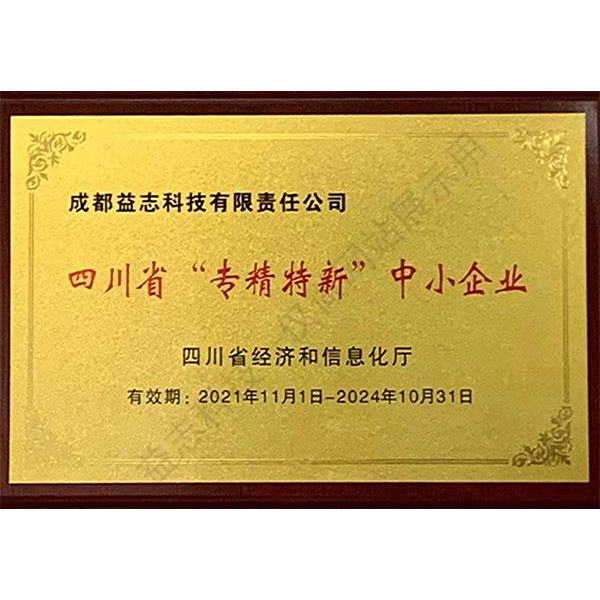
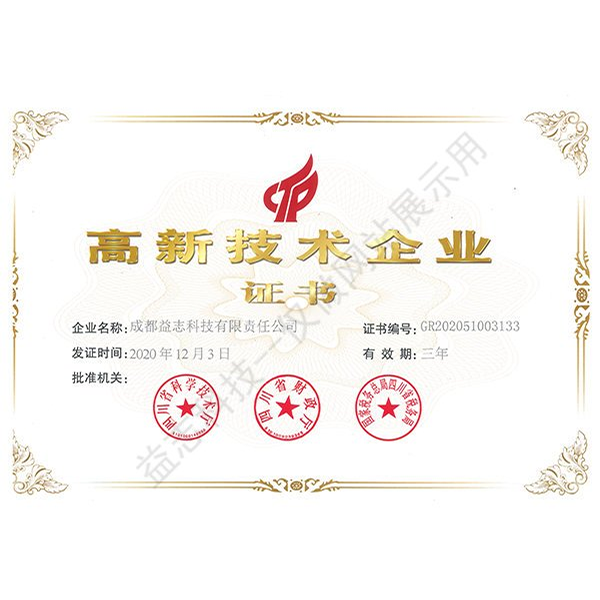
It was precisely these design institutes, often spun off from large chemical holdings, that became the engine. They don’t just sell a product, but conduct R&D for a specific customer process. For example,Chengdu Yizhi Technology Co.- this is just such a case. Institute created on the basisChengdu Huaxi Chemical Technology Co.with a serious authorized capital. Their websiteyzkjhx.rufocused on the Russian-speaking market, and this is significant: they do not wait for people to come to them, but go to regions with complex projects, offering not a standard product, but engineering based on their adsorbents. This is no longer the level of a supplier, but of a partner in the technological process.
Technological kitchen: not only zeolites
Yes, zeolites are the kings of highly selective processes. China now produces them in colossal volumes, from standard 4A, 5A, 13X to very specific ones, for example, for the separation of para-xylene or the purification of medical oxygen. But the trick is different: the ability to combine. Often a layered load - silica gel + zeolite + activated alumina - gives a better and more economical result than a single supermaterial. Chinese technologists have learned to calculate this balance very accurately.
Another important point is mesoporous materials based on aluminum or titanium oxide. They are gaining momentum for the adsorption of large organic molecules, for example in pharmaceuticals or dye wastewater treatment. Here, Chinese manufacturers are actively collaborating with academic institutions, quickly transferring laboratory developments into pilots and then into industrial batches. True, there is also a downside: sometimes this speed comes at the expense of the depth of development of the technology. I came across a situation where a new mesoporous material with a fantastic stated capacity was proposed for a volatile organic compound (VOC) capture project. Everything worked at the stand. In a real installation, with fluctuations in temperature and humidity, it sintered into a monolith in six months. The manufacturer, of course, replaced it, but time and money were lost on reconfiguring the adsorber. These are typical “growing pains”.
Therefore, now, when choosing a supplier, I look not only at the technical passport, but also at the history. Do they have any completed projects with this specific type of adsorbent that have been working for at least 3-5 years? Are they willing to provide data on capacity decline over time? Companies like the one mentionedChengdu Yizhi Technologybenefit precisely due to the fact that they are part of a large technology holding (Huaxi Technology). They have behind them not just sales, but their own industrial installations where they test materials. This is trust of a different order.
Market: pressure from within and exit to the outside
The domestic Chinese market is a gigantic testing ground and at the same time a meat grinder. Strict environmental regulations introduced over the past decade have created an explosive demand for gas and wastewater treatment systems. Accordingly, for adsorbents. This has led to the emergence of hundreds of small producers who are chasing volume at the expense of quality. Their products put pressure on prices, but they are not considered for critical projects.
The middle and upper segment of the market is consolidated around large players with a full cycle - from raw materials and R&D to production and technological design. Their strategy is to avoid competition only on price, offering a complex: adsorbent + technological scheme for its use + service. It is these companies that are now actively entering the international market, including the CIS and Russia. They no longer compete with local chemical traders, but with large international corporations, offering comparable quality, but often more flexible and localized solutions.
For example, for the Russian market with its abundance of gas fields and developed oil refining, adsorbents for drying and purifying hydrocarbon streams are becoming key. Chinese suppliers play on two fields here: as a more affordable alternative to expensive European materials for standard tasks and as developers of non-standard solutions for specific, often “neglected” ones. from the point of view of the composition of raw materials and deposits. Their flexibility in developing technical specifications is a big advantage.
Traps and what to look for when choosing
Working with Chinese adsorbents, I learned to identify several typical pitfalls. The first is the stability of the parameters from batch to batch. Top manufacturers have an order with this, while the second and third echelons have a lottery. You should always require a quality certificate for a specific delivery with test data not only for capacity, but also for strength (abrasion resistance) and thermal stability.
The second point is the regeneration conditions. Ideal parameters are often indicated in the documentation. In reality, the plant may not be able to provide such precise heating or such vacuum. You need to discuss these nuances in advance and ask technical support to calculate working windows. It's a good sign when a manufacturer likeChengdu Yizhi Technology Co., Ltd., immediately requests a detailed diagram of your installation and regeneration flow parameters.
The third is logistics and packaging. Adsorbents, especially zeolites, are susceptible to mechanical damage and moisture. A bag in a bag, vacuum packaging, rigid containers - this is not a whim, but a necessity. One day we received a batch that saved on packaging. As a result, up to 15% of the material was in the form of dust, which clogged the distribution grids in the column. Cleaning and downtime cost more than all the “savings”.
Looking ahead: which way is the wind blowing?
The trends are obvious: further specialization and “intellectualization?” materials. We are talking about adsorbents with improved kinetic characteristics (less energy consumption for regeneration), materials with dual functionality (adsorption + catalysis), and developments for new areas such as CO2 capture or lithium extraction from brines.
Chinese companies are not catching up here, and in some niches they are trying to set the tone. Their advantage is a huge domestic market as a test bed and government support for the “green” ones. technologies. The risk is possible overheating and the emergence of many crude, unfinished solutions in the pursuit of funding.
For us, practitioners, the main thing is to filter this flow. The Chinese adsorbent market is no longer just a source of cheap raw materials. It is a source of complex, sometimes risky, but often very effective technological solutions. The key to success is choosing not a product, but a partner. A partner who understands your process, has his own deep expertise and, what is critically important, is responsible for the result not on paper, but de facto, through his institutions and engineering capabilities. Like that same structure - a design institute with a registered capital of 120 million yuan, which was initially created to solve non-standard problems, and not to trade in bags.