Chinese adsorbent: technology and market?
2025-12-31
When they talk about Chinese adsorbents, many people immediately have a picture in their head: huge factories, conveyors, tons of cheap products for export. And there is some truth in this, but only some. The biggest myth is that all this is a homogeneous mass, “consumer goods?” for basic tasks. Behind this stereotype, the real picture is lost, which is much more complex and interesting. Over the past ten years, everything has changed radically, and if you don’t dig deeper, you can easily make a mistake in choosing a supplier or in assessing technological capabilities.
From ?made in China? to “designed in China”: an evolution of the approach
Previously, years before the 2010s, the main driver was indeed the price tag. They purchased licensed or simply reproduced technologies, often outdated, and increased the volume. The quality could “float” from party to party, and this did not give them the best reputation. But the situation began to change when large players, especially those who worked in the domestic market with its strict environmental regulations, began to invest in R&D. We are not talking about cosmetic improvements, but about fundamental research on the synthesis of zeolites, modified active carbons, and sorbents based on metal oxides.
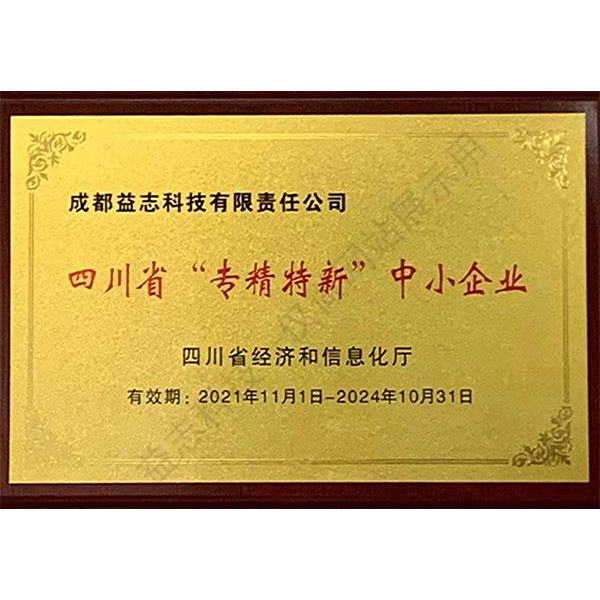
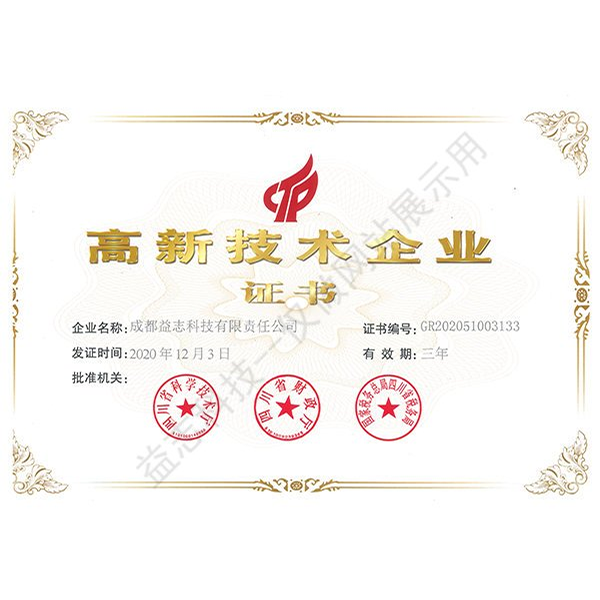
A striking example is the emergence of specialized design institutes that work not on a regular basis, but on specific, complex tasks. Here, for example,Chengdu Yizhi Technology Co.(their website ishttps://www.yzkjhx.ru). This is not just a plant, but an institute created by the chemical company Huaxi Technology. When you see the registered capital of 120 million yuan, you understand that this is a serious application for deep development. They, like a number of others, focus not on selling bags of powder, but on designingtechnological schemescleaning "turnkey". This is already a different level. The client comes not for a sorbent, but for a solution to a problem with emissions or purification of a product.
What has changed in practice? Previously, they sent you technical specifications and MSDS, and that’s it. Now from good suppliers you can get a full report on pilot tests on your own raw materials, data on adsorption kinetics, and process modeling. It may not always be perfect, but the approach itself speaks volumes. They learned to ask questions: “What is your initial concentration?” What is the flow temperature? Are there aerosols?? Without this dialogue they no longer work.
Key technological niches and where Chinese manufacturers are really strong
You can’t talk about the entire market in bulk. Their strength now lies in specific segments where they were able to find the optimal efficiency-cost ratio. The first thing that comes to mind iszeolitesfor drying gases, especially in the oil and gas and chemical industries. Not those UOP level molecular sieves, but for less critical but mass applications. Their synthesis has been fine-tuned; there are dozens of variations in pore size and composition. At the same time, the price is 1.5-2 times lower than European analogues, and the stability of recent years has been at a decent level.
The second layer is specialized activated carbons for capturing organic vapors (VOCs) and in gold mining. Here they made a breakthrough due to the raw material base (their own coconut shells, coal) and scale. But something else is more interesting - oxide-based adsorbents for purification from specific impurities, for example, hydrogen sulfide or organosilicon compounds. I saw projects where Chinese granular sorbents based on ZnO worked in schemes for fine purification of synthesis gas, and showed a resource quite comparable with expensive analogues.
The third, gaining momentum, segment is functionalized materials, say, impregnated carbons for trapping mercury or specific acids. This is no longer a commodity, but a piece product. Competition with European manufacturers is fierce here, and the Chinese are not playing with price, but rather with flexibility - they are ready to make a small pilot batch for your unique emissions composition. For an average project in the CIS, this is often a decisive factor.
Market pitfalls: what you encounter in practice
Despite all the progressiveness of the leaders, the market remains extremely heterogeneous. The biggest risk is to stumble upon a trading company that doesn’t really understand what it is selling. They can beautifully translate the specifications from the manufacturer, but there will be no answer to questions about technical support, regeneration or disposal of waste material. I once encountered a situation where coal was supplied for a solvent recovery system that was not optimal in granule size. The result is high pressure drops, an oversight by the designers, and the seller simply threw up his hands.
Another nuance is logistics and documentation. Quality certificates can be “template”, not for a specific batch. It happened that in the analyzes for bulk density or strength there were significant deviations from the declared ones, which is critical for calculating the loading of adsorbers. Now we always require sampling and independent testing before shipping a large batch. Reliable suppliers, the sameChengdu Yizhi Technology, they do not refuse this; moreover, they often insist themselves in order to avoid problems in the future.
And of course, the “Achilles heel?” - This is after-sales service and engineering outside of China. If you just need material, then there are no questions. But if a retrofit of an existing installation is required or urgent consultation on an emergency situation is required, the response time can be long. They understand this and are starting to create engineering offices or partnerships in key regions, but the process is slow.
Case: a non-obvious application and why it worked
I would like to give an example from real experience that well illustrates the shift in thinking. There was a project to purify waste gases at a chemical production facility in the CIS. There was a complex mixture of aromatic compounds mixed with acid vapors. The standard solution is expensive imported impregnated coal. The Chinese supplier (I won’t name it, but from the technological cohort) offered not a finished product, but a joint development: they took their framework coal from coal tar pitch as a basis, and selected the impregnation in the laboratory, simulating exactly our gas composition.
The process took about three months, including sending our gas samples to them. The result was a material with efficiency at the standard level, but 30% cheaper. The key was that they were not intimidated by a non-standard task and were willing to work iteratively. After the launch, there were minor problems with dusting - they did not take into account the sufficiently abrasive effect in a particular device. But here the response was prompt: they sent a technologist, adjusted the activation protocol for the next batch, and the problem went away.
This case showed that the benefit lies not only in the price per kilogram. It is readiness for cooperation and adaptation. For Western vendors, such a small, non-standard order is often unprofitable; they work with a catalog. Chinese technology companies, especiallyYizhi Technology, which position themselves as a design institute, see this as their niche. They are not selling a sorbent, but a workable cleaning scheme, and they are ready to “finish” it. material to its conditions.
Looking ahead: which way is the wind blowing?
If we extrapolate current trends, it is obvious that simple copying is over. Major investments go in two directions. The first is “smart?” or multifunctional adsorbents, such as phase change materials or combined sorbent-catalysts. The second is the deep integration of the adsorption stage into the client’s overall technological cycle, with digital modeling and resource forecasting.
Already now, pilot installations with online monitoring systems for the degree of sorbent saturation and automatic redirection of flows are being shown at exhibitions in Shanghai or Tianjin. It looks, of course, a little damp at times, but the vector is given. The domestic Chinese market, with its strict environmental requirements, acts as a powerful testing ground for these technologies.
For us, practitioners, this means that we will soon have to evaluate suppliers not by their product catalog, but by the strength of their R&D department and the bank of successfully implemented pilot projects. Price will remain an important factor, but the factor of technological flexibility and the ability to solve non-standard problems will weigh more and more. And in this new race, Chinese players who have managed to accumulate capital, experience, and, importantly, their own testing base, have very good chances to occupy their stable niches in the global market. Not as suppliers of cheap raw materials, but as partners in complex engineering solutions.