Chinese sorbents: technologies and applications?
2025-12-31
When they talk about Chinese sorbents, many people immediately imagine cheap activated carbon in bags. This, of course, is reality, but only a small and outdated part of it. Over the past ten years, everything has changed dramatically. The problem is that information about these changes is often locked into industry reports or lost in the flood of sales pitches where all the products are cutting-edge. I’ll try to sort it out based on what I saw myself in production and in laboratories.
From activated carbon to zeolites: evolution of the raw material base
Yes, traditional carbon sorbent is still a giant segment. But if earlier the emphasis was on volume and low price, now the key word isspecialization. Coconut coal for gold mining, coal from pecan shells for deep purification of pharmaceutical solutions are no longer exotic, but standard items in the catalogs of serious suppliers. But the real breakthrough, in my opinion, is associated with synthetic zeolites.
China has learned to produce them on an industrial scale with amazingly stable characteristics. Previously, we purchased silica gel and zeolites in Europe, but about five years ago we began testing samples from Chinese manufacturers, for example, fromChengdu Yizhi Technology Co.(their website isyzkjhx.ru). The first thing that caught my eye was not the price, but the detailed technical documentation. Not just 4A zeolite, but a complete breakdown of capacity, heat resistance, and abrasion resistance for specific batches. This is a sign of technology maturity.
There was also a bad experience. Once we ordered a batch of zeolites for drying natural gas. According to the passport, everything is perfect. In practice, after three months the dust emission increased sharply and the filters became clogged. It turned out that the problem was in the binder - they used cheap clay material to form the balls. The manufacturer, of course, replaced everything, but the simple installation was expensive. Now we always require a test launch on a pilot column.
Modification technologies: not just adsorption, but smart capture
The raw sorbent is half the battle. What is much more interesting is what they do with it next. Impregnation with metal salts (silver, copper, manganese) for catalytic oxidation or selective binding of hydrogen sulfide is now the basis. Chinese laboratories are actively working on hybrid materials, for example, based on mesoporous silica (type SBA-15) functionalized with amino groups for CO2 capture.
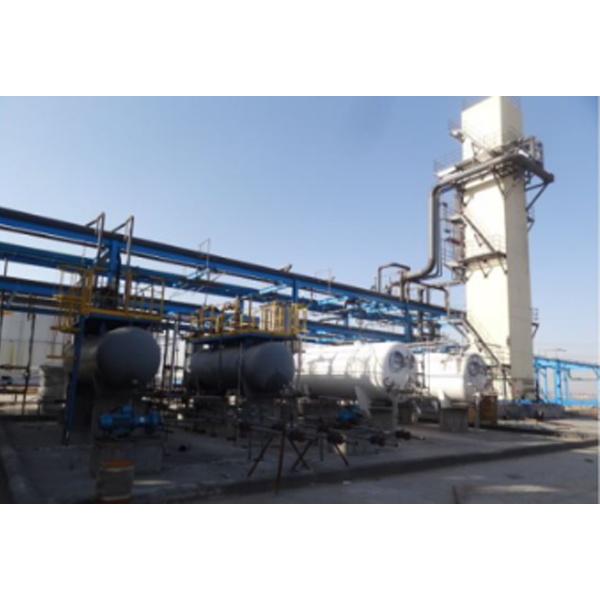
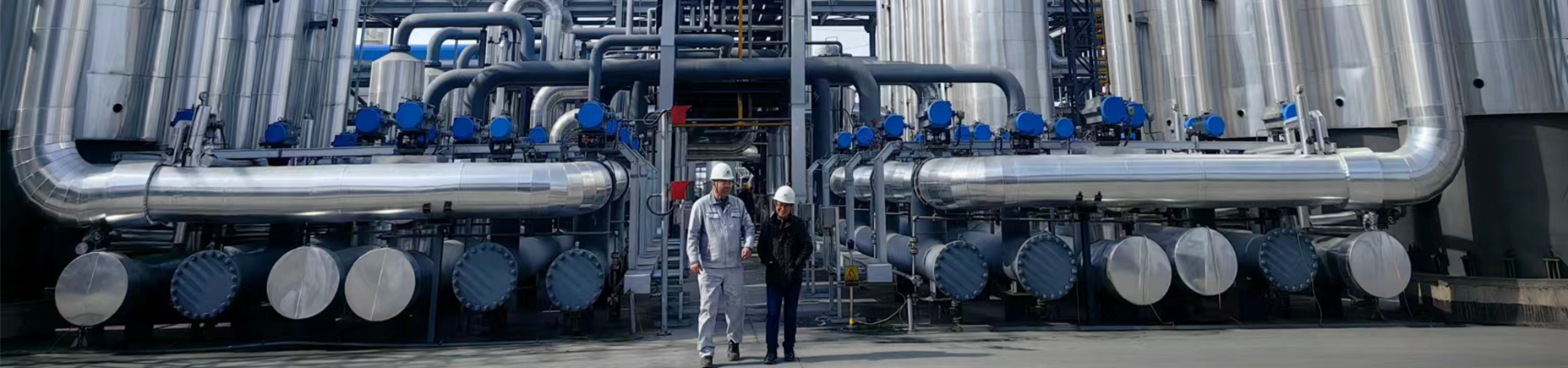
I saw one installation at a refinery in Shandong, where they used Chinesemodified zeolitefor simultaneous removal of mercaptans and drying of the stream. An elegant solution that saves an entire cleaning step. The key was not so much the substance as its granulometric composition and pore profile, selected for the hydrodynamics of a particular apparatus. This is a turnkey level, not just selling a bag of powder.
This is where misunderstandings often arise with customers. They are waiting for a magic pill: Give us a sorbent so that it will remove everything. We have to explain that selectivity is a double-edged sword. High specificity for one pollutant often means passivity for others. You need accurate chromatography of the input mixture, otherwise your money is down the drain.
Applications beyond traditional cleaning
Everyone knows about water and gas purification. But there are niche areas where Chinese materials have found unexpected uses. For example, in agriculture - polymer-based sorbents for the slow release of fertilizers. Or in the food industry - highly porous materials to stabilize taste and remove foreign odors in packaging.
One of the most interesting projects I came across was the use of a special aluminosilicate sorbent to extract lithium from brines. The technology is not new, but Chinese engineers were able to dramatically increase the dynamic capacity of the material and its resistance to repeated regeneration in an aggressive environment. This is a direct support for their own giant battery industry.
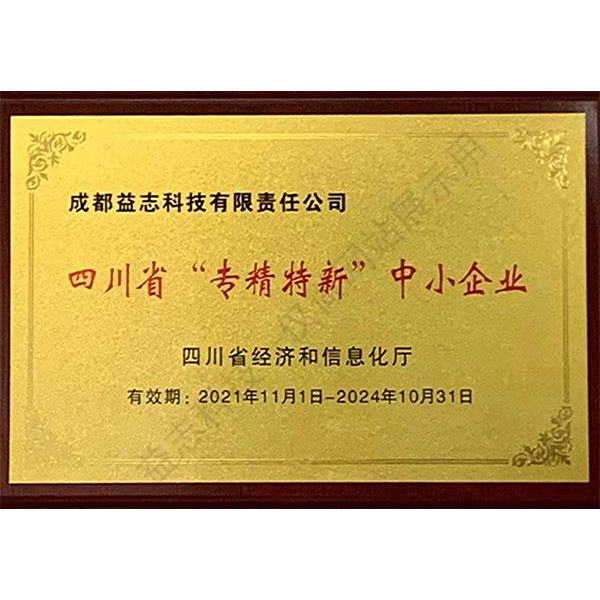
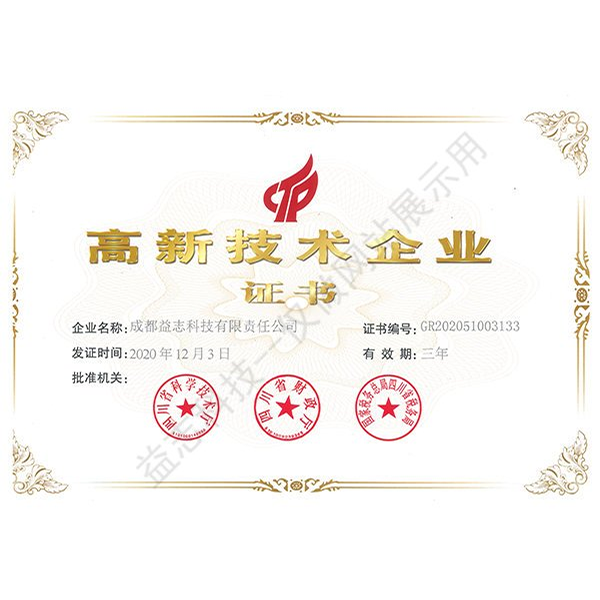
Another point is sorbents for nuclear energy, for capturing radioactive isotopes. The requirements are prohibitive. I know that several Chinese research institutes, including structures related toChengdu Yizhi Technology Co.(this institute, let me remind you, was created with a registered capital of 120 million yuan, which indicates serious investments in R&D), such developments are being carried out. Naturally, they do not appear on the open market, but the very fact of such work speaks of the depth of study of the topic.
Logistics, quality and pitfalls
Technology is great, but business is done on the ground. And here there are some peculiarities. Large Chinese manufacturers are now building a full cycle: from material synthesis to delivery of ready-made sorption cartridges or modules. It's convenient. But the risk is in averaging. Their standard line may not suit your slightly unique problem.
The quality of control has increased significantly. Many places have implemented statistical process control (SPC). But the rule of trust, but verify has not been canceled. It is imperative to carry out incoming control at your site, at least for key parameters: bulk density, strength, actual adsorption capacity for the reference substance. I remember how a batch of super-sorbent for VOC showed in our tests half the capacity than in the passport. It turned out that they tested on toluene, and we worked with a mixture of xylenes - the size of the molecules was different, the kinetics of diffusion in the pores changed.
Logistics are a different story. Sorbents are often fragile materials. Improper handling or sea transportation in high humidity conditions can lead to the formation of fine dust and caking. Good suppliers now use vacuum packaging with a moisture indicator and hard big bags with reinforced corners.
Looking into the future: trends and limitations
Where is everything going? First, towards smart or regenerative sorbents that change their properties under the influence of temperature, pH or electric field, allowing desorption to be carried out without complex procedures. Secondly, there is a growing demand for biodegradable sorbents for oil spill cleanup or in hygiene products.
But there are also limitations. The main thing is dependence on raw materials. The production of many advanced zeolites requires high quality kaolin or metakaolin. Environmental requirements for production are becoming more stringent, which hits small factories, but plays into the hands of large players like Huaxi Technology and its design institute.
As a result, Chinese sorbent is no longer synonymous with cheap and cheerful. This is a wide range of materials, from mass to high-tech, backed by serious scientific and production capabilities. The key to a successful application is not in finding the cheapest option, but in deep dialogue with the supplier, accurate technical specifications and, crucially, a willingness to invest time in joint testing. Without this, even the most perfect material may not work.