Chinese gas butterfly valves: innovation?
2026-01-20
When you hear “Chinese gas butterfly valves?”, the first reaction of many is skepticism. Cheap, cheerful, but it’s better to remain silent about reliability and innovation. I thought so myself ten years ago. But now, after dozens of projects where these valves operate under pressure and in aggressive environments, the opinion has changed dramatically. We are not talking about mass consumer goods, but about specific manufacturers who have made a real breakthrough over the past 5-7 years. The question is: what is hidden behind this breakthrough - real engineering solutions or just smart marketing? I’ll try to sort it out based on what I personally encountered.
From stereotypes to specifications: the evolution of perception
Previously, the main argument against was the material of the seals. They installed some kind of rubber that stiffened in the cold or “floated?” from hydrocarbon vapors. A breakdown of shut-off valves is no joke. Therefore, Chinese fittings were associated with risk. The turning point for me came at a petrochemical facility near Omsk, about six years ago. There were butterfly valves with seals made of modifiedfluorine rubber(FKM, aka Viton) from a manufacturer who worked closely with engineering companies. I won’t name the brand, but it was not a random supplier from Alibaba, but a factory with its own design bureau.
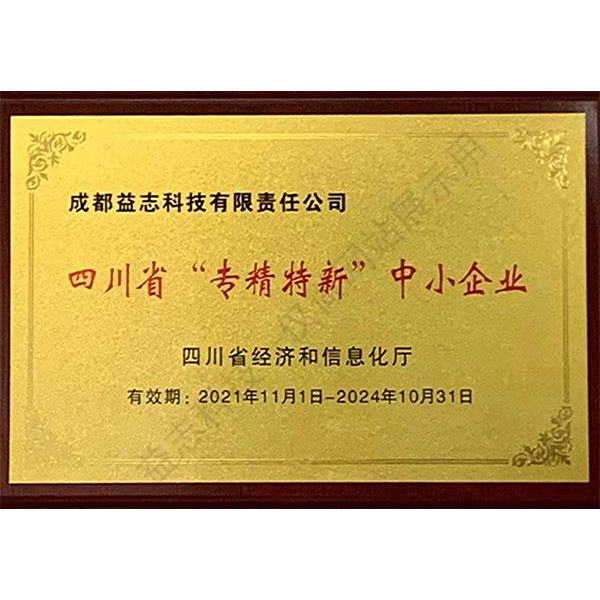
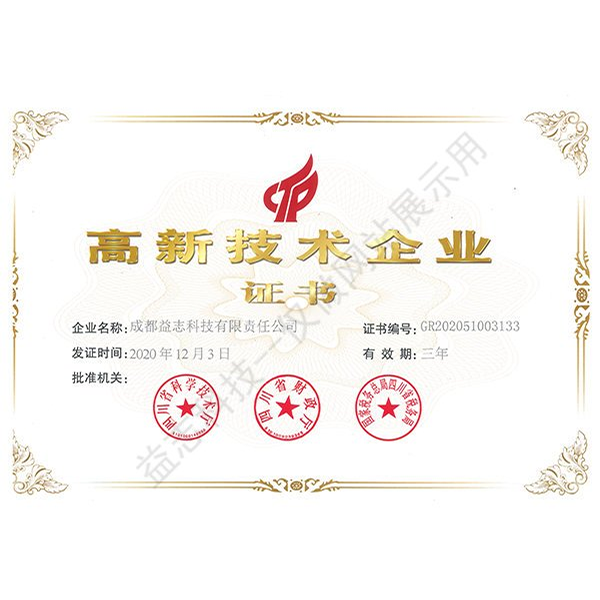
The key was the approach to specifications. Previously, you asked for a TSO (Triple Shut-Off) design, and they brought you a shutter with one seal, just a thick one. Now normal manufacturers, such as the design institute Chengdu Yizhi Technology Co., Ltd. (a subsidiary of Huaxi Technology), initially offer the following options: soft seal, metal-to-metal, or combined. On their website yzkjhx.ru it is clear that they are based not on the catalog, but on the technological scheme. This is an important shift - they began to speak the language of process engineers, not just buyers.
And here it is worth dispelling one myth. Innovation is not necessarily a breakthrough technology like a new polymer. More often than not, it’s systematic work on little things. For example, the same Chengdu Yizhi Technology pays incredible attention to the quality of the casting of the case and the grinding of the disc surface. It would seem nonsense. But it is micro-irregularities on the disk that kill the seal during the first six months of operation on “wet” conditions. gas. Their control technology here is their know-how, which is not written about in brochures, but which is visible in the field.
Design features: where to look for a catch?
If we take gas applications specifically, the main headache is not only pressure, but pulsations, vibration and low temperatures. The classic weakness of many butterfly valves is the stem and its seal. Chinese manufacturers have long copied European designs with one or two gland seals. The result is leakage on the rod under cyclic loads.
The current trend is combined rod seal systems. I have seen options where there is an oil seal plus a bellows (though this is a price at a different level). But a more widespread and reasonable solution is a reinforced stuffing box. with several rings made of different materials, for example PTFE + graphite. This is not an innovation on a global scale, but for a Chinese product that needs to be competitive on price, it is a serious step. It is important to look at the drawings: the number and location of these rings. If the supplier details them, this is a good sign.
Another point is the drive design. Often the problem is not in the shutter itself, but in the mismatch between the shutter moment and the selected gearbox or pneumatic drive. Chinese engineering companies, the same ones that produce valves, began to offer comprehensive solutions. That is, not just sell you the valve, but calculate and supply it assembled with the drive, bracket and limit switches. This reduces installation risks. By the way, this is clearly visible on the website yzkjhx.ru - they position themselves as an institute capable of complex projects, and not just an iron dealer.
Case: a failure that taught you a lot
I’ll tell you about one negative experience that is more valuable than ten successful ones. We ordered a batch of DN200 valves for a gas drying installation. Medium - methane, low content of hydrogen sulfide, pressure up to 40 bar. The temperature dropped to -35°C. The manufacturer (I will not name) provided all certificates, including low temperature tests. The seal was stated to be frost-resistant NBR.
Everything passed acceptance tests on site. But after three months of operation in winter, problems with “sticking” began. disk in intermediate positions when adjusting the flow. Upon opening, it was discovered that the material of the seat seal actually retained elasticity, but the geometry of the disk itself and its fit on the rod were not designed for such temperature deformations. A micro-distortion has occurred. The manufacturer, of course, replaced the fittings, but simple installation was more expensive. Conclusion: certificates are good, but real field conditions, especially for gas environments, are always more difficult. Now, when ordering, I always specify not only the seal material, but also the calculated coefficient of thermal expansion of the disk and housing material for a specific range.
The role of engineering: why a design institute is important
This is where we come to the key difference. Previously, you bought from a factory that makes a thousand types of fittings. Now those who have serious engineering behind them, like Chengdu Yizhi Technology Co., Ltd., are winning. is a design institute with a registered capital of 120 million yuan, established by Huaxi Technology. These are not just words.
In practice, this means that not a sales manager, but a process engineer may come to your site (or online meeting) and ask: “What is the exact content of heavy hydrocarbons in the gas stream?” or “How often is the open-close cycle planned?" They can simulate the operation of the valves to suit your conditions. For gas valves, where class A tightness according to GOST or API 598 is important, this opportunity is invaluable.
Their website yzkjhx.ru is, in fact, a tool for such deep interaction. There is not just a catalog, but access to a technical library, descriptions of materials, and examples of calculations. They are not selling a product, but a competency. In conditions where each project is unique, this approach is the main innovation on the market.
Price vs. Cost of ownership: old debate
Yes, the Chinese shutter is often 30-50% cheaper than its European counterpart. Question: due to what? If due to savings on steel quality control or on final assembly (I saw how they assembled without a torque wrench!), then these savings will be imaginary. The cost of replacing a failed valve on an existing gas pipeline is astronomical.
But if the price is reduced due to optimization of logistics, in-house production of casting and milling, and at the same time key components (seals, bearings) are purchased from proven global suppliers (such as John Crane or Burgmann), then this is a different story. This is the path that leading Chinese manufacturers are taking, including structures like Yizhi Technology. Their capital allows them to invest in modern processing equipment rather than saving at the last stage.
Therefore, now the question is not “Chinese or European”, but “which Chinese supplier has full-fledged engineering and a transparent quality chain?” The answer to this determines the lifetime cost of ownership.
A look into the future: digital and materials
Where is the industry heading? I see two clear trends among progressive Chinese players. The first is ?digitization? fittings. We are not talking about smart factories, but about something simple and useful: gates with pre-installed position and torque sensors, with the ability to be integrated into a SCADA system without dancing with a tambourine. This is becoming the standard for new projects.
The second trend is working with materials. These are not only seals, but also coatings. For example, applying nickel or silicon carbide coatings to the disk and seat for working with abrasive impurities in gas (dust, sand). Chinese laboratories are actively testing such solutions, and they are already appearing in catalogs as an option. This is a direct response to requests from fields where gas quality leaves much to be desired.
So, returning to the main question: is it innovation? For the global market, perhaps not. It is rather a quick and high-quality mastery of the world's best practices. But for a specific engineer who chooses reliable fittings for his gas facility near Novy Urengoy or Kazan, yes, these are exactly the innovations that matter. Because they solve specific problems, and do not exist in the form of beautiful presentations. And this is perhaps the main change.