Chinese butterfly valves: innovation?
2026-01-20
When you hear “Chinese butterfly valves?”, the first thought for many is cheap and cheerful. But these are no longer just copies, if you look into the details. Is this innovation? Rather, a pragmatic evolution, where the key is not loud statements, but specific solutions to real problems on pipelines.
Where do the legs of stereotypes come from?
Previously, about ten years ago, the situation was transparent. Chinese suppliers often worked on the principle “give me a drawing and we’ll do it cheaper?”. The quality of the seals, corrosion resistance, casting accuracy - all this was poor. I remember that at one of the petrochemical facilities near Novosibirsk a batch ofbutterfly valveswith supposedly “improved” fluoroplastic seat. After six months of moderate use, leaks began. It turned out that the material did not correspond to the declared chemical resistance, and the geometry of the disk had tolerances that would have been defective for a European manufacturer.
Now many, especially design institutes that work closely with China, have learned to formulate technical specifications down to the smallest detail. Not just a “DN300 valve”, but with testing standards, disc material composition (say, 316L stainless steel with a certain molybdenum content), seal type (EPDM for water or PTFE for aggressive environments) and even the method of inspection of welds on the body. Without this, of course, you can end up with the old approach.
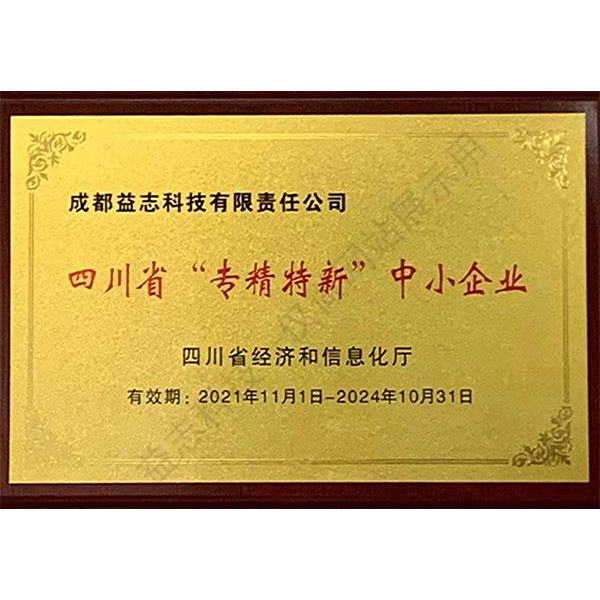
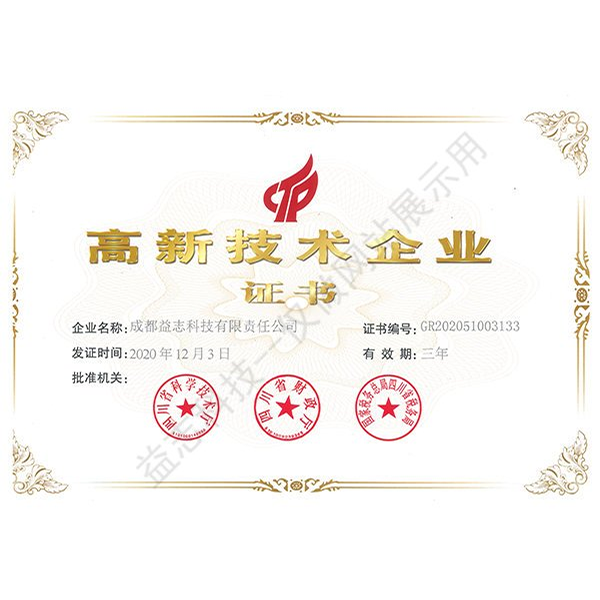
That's why companies like Chengdu Yizhi Technology Co., which originally grew out of chemical technology holding Huaxi Technology, have an advantage. They know from the inside what requirements are critical for chemical production. Their websiteyzkjhx.ru- this is not just a catalog; project specifics are often visible there. The registered capital of 120 million yuan is also not for beauty, it’s about investing in our own test benches and quality control.
Where changes are really visible: materials and processing
If we talk about innovation in the literal sense - breakthrough technologies - then it’s quiet here. But Chinese engineers have made great progress in adaptation and optimization. The most noticeable progress is in the field of materials and surface finishing.
Take, for example, spraying hard wear-resistant coatings onto a disc. A few years ago it was a lottery. Now, on critical products, such as valves for thermal power plants or desalination plants, methods like HVOF (high-velocity gas flame spraying) are used. This is not their know-how, but implementation on the flow with adhesion control is already a result. I personally saw reports on abrasive wear tests with sand in water - some samples had a service life comparable to their European counterparts in the mid-price segment.
The second point is casting. Sinks and pores in critical areas (neck, shaft attachment points) were a scourge. Now large manufacturers are actively using radiographic testing and computer modeling of gating systems. This is not an innovation on a global scale, but for mass Chinese production it is a serious step towards stability. On the same Yizhi Technology website, product descriptions often include phrases like “integrated die-cast housing design?” — this is precisely about minimizing welds in the load-bearing structure, which increases reliability.
Weak link: components and pitfalls?
But where innovation often stumbles is in the packaging. The housing and disc itself may be well built, but the bearings, shaft seals, or even the supplied bolts are the weak point. Savings here are fatal.
I had experience with deliveries to a small dairy plant. The valves are from a trusted Chinese factory, everything seems to be fine. But after three months, complaints about the tight movement began. When they opened it, the roller bearings in the manual drive gearbox were clogged with cheap grease, which thickened in the cold and washed out when washed with hot water. The problem was solved by replacing it with high-quality lubricant, but time and reputation had already suffered. This is a typical story: the main node is good, but they save money on the periphery.
Therefore, now competent buyers always specify the brands of critical components or immediately include their replacement in the contract. A good sign when a manufacturer, like Chengdu Yizhi Technology Co., Ltd., positions itself asdesign institute. This hints that they can not just sell hardware, but select or design a node for a specific environment, including all these “little things”.
Digital and service: where there is almost no innovation
Here the picture is motley. Smartbutterfly valveswith position sensors, wear monitoring and integration into process control systems - this is still mainly the prerogative of European brands. Chinese manufacturers offer options such as electric or pneumatic drives with a basic feedback function, but it rarely comes to complex analytics and predictive maintenance.
Service is a separate issue. Innovation in logistics and support? Most often it is standard: a warranty, the presence of spare parts warehouses in Russia (this is a big plus if it exists), technical documentation of varying quality. The strength is flexibility in non-standard sizes or designs. Need a 16 bar DN267 valve with EPDM lining? Europeans will think for six months and bill it like a spaceship. The Chinese, especially through engineering companies, often take on such tasks and do them faster. This is their market niche.
On the website yzkjhx.ru, by the way, it is clear that they focus specifically on non-standard and specialized solutions for chemistry, and not on selling thousands of standard valves at retail. This is the correct and honest approach.
Bottom line: evolution instead of revolution
So is this innovation? If you expect a technological miracle from Chinese shutters that will revolutionize the market, then no. There is no revolution happening. But there is a very active and pragmatic evolution, driven by market demands.
They have learned to solve specific pain points: resistance to aggressive environments (thanks to experience in the chemical industry), sufficient strength for most applications, competitive price due to scale of production. Innovation here lies in control processes, in adapting known technologies to cost-effective production, and in the ability to quickly customize a product.
Choosing Chinesebutterfly valveToday, you are not buying “innovation”, but a completely predictable and often optimal price/quality engineering product. But with one important caveat: 90% of success depends on the competence of the supplier. We need not just a seller, but a partner with an engineering background, like the mentioned companies from the Huaxi Technology project, who understands where and why this valve will be installed. Without this, you can easily go back ten years, to problems with leaks and tight movement.