Chinese butterfly valves: technology and market?
2026-01-20
When you hear “Chinese butterfly valves?”, the first thing that comes to mind for many is cheap and cheerful. But this has not been entirely true for ten years now, if it is true at all. Yes, the price pressure is colossal, but if you dig into the technology and materials, the picture becomes much more interesting and ambiguous. I’ll try to sketch out my thoughts based on what I saw myself on projects and in workshops.
From ?iron? to engineering: evolution of approach
Previously, until the mid-2010s, the main emphasis was on machining cases and disks. They took cast iron, less often carbon steel, and turned it out. Tightness was ensured by standardrubber seals, most often EPDM or NBR. The problem was predictability. Party to party could “walk?” There were some problems with the quality of casting and the geometry of the saddle. I remember a project for heating networks in Kazakhstan, where, due to micro-sinks in the body casting, the flange under the seal began to leak after six months. Not critical, but unpleasant.
Now the focus has shifted. Keyword -calculation and materials. Progress has been made not so much in machine tools (although there is some), but in engineering software. The same finite element analysis (FEA) for estimating gate stresses at full back pressure has become almost the norm for more or less serious manufacturers. It’s no longer just “made according to the drawing”, but “checked how it will work?”.
It is in this connection ?calculation + material? Interesting hybrids have appeared. For example, a disc made of 316 stainless steel, but with stellite or tungsten carbide laser deposited on the edge in contact with the seat. For abrasive media - sludge, pulp - the solution is sometimes more viable than an all-metal valve, and one and a half to two times cheaper than imported analogues. But there is a nuance here: the quality of the surfacing. If the technology is not proven, the layer may come off or have microcracks. I saw this on one batch for a cement plant.
Market: between price and specification
The market is now strictly segmented. Conventionally, it can be divided into three echelons. The lower one is a standard seal for water, air, and non-aggressive media. Prices are king here, competition is fierce, and often the winner is the one who has better logistics and connections with installers. The quality... let's just say, is sufficient to fulfill the warranty.
The middle echelon is precisely the area where the main technological struggle is unfolding. Requests go to work with more complex media: alkalis, weak acids, food products that require certain certificates. It’s not just the shutter that’s important here, butequipment for the task: selection of seal (Viton, PTFE, metal carbon), type of drive (electric, pneumatic), rod material (stainless steel 17-4PH instead of the usual 304). Competition takes place at the level of engineering and service.
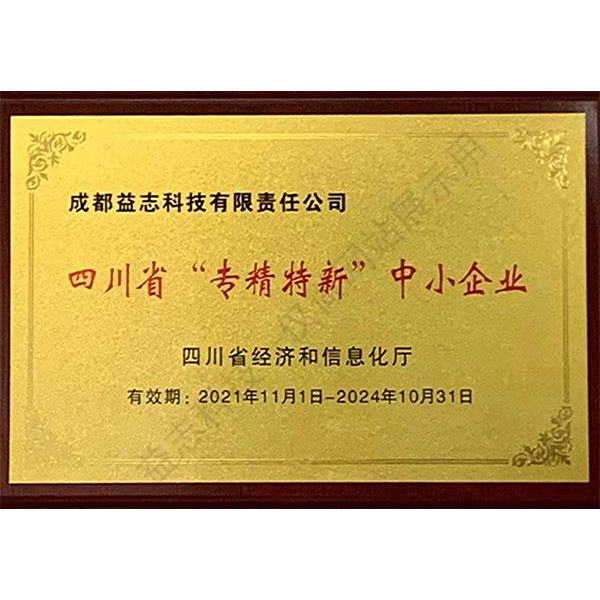
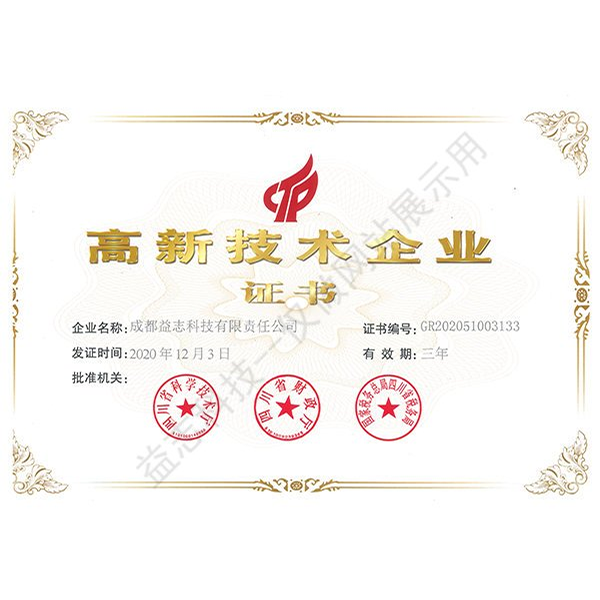
The upper segment includes projects where the key factor is not price, but reliability and compliance with international standards (API 609, ISO 5211). Here, Chinese manufacturers work locally, often through joint ventures or deep adaptation of products. Their share is still small, but growing. Interestingly, some companies are going the route of creating specialized engineering departments. Here, for example,Chengdu Yizhi Technology Co.– this is not just a plant, but a design institute created by a chemical technology company. Their websiteyzkjhx.ruis no longer just a catalog, but a portfolio of solutions. The registered capital of 120 million yuan is a serious application for deep development. Such structures can not only sell a valve, but also calculate the assembly and offer material science for a specific production line. This is a different level of trust.
Drives and automation: the weak link?
This is often where it comes down to. On my ownbutterfly valvecan be done perfectly, but if you put a weak or unreliable electric drive on it, the whole system goes to hell. Chinese manufacturers understand this. The trend now is to offer integrated solutions: shutter + drive + controller. But the story with drives is complicated.
Many mid-level assemblers buy drives from third-party specialized factories (and there are dozens of them in China) and simply connect them together. The result can be unpredictable in terms of torque settings and jamming protection. More advanced players, especially those working in the petrochemical or energy sectors, either have their own drive production or have exclusive long-term contracts with trusted suppliers, tightly controlling specifications.
This is where there is often a bottleneck in design documentation. European or Russian designers require specific brands of drives (Auma, Rotork, Bernard). A Chinese manufacturer can offer “similar in characteristics?”. And here the delicate game begins: to prove that its complex (shutter + drive) has passed the necessary test cycles and has certificates. Not everyone goes for it, but those who invest in test benches gain a serious advantage.
Traps and pitfalls when choosing
The main pitfall is obsessing over unit price. The Chinese market allows you to find an offer for any budget. But a cheap valve for a conventional hot water supply system can “eat”? budget for repairs due to incorrectly selected tires, which will quickly age due to temperature. You should always request a passport indicating specific grades of materials, and not just ?EPDM? or “stainless steel?”.
The second common problem is discrepancy in weight and dimensions. It happens that the Chinese equivalent is lighter and more compact than the European one. This isn't always a good thing. Lower body weight may mean thinner walls, which will affect resistance to pipeline loads, especially vibration. It is always worth checking compliance with standards for flange sizes (DIN, ANSI) and, critically, for the distance between flanges (face-to-face dimension).
And third is logistics and availability. This is a sore subject right now. It would seem that production is nearby, but the production time for a non-standard item (especially with an exotic coating or seal) may take longer. And availability in warehouses in the Russian Federation is often limited to standard sizes. Here, companies with strong engineering and logistics support that can quickly respond to requests have an advantage.
Looking ahead: which way is the wind blowing?
Technologically, I think the trend towards “smart” will intensify. functions. We are not talking about fancy IoT stuffing, but about basic things: built-in position sensors, seal wear indicators, predictive diagnostics capabilities. For China, it is a matter of time and a reduction in the cost of such sensors.
Materials - Here I look forward to progress in the field of polymer composites for discs and seats. Work is ongoing, especially for chemistry and food processing, where chemical resistance plus anti-friction properties are required. Perhaps the emergence of more affordable solutions based on PEEK or its modifications.
And the main thing is market consolidation. There will be fewer small handicraft shops. Full-cycle players will be strengthened: from design and casting to assembly and after-sales service. Like the sameChengdu Yizhi Technology Co., which was originally created as an institute for solving technological problems. Such companies are no longer just exporters of iron, but suppliers of engineering solutions. Their products arebutterfly valves— becomes only a part of a more complex product, where guaranteed performance under specific conditions is important.
So, to answer the question from the title... Technologies are catching up and in some ways are already on par, but the stigma of “cheap”? still holding on. The market is a battlefield between the old approach of “sell cheap?” and new ones - “solve the problem?”. And, according to my observations, it is the second approach that wins. Simply because the cost of technological line downtime is always higher than the savings on valves.