Chinese butterfly valves: innovation?
2026-01-20
When you hear “Chinese butterfly valves?”, the first reaction of many is skepticism. Cheap, cheerful, for irresponsible nodes. I thought so myself ten years ago. But now, looking at the specifications that come from suppliers like Chengdu Yizhi Technology Co., or browsing their catalog at https://www.yzkjhx.ru, you realize that the picture has changed a lot. The question is not whether they have caught up with European brands, but where exactly they have directed their efforts and what compromises are behind it. This is not about blind copying, it is about adaptation to a different market and other requests. And this is where the fun begins.
From ?iron? to materials: where is the real shift
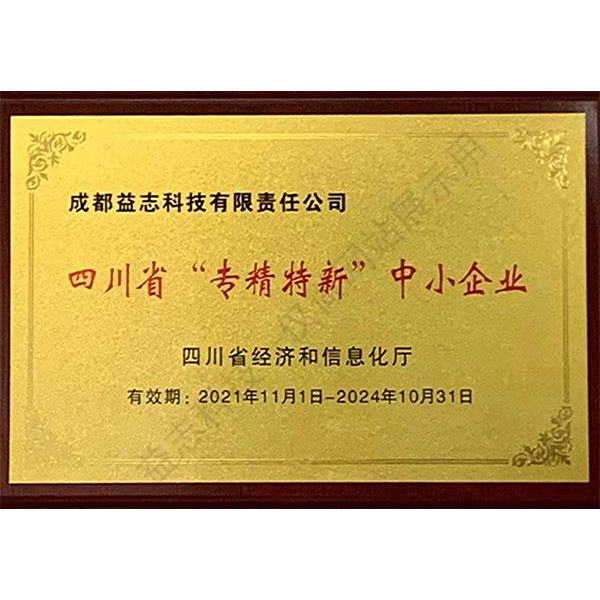
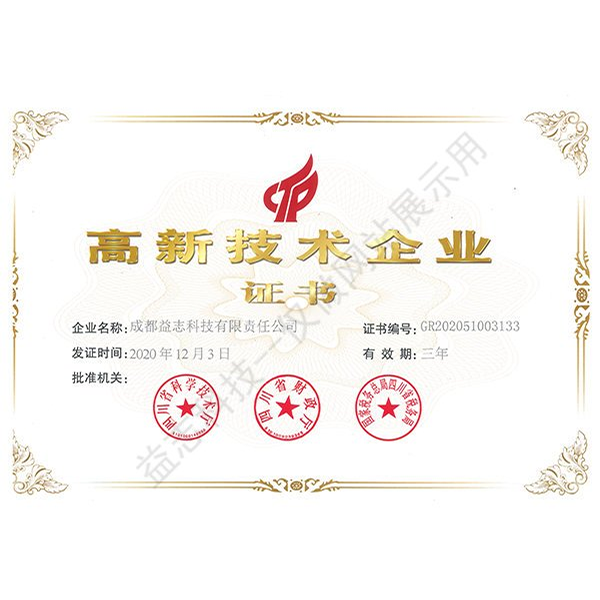
Previously, the main problem was the material of the disc and seal. Cast iron, regular stainless steel, EPDM - a standard set that quickly failed in aggressive environments or simply during intensive work. Now Chinese manufacturers, especially design institutes such as Yizhi Technology (a subsidiary of Huaxi Technology with an authorized capital of 120 million yuan - this is important, which means there is money for development), are actively working with coatings. This is not just about spraying, but about full-fledged engineering solutions.
For example, I have seen valves with discs coated with a nickel-phosphorus alloy using chemical deposition. For certain environments, say, with abrasive particles or moderately corrosive ones, this gives a significant increase in service life. The keyword is “for specific environments”. They are not trying to make a universal ?all-consuming? solution, but rather create a line for specific tasks in petrochemicals or water treatment. This is a pragmatic approach that is often overlooked when expecting miracles from them.
But there are pitfalls here too. The quality of the coating is dark wood. One batch may be excellent, but in another the adhesion is weak, and after six months peeling begins. We once installed a batch of such valves on the supply line of process water with impurities. Some of them are still working, but on three disks the coating is “swollen?” in just eight months. The supplier, of course, replaced it, but who compensates for the downtime? This is the same “risk zone” that makes you think ten times.
Design and “reverse engineering”: what was copied and what was rethought
Take a look at a typical flanged butterfly valve from any large Chinese factory. The contour of the body, the location of the spindle, the stuffing box - everything is very recognizable, reminiscent of old models of famous brands. This is classic "reverse engineering" and there is nothing wrong with it. The problem begins in the details that are not visible at first glance.
For example, the design of an elastic saddle. Many copy the shape but fail to maintain the precision of the injection molded rubber insert. The result is uneven pressure on the disk around the entire perimeter. In the closed state it seems to hold, but under cyclic loads, frequent openings and closings, wear occurs in a “wedge-like” manner. On the one hand, the saddle is still like new, on the other, it’s already worn out. This is only visible when opened after a couple of years of use.
But what they really rethought were the gearboxes and disc locking mechanisms. I came across models where, instead of the classic locking ring on the spindle, a conical fit system with a lock nut is used. Easier to assemble on a conveyor belt, cheaper to manufacture, but requires higher quality installation on site. If the installer overtightens, misalignment occurs. This is a trade-off between manufacturing cost and personnel qualification requirements during installation. For large-scale projects in developing countries, where the labor of an engineer is cheaper than high-precision machining of a part, this logic has the right to life.
Operation in the field: stories from the field
All theory pales before practice. We had a project - modernization of a pipeline section at a chemical plant. We decided to save money and supply Chinesebutterfly valveswith electric drives for auxiliary lines (drainage, bypass). The main lines remained behind the European fittings.
What did you find out? There were almost no problems with mechanics. The shutters were working. The main headache came from the drives. Not on their power or torque, but on the basic compatibility of communication protocols and the resistance of position sensors to vibration. ?Brain? drives trying to ?talk? with our automated process control system, produced such failures that it was easier to transfer them to manual local control. The result was savings on fittings and an increase in the cost of commissioning and reprogramming.
Another case, more positive. Large calibers (DN800) with a manual gearbox were installed at the wastewater treatment plant. The area has a damp, salty atmosphere. We expected that the cast iron body would quickly become covered with “saffron milk caps”. But the shutters were reinforced with powder coating. Four years have passed - they look visually better than their European neighbors, who began to touch up the paint in the third year. This means that they have made a real step forward in anti-corrosion protection for standard atmospheric conditions. But again, this is external protection, and not the durability of the material of the casting itself.
Where is the innovation? In the approach to standardization and logistics
If you look for real onesinnovationin Chinese butterfly valves, they often lie not in the area of breakthrough technology, but in the area of organization. Let's take the same Chengdu Yizhi Technology Co., Ltd. As a design institute established by Huaxi Technology, they can offer not just fittings, but turnkey solutions. — drawings, calculations, specifications of materials for a specific technological process of the customer.
This is a game changer. They don't sell you a DN300 valve. You are offered a solution to shut off the flow of calcium carbonate suspension at 80°C and a pressure of 10 bar, taking into account peak water hammer in the system. And they quickly adapt the standard model to this solution: they select a harder rubber composition for the seat, install a 17-4PH spindle instead of 304 SS, and apply a specific internal coating. The speed of such adaptation and its cost are their main trump cards.
Logistics is a separate matter. Possibility to ship a large shipment from a warehouse in Chengdu? in two weeks is a powerful competitive advantage for urgent projects. But behind this speed there is sometimes hidden “kneeling”. I once received a shipment in which boxes with flanged valves contained mounting bolts one size smaller. Apparently, the warehouse ran out of what they needed, and the ones they had were packed away. Trifle? Yes. But at the site, in the field, this is downtime and unnecessary expenses. Innovative logistics are being undermined by archaic quality control in the last mile.
Conclusions: no?yes? or ?no?, and ?when? and ?for what?
So are Chinese butterfly valves innovative? If you expect from them a revolution in materials science or a fundamentally new design, then most likely not. Their strength lies in the flexible and quick adaptation of proven solutions to a mass but segmented market. Theirinnovation— in the business model, in the speed of customization and in aggressive pricing due to scale.
It is worth choosing them with a clear understanding of the limits of application. For critical, high-speed lines with strict requirements for reliability and compatibility with automated control systems, I would think twice for now. For auxiliary systems, for non-critical environments, for projects with a tight budget and clear, standard operating conditions, this is often the optimal choice.
The website https://www.yzkjhx.ru is just an example of such an approach. You see not just a catalog of hardware, but an emphasis on engineering services, on the ability to “adjust?”. This is their main message to the market. They sell not just a valve, but a solution to the problem of blocking the flow within a given cost. And in this sense, their approach is in itself an innovation for an entire segment of the global valves market. Another question is whether we, as engineers and customers, are ready for the compromises that inevitably follow from this approach. Experience, sometimes bitter, provides the answer to this question.