Chinese gas valves: innovation?
2026-01-20
When you hear “Chinese gas valves?”, the first reaction of many is skepticism. ?Well, cheap copies?, ?for undemanding applications will do?. I thought so myself ten years ago. Until I came close. Now I will say this: if you put aside prejudices and look at specific products and projects, the picture turns out to be much more complex and interesting. Yes, there is everything there - both outright rubbish and really thoughtful solutions that make you reconsider your views. The question is not the country of origin, but who does it and how. And this is where the fun begins.
From ?iron? to the system: paradigm shift
Previously, Chinese manufacturers, as they say, “poured iron”. The emphasis was on basic features and price. The shutter is like a mechanical device - it closes, opens, and seems to hold. But over the course of five to seven years, the situation began to change noticeably. Companies have appeared that have stopped simply copying old European or American models. They began to think of the gate as a system element that needed to operate under specific process conditions.
A striking example is seal materials. Have you ever encountered a situation where standard EPDM or Viton from an unknown local supplier swelled or cracked after six months of working with a specific environment? Chinese engineers from more advanced companies now often offer custom solutions. It’s not just “we have a fluoroelastomer?”, but questions are asked: cycling temperature, the presence of abrasives, small particles in the gas, possible condensation. And they select or even order the production of a polymer mixture for the task. This is no longer copying, this is adaptive engineering.
Moreover, what is important, it is not always more expensive. Their strength lies in their production flexibility. To order a batch of valves with seals made of a special composition for, say, biogas with hydrogen sulfide impurities - the time frame is often several times shorter than that of European brands. Another issue is quality control of this very mixture. This is where the main risk lies. Requirements must be very clearly specified and verifiable. Without this, you can get a “pig in a poke”.
Field tests: theory vs. practice
All this sounds good in catalogs or in negotiations. Reality is tested on objects. I remember a project at one of the coal-fired thermal power plants in Kazakhstan. The task was set to replace valves on the pulverized coal mixture transport lines. Hellish abrasive, temperature, vibration. The European equipment served, but the cost of replacement was beyond the budget. We considered an option from a Chinese manufacturer, which positioned itself as a specialist in abrasive media.
They sent samples. Structurally, there was nothing supernatural, but there were nuances: a reinforced design of the trunnions, protective bushings at friction points made of a wear-resistant alloy (claimed as their own development), and most importantly, a sealing scheme where the stuffing box seal was combined with a purge port for supplying inert gas. It was not a revolution, but it was a competent, holistic compilation of known solutions for a specific problem. We put several pieces to the test.
Result? After a year of intensive work, the condition was comparable to previously installed expensive analogues. The wear life of the seat and disc turned out to be even slightly higher. But there were difficulties with the drive - the Chinese gearbox on an electric drive began to “cry?” oil and get hotter than normal. This is a classic story: the main unit (body, disk, seat) has reached a good level, but the components (drives, gearboxes, sometimes bearings) may have failures. Conclusion: it is often profitable to take “naked” shutter, and install your own proven drive.
The role of design institutes: how Chengdu Yizhi Technology is changing the approach
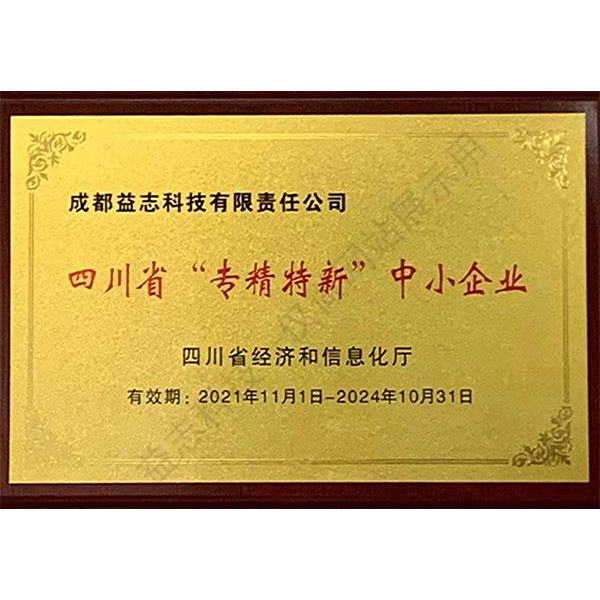
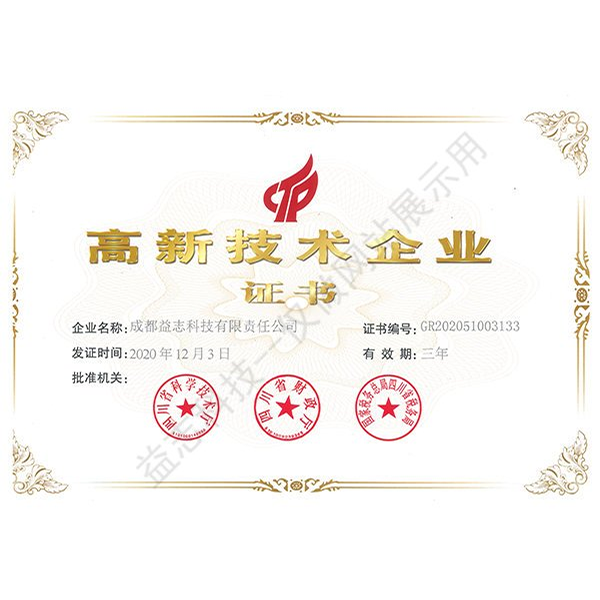
This brings us to a key shift. Previously, you worked with a manufacturing plant that simply sells hardware. Now such structures are entering the market asChengdu Yizhi Technology Co.. It's not just a factory, it's as stated on their websiteyzkjhx.ru, a design institute established with a registered capital of RMB 120 million. The difference in approach is colossal.
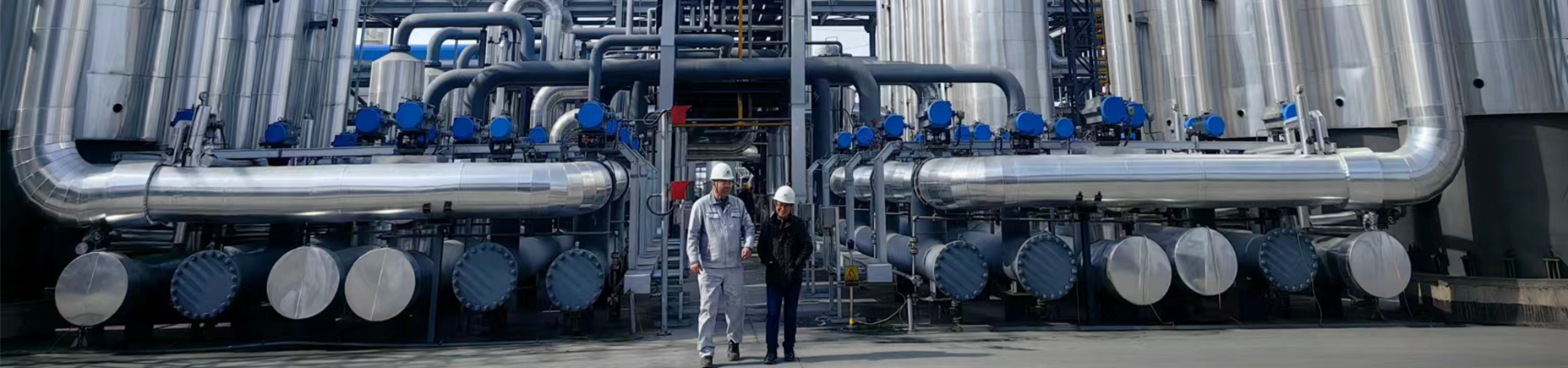
With such organizations, the conversation begins not with the catalog, but with the terms of reference. Their engineers are able to conduct CFD flow modeling to optimize the hydraulic characteristics of the valve for a specific pipeline, and calculate stresses on the journals at non-standard pressures. They were initially designed for complex, non-basic tasks - for example, for the chemical industry or gas purification.Chengdu Yizhi Technology, being part of the structure of Huaxi Chemical Technology, essentially grew out of a deep understanding of technological processes rather than mechanical processing.
This is an important point. Their innovations often lie not in the creation of some fundamentally new type of shutter, but in the area of its precise adaptation and integration. They can offer a design option with a special seat coating (tungsten carbide spraying, stellite), and calculate the required drive torque taking into account the actual viscosity of the medium, and not based on dry air. This is the level at which the line between ?equipment manufacturer? and an “engineering company”. For the end customer, this can mean more reliable operation of the system as a whole, although it requires deeper interaction at the design stage.
Traps and pitfalls: what is left unsaid
Of course, not everything is shiny. Innovation is innovation, but a Russian or Kazakh engineer, accustomed to holding metal in his hands, often stumbles upon unpleasant surprises. The first is the quality of casting. Claimed to be cast iron or steel, but when opened, sometimes you see porosity and cavities in the body of the body, especially in massive sections. This is the scourge of many, even good manufacturers. This can only be combated by strict acceptance control, including ultrasonic testing of selected products from the batch.
The second is certification. “Compliance with GOST, API, ISO” is declared. Everything is on paper. But in practice, a certificate for a material can be “general” for the entire plant, and not for the specific melt from which your bolt is cast. Or tightness tests class ?A? according to GOST, were carried out on one product, and the entire batch was made using the same machine settings, but without verification. Trust but verify is the main principle. It is better to include in the contract the stage of acceptance testing at the manufacturing plant with the participation of its specialists.
Third - logistics and after-sales. With an innovative, custom product, the issue of spare parts may arise. If you urgently need a seal repair kit for your special design, they may simply not have it in stock. We'll have to wait for production. This kills any cost advantage. Therefore, when ordering, it is critically important to think through the issue of spare parts and prescribe the conditions for storage and delivery of spare parts for years to come.
Looking ahead: which way is the wind blowing?
So where is the innovation here? To summarize, they have shifted from the plane of “making it cheaper?” in the plane of “make it smarter for the task?”. The key areas that I see are: integration of sensors (position, wear, temperature) directly into the gate design with output to standard industrial protocols; development of the theme of “smart” control, where the drive and the valve are a single system capable of adapting the closing speed depending on the pressure in the line.
And the second trend is materials. Working with composites, new coatings that increase wear resistance. The sameChengdu Yizhi Technologyin its materials it focuses on designing for chemistry - and this is always a war of materials with the environment. Their potential lies precisely in this deep knowledge of the chemistry of processes, which can be translated into the mechanical part.
So, to answer the question from the title: yes, there is innovation. But they are not loud and not always obvious. These are not breakthrough discoveries, but consistent, sometimes very pragmatic work on improvement, adaptation and integration. This is a transition from selling a device to selling an engineering solution. For us practitioners, this opens up new opportunities, but also requires a new degree of involvement, expertise and control. You can’t blindly trust anyone’s catalogues, neither Chinese nor European. But it is possible and necessary to work competently with those who have proven themselves in practice. And in this segment, Chinese players, especially design institutes, have long been not just copyists, but serious, although not without risks, partners for complex tasks.