Chinese butterfly valves: where to buy?
2026-01-26
The question seems to be simple - type it into the search and choose. But in practice, when it comes to industrial fittings, everything comes down to nuances that a beginner simply does not see. Many people immediately look for the cheapest or most famous brands, losing sight of the main thing: for what specific media, pressures and, critically, what certification is required. I went through this myself, purchasing a batch for a facility with food media. I saved money on the supplier without the necessary declarations - as a result, the entire batch was stuck at customs, I had to urgently look for a replacement and explain things to the customer. So where to buy is not so much a question of geography as of finding the right partner who understands the essence and does not just sell hardware.
What are they really talking about when they talk about Chinese?
Here we immediately need to separate. There is outright consumer goods that are brought from nowhere, often without labeling, with rubber seals that corrode within six months. And there is production that operates according to international standards - API, ISO, DIN. The difference is like between a market tool and a professional one. The latter, in fact, are no longer just Chinese, but a product of global industry simply localized in China. You need to look for them.
The key point is materials. Cheap valves often come with a 304 stainless steel (AISI) disc and EPDM seal for all occasions. But if the environment is, say, abrasive or high-temperature, this will not work. You need 316L, and the seal is Viton or PTFE. A supplier who immediately clarifies these details is already a good sign. Those who send a price list without a single question about the specifications usually cause more problems later.
Personal example: heating networks required steam valves. I found the manufacturer, everything seemed to match the catalog - pressure, temperature. But he didn’t ask about the specific brand of cast iron of the body. They came with spherical graphite, but of poor quality; after a season, fistulas appeared on some of them. It turned out that steam required a certain class of cast iron. Now I always ask not just for cast iron, but for a material certificate.
Search channels: from Alibaba to specialized platforms
Alibaba.com is the first place everyone goes. And this is correct for a general understanding of the market and prices. But there you need to immediately filter out 90% of the offers. I look at Gold Supplier or Verified status - this is the minimum. Then I definitely ask for a list of completed projects, a reference list, especially for the CIS. If it’s not there or it’s scant, I don’t communicate further.
It is much more effective to look not for general sites, but for specialized ones. There are, for example, industry portals for oil and gas or water treatment, where manufacturers maintain their catalogs. The content there is less salesy and more technical. You often come across companies that are not just traders, butdesign institutesor have an engineering department. It’s easier to speak the same language with people like that.
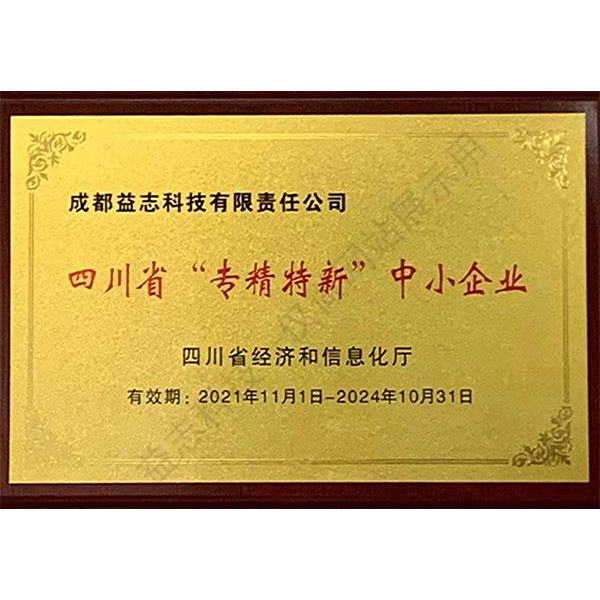
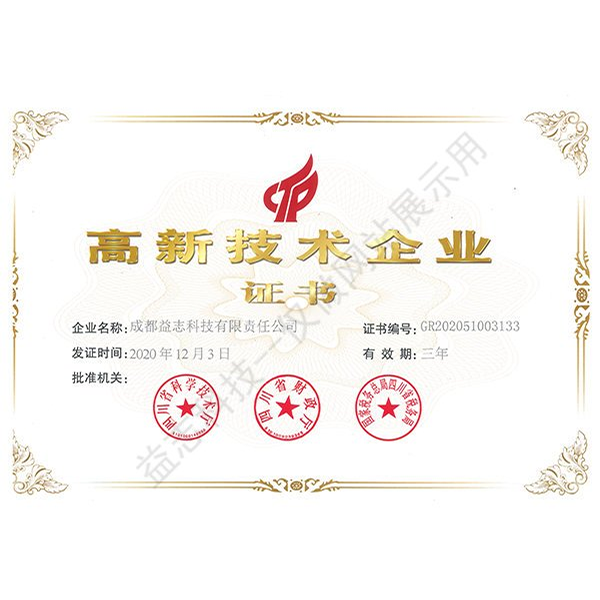
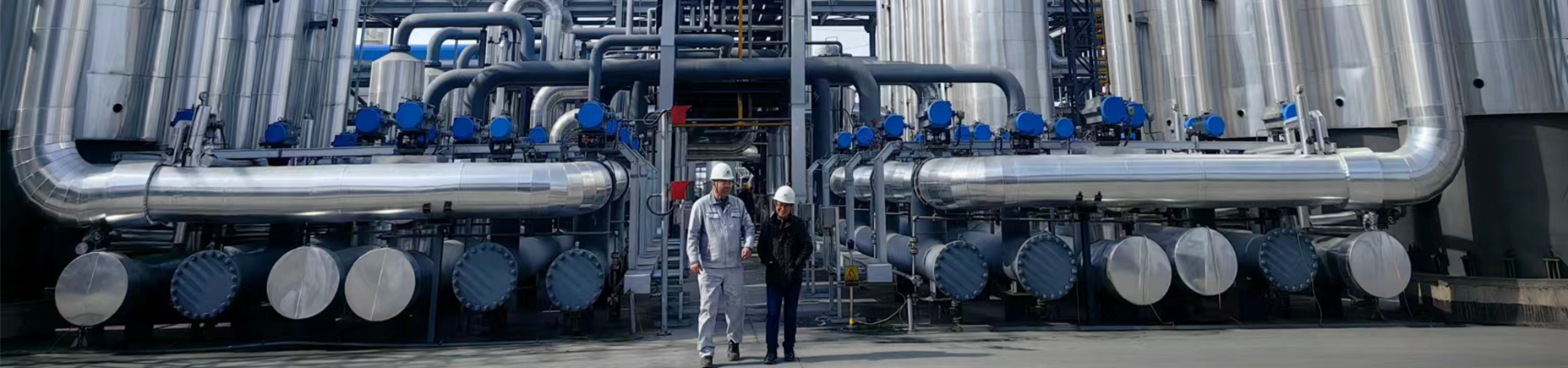
By the way, one of these finds is the websiteChengdu Yizhi Technology Co. (yzkjhx.ru). I paid attention because this is not just a page with a catalog. It is clear that the company is focused on complex solutions - they have fittings, piping, and even design. This is exactly the case when there is engineering support behind the butterfly valve. The authorized capital of 120 million yuan, indicated in the description, also indirectly speaks of seriousness - small offices do not declare such figures.
Criteria for choosing a supplier: what is more important than price
Price is, of course, a deciding factor. But only as a last resort. The first thing I start the dialogue with is the question of certificates. Especially if the object is responsible. We need certificates for materials, for fire safety (if required), for compliance with GOST or TR CU. An honest supplier either immediately sends or clearly states which ones are available and which ones can be obtained for the project. If excuses begin, this is a stop sign.
Second is technical support. I don’t need a sales manager, but a technologist or engineer who can answer questions about seat fit, Kv flow coefficient, or seal compatibility with a specific reagent. I encountered one problem when they sent me a drawing with a non-standard flange design - the manager could not explain whether it fit our standard. I had to figure it out myself, wasted time.
Third - logistics and customs. A good supplier has proven delivery schemes to Russia, Kazakhstan, and Belarus. He knows the nuances of registration and will help with documents. Ideally, he has a warehouse of spare parts or finished products in the EAEU. This dramatically reduces response times in the event of a breakdown. The sameChengdu Yizhi Technology, judging by their Russian-language website, are clearly focused on our market, which means that they have already passed many bureaucratic barriers.
Specifics for different tasks: not everything is universal
This is where many people get confused. Take one type of seal for water and for chemistry. There are no universal solutions. For water supply, for example, a simple cast iron valve with a rubber seal is often sufficient. The main thing is to check the quality of the coating inside and outside (epoxy should be smooth, without sagging).
For the chemical industry, the story is more complicated. We need not just resistant materials, but also specific design features - a full-bore disk so that there are no stagnant zones, a certain type of gland seal. Once we were purchasing caustic soda for a line. They installed valves with a Teflon-coated disk, but did not take into account the design of the neck. As a result, the medium entered the area between the rod and the disk, corrosion began, and the valves jammed. I had to change to a model with a rod completely isolated from the environment.
Another subtle point is management. Electric drive or pneumatic drive? Chinese manufacturers now make very decent actuators, but they need to be selected in conjunction with the shutter, and not separately. It is better when the supplier is an integrator himself and provides a guarantee for the entire shutter + actuator assembly. Otherwise, in the event of a breakdown, responsibility will begin to shift: the valve manufacturer blames the drive, and vice versa.
Final algorithm: how I act now
I proceed from the customer’s specifications (technical conditions). I clearly describe the environment, pressure, temperature, cyclicity of work, standard for flanges.
I am looking for 3-4 potential suppliers. Priority is given to those who have Russian-speaking specialists or representatives. Websiteyzkjhx.ruthe same Chengdu Yizhi is a good example, the information is structured, there are sections with technical data, and not just contact us.
I am requesting a commercial proposal with the obligatory attachment: specification of materials, general drawings, list of certificates, production time and delivery terms (FOB, CIF, etc.). I see how quickly and completely they respond.
Please provide contacts for technical consultations. If they connect you with an engineer right away, that’s a big plus.
I am requesting a reference list for similar projects. If there are objects in the CIS, I try to find reviews myself, sometimes through mutual acquaintances in the industry.
And only then do I compare prices. It often turns out that an offer that is 10-15% more expensive is paid for by the presence of a spare parts warehouse in Moscow or a detailed manual in Russian. Trifle? In fact, in the event of an accident, these little things make all the difference.
So, back to the title question.Chinese butterfly valvestoday is not a lottery if you approach your choice systematically. It’s worth buying not where it’s cheaper, but where they can provide not just supply, but engineering support and understanding of your specific task. And there are such companies, even if there are not thousands of them, on the market.