Chinese flanged valves: innovation?
2026-01-26
When you hear “Chinese flanged valves?”, the first thing that comes to mind for many is cheap and cheerful. Or vice versa, suspiciously cheap. Working with the supply of fittings for CIS projects, I constantly encounter this stereotype. But the question is different: what is hidden behind this “cheapness?” Today? Just a low price or already a reasonable value for the money? And where is the place for real innovation, and not just copying old models? I’ll try to sort it out based on what I saw myself.
From ?iron? to specifications: evolution of the approach
Previously, about ten years ago, the Chinese shutter was often a pig in a poke. The shipment arrived, seemingly according to the drawing, but in fact - the thickness of the disk was “floating”, the seal was made of an incomprehensible rubber, which after six months in an aggressive environment became tanned and crumbled. Now the situation is different. Yes, the price pressure is colossal, but the requirements of designers, especially at large facilities, have increased. Simply casting a body from gray cast iron and assembling it with bolts is not enough.
The key shift I'm seeing is working ahead of the curve on materials. Not just “stainless steel”, but specific brands suitable for the environment. For example, for certain hydrocarbons or weak acids, they began to offer not just 304, but 316L with a reduced carbon content to minimize corrosion on welds. This is not an innovation on a global scale, but for the mass segment it is a serious step. The customer can now receive not an abstract “flanged valve”, but a product that meets specific technical regulations, albeit with some tolerances.
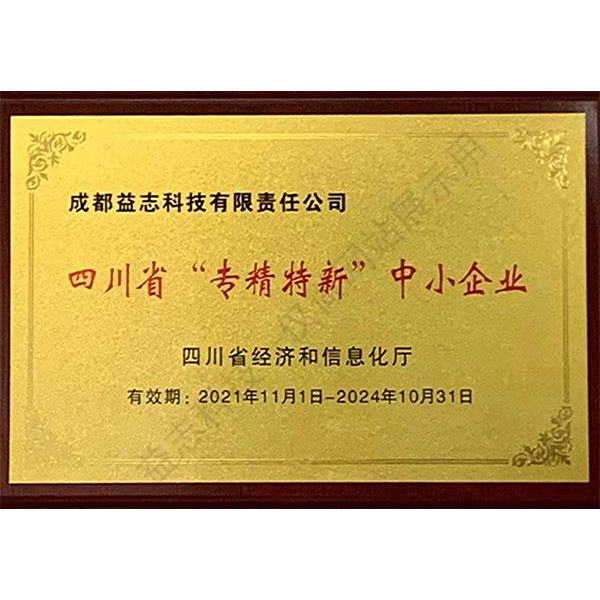
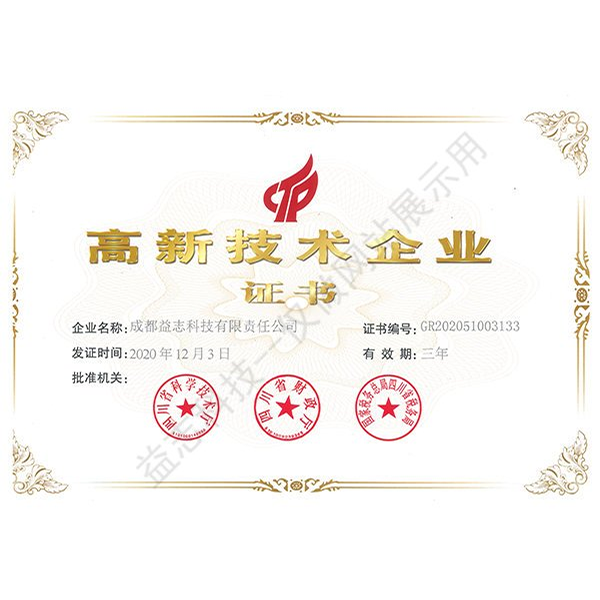
Here's a concrete example. One water treatment modernization project required valves with EPDM sealing, but with special requirements for elasticity at low temperatures. Standard samples from several factories were not accepted. Then through partners, likeChengdu Yizhi Technology Co.(this is their Russian-language portalyzkjhx.ru), which are positioned as a design institute, and not just traders, managed to reach engineers. They did not immediately say “yes?”, but requested detailed environmental parameters and carried out their tests. As a result, we selected a rubber compound that satisfied the requirements. This is already a level of service, and not just sales of hardware.
Constructive little things that make a difference
Innovation is often not in revolutionary design, but in the details. Let's take the shaft. Previously, all spindles were made of ordinary carbon steel, even on critical components. Nowadays you increasingly see hollow shafts made of stainless steel - this reduces weight and increases corrosion resistance, and for some flushing systems this is a design advantage. But there are pitfalls here too.
Once there was a story with a hollow shaft with a large diameter, DN500. The specification stated “stainless steel”, but without a brand. It arrived and it looks shiny. But during installation, when they began to tighten the drive, they felt that the shaft was “playing”. more than calculated. It turned out that the wall thickness was at a minimum, and the material was something like 201 grade, not very strong. We had to strengthen the structure on site. Conclusion: even a progressive design requires strict control over execution. Now we always require a passport with the chemical composition of key parts, and some suppliers, such as the mentioned Yizhi, agree to this because they have their own laboratory anddesign instituteat the core.
Another point is the shaft seal system. The classic stuffing box seal is cheap, but there are always maintenance issues. More and more factories are offering bellows sealing as an option, even on standard flanged valves. This is certainly a step forward for environments where absolute tightness is important and there is no access to tighten the seal. But the price immediately jumps by 30-50%. And here you need to clearly understand whether the customer needs it. Often designers play it safe and demand a bellows, although in fact the environment is non-aggressive and the seal would be enough for the entire service life. This is not innovation, but rather competent engineering - the correct selection of a solution for the task.
Production process and control: where does reliability lie?
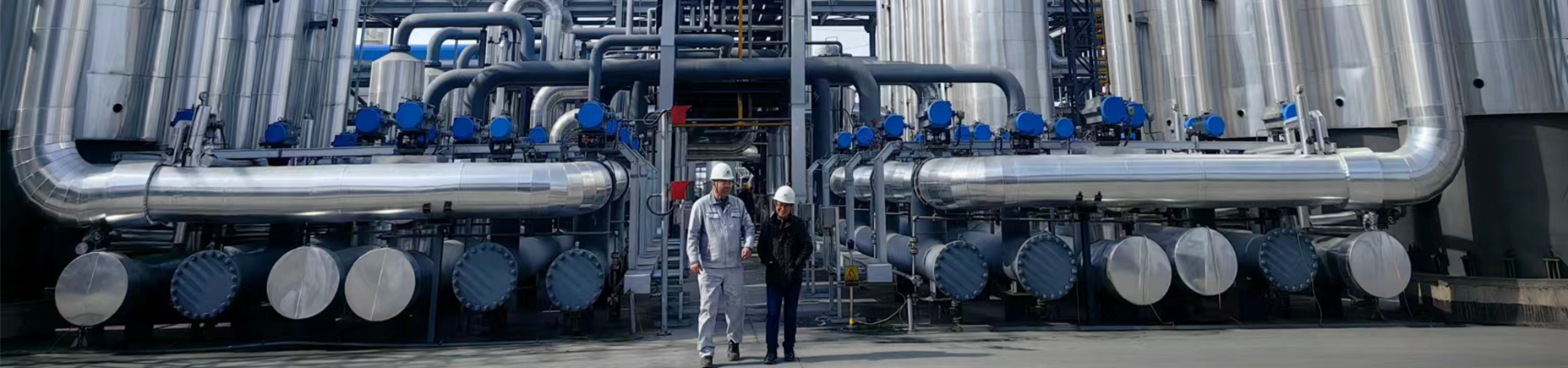
You can talk about innovations in materials and designs, but if production is a makeshift workshop with outdated machines, there will be no point. Here, Chinese manufacturers have a huge range. Large factories that export to Europe or for oil and gas giants inside China are equipped with the latest technology: CNC, robotic welding under argon, ultrasonic inspection of seams.
But my experience shows that the main thing is not even the machines (although they are important), but the control system. I saw how at one plant, after machining, every part, especially seats under the seat and seals, is checked not just with calipers, but with 3D scanners to build deviation maps. This allows you to predict how the shutter will behave after assembly. For such critical products asflanged valvesfor the chemical industry, this is critical. Because a chemical leak is not just water on the floor, it is an emergency.
At the same time, there are a lot of small factories where control is a visual inspection by a foreman. And their products also enter the market under the common brand “Made in China?”, creating that same ambiguous reputation. Therefore, now for us the key criterion is not the country of origin, but the specific manufacturer and its competencies. The sameChengdu Yizhi Technology Co., Ltd., judging by their materials and registered capital of 120 million yuan, Huaxi Technology was originally created as an engineering center, which implies a different approach to quality than that of a purely assembly shop.
Adaptation to CIS markets: innovation or necessity?
A separate topic is how Chinese products adapt to our realities. And there are interesting points here. For example, climate control. Standard Chinese valves are often rated for temperatures down to -20°C. This is unacceptable for Siberia or the northern regions of the CIS. Realizing this, advanced suppliers began to offer ?Arctic? execution: special low-temperature seals (say, NBR with special additives or even fluorine rubber), the body material is not cast iron, but carbon steel with impact strength tested at -40°C, and, of course, more thorough anti-corrosion treatment.
Is this innovation? Rather, competent customization. But to do it, you need to deeply understand the requirements of GOST, TR CU and, most importantly, real operating conditions. Some suppliers simply stick on the ?HL? tag. (cold climate), without changing anything essentially. Others, and they are still a minority, conduct real tests and provide protocols. This is the very transition from trade to engineering.
Another aspect is document flow. Previously, the quality passport (Certificate of Conformity) was a formality, often with translation errors or non-compliance with real parameters. Nowadays, you increasingly see full-fledged passports in Russian, with the numbers of the melts, the results of mechanical tests, even with recommendations for installation and maintenance. This is invaluable for installers and maintenance services. Websiteyzkjhx.ru, by the way, is a good example - the information is structured specifically for a technical specialist, and not just for a purchasing manager.
Results: so where is the innovation?
Returning to the title question. If by innovation we mean breakthrough, previously unseen technologies in the field of shut-off valves, then Chinese flanged valves, frankly speaking, do not offer them. World leaders like German or American companies are still ahead in terms of premium solutions, complex alloys and digitalization (built-in position sensors, residual life prediction).
But if we talk about innovations in accessibility, in production flexibility and in the speed of adapting a standard product to the specific, increasingly complex requirements of a growing market, then Chinese manufacturers, especially the upper echelon, are demonstrating very dynamic development. Their strength is not in inventing the bicycle, but in making that bicycle as reliable as possible for the given conditions, while maintaining a competitive price.
That is why today the choice in favor of a Chinese shutter is not always a choice in favor of the cheapest one. This is increasingly a conscious choice in favor of the optimal price-quality-functionality ratio. for a project of medium complexity. And this requires not just machines, but an engineering approach, a deep understanding of the customer’s technologies and processes. And those companies that develop these competencies set the tone, gradually changing the old stereotype. I think this is the main innovation – changing the very approach to business.