Steel butterfly valves from China: prospects?
2026-01-26
When you hear “Chinese steel valves,” the first thought for many is “well, that’s cheap.” And this is perhaps the main stereotype that prevents us from seeing the real picture. Over the past seven or eight years, the situation has changed dramatically, but the inertia of thinking remains. I’ll try to break it down, based on what I saw myself on projects and in negotiations with suppliers.
From ?iron? to an engineering product: the evolution of quality
Previously, about ten years ago, yes, the problem was in the base materials. Steel 316, which according to the passport was 316, could in fact show worse corrosion resistance. Seals are a different story: EPDM rubber, which crumbled after the first cycle of hot steam, or Teflon inserts that could not withstand the stated pressure. Now this is, rather, the lot of frankly handicraft workshops that sell everything through Alibaba.
A key shift occurred when large Chinese manufacturers, especially those serving the domestic petrochemical or energy markets, began to be certified to API 609, ISO 5211. This is not just a piece of paper. To obtain such a certificate, you need your own test benches and control at all stages. I saw a factory where everyonesteel butterfly valveBefore shipment, they are tested for tightness under pressure and for torque. This is a different level of discipline.
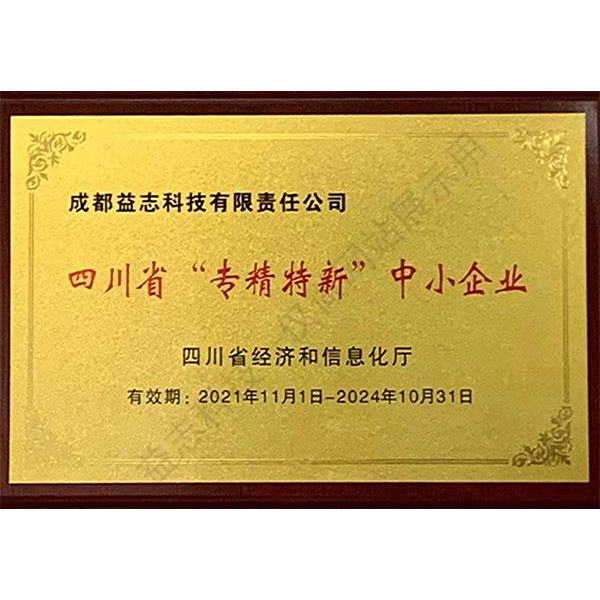
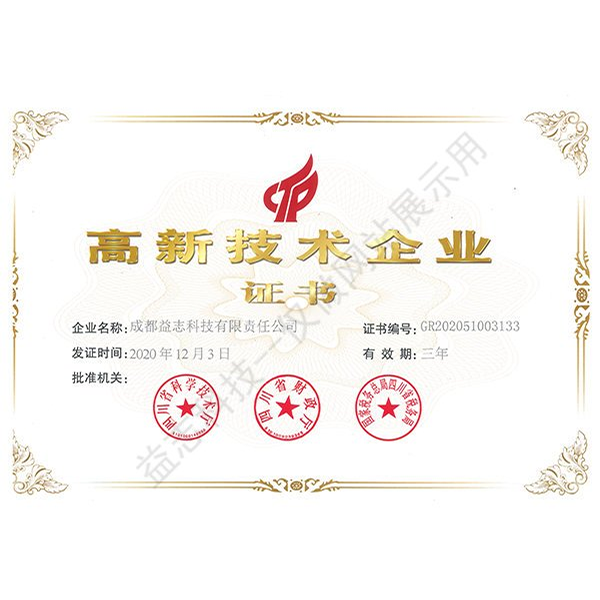
But the nuance is that not everyone has this quality. It is concentrated among players who initially position themselves as engineering companies, and not just factories. Here, for example,Chengdu Yizhi Technology Co.- this is a design institute created by a chemical technology company. Their websiteyzkjhx.ruinitially designed for complex technical solutions. For them, the production of fittings is not a separate business, but part of a chain for their own facilities. Therefore, the approach to the same valves is different: materials, calculations for flange loads, selection of seals for a specific environment. They have a registered capital of 120 million yuan - that says something. Such companies do not chase the cheapest contract; they work on complex niche projects where reliability is needed.
Price vs. Cost of ownership: where's the catch?
Yes, the unit price is often attractive. But if you take it for a serious object, then you need to count differently. Once we purchased a batch of inexpensive DN300 valves for water supply. On paper everything looked good: stainless steel disc, double-sided eccentric fastening. But in reality there was a problem with the stuffing box seal of the rod. After six months of operation in winter, leaks began. It turned out that the packing material was not designed for cyclic temperature changes from +5 to -20. The manufacturer, of course, sent new sealing kits, but installation, simple installation, and the work of mechanics - all this more than ate up the initial savings.
Since then, we have always requested not just a certificate for the housing material, but detailed specifications for ALL sealing components: brand of rubber, Teflon composition, type of lubricant in bearing units. Chinese mid- and high-end suppliers are now ready to provide this, often even with test reports from their laboratories. This is the very transition from price to cost of ownership.
Another point is completeness. It is a good sign when the valve is supplied immediately with an ISO 5211 drive flange, limit switches and even a mechanical position indicator “as part of the basic delivery set”. This suggests that the manufacturer is thinking about integrating the product into the system, and is not just selling an “iron butterfly”. The same manufacturers associated with the project business asChengdu Yizhi Technology, this approach is in the blood.
Logistics and support: unobvious difficulties
The future depends not only on the quality of the product, but also on what happens before and after delivery. Long sea transportation is a risk of corrosion if improperly packaged. I have seen cases where an excellent quality shutter arrived with pitted rust on the stem due to condensation inside the vacuum packaging. Now progressive suppliers use silica gel and corrosion inhibitors, but this must be specified separately.
Technical support is where it often fails. Writing to a general email and receiving a template response three days later is not support. Those who have a Russian-speaking engineer who understands the product, and not just a sales manager, are valuable. The ability to quickly obtain a drawing in AutoCAD format, a 3D model, and an installation diagram for flange tightening torques is critically important for on-site installers.
Here are sites likeyzkjhx.ru, which were originally made for the CIS, have an advantage. The information is structured, there are catalogs, and often a section with technical documentation. But again, this is just a sign. You need to check with personal communication: ask a difficult question about selecting a valve for a mixture with abrasive particles and see how quickly and to the point they answer.
Niches where Chinese steel valves are already competitive
Petrochemicals ?medium? parameters. We are not talking about critical lines with high pressure and temperatures of up to 500°C, but about many auxiliary process lines, water treatment, and HVAC systems at industrial sites. Here, the requirements for pressure (up to PN25) and temperature (up to ~200°C) are well within the capabilities of high-quality Chinese valves with Teflon or metal seals. Competition with European brands is based on price with comparable parameters.
Energy, especially coal and gas. Systems for ash removal, supply of lime suspension, process water. The environment is abrasive and often corrosive. The durability of the disc and seat and maintainability are important here. Chinese manufacturers offer solutions with stellite or tungsten carbide deposited on critical surfaces, and the price can be 30-40% more profitable. But, I repeat, you need to deeply analyze the specific proposal and surfacing technology.
Communal sector of large cities. The diameters are large (DN800 and above), the pressures are small. The main enemy is the low quality of network water and irregular maintenance. The reliability of the design “out of the box” is important here. and the presence of service centers or at least spare parts warehouses in the region. Some large Chinese players are starting to set up such spare parts warehouses in the EAEU countries, which seriously changes the equation.
What's the result? There are prospects, but they are segmented
So, the prospects aresteel butterfly valves from ChinaThere are definitely some, but they are not for everyone. This is not a one-size-fits-all answer to every request. This is an option for a technically competent customer who is willing to invest time in choosing a supplier, analyzing documentation and negotiating.
The ideal candidates for this choice are projects where the optimal cost of ownership is important, rather than the minimum purchase price, and where the environmental parameters are not at the limit of the equipment's capabilities. And where there is its own or external technical supervision service that can check the equipment at the entrance.
The future, as I see it, lies in further segmentation of the market. There will be clear “budget” plans. brands for non-critical applications and strong engineering brands, like the same direction fromChengdu Yizhi Technology Co., which will no longer compete on price, but on technical compliance, service and willingness to solve non-standard problems. Already now they offer valves for a specific project, and not vice versa. This, perhaps, is the main shift and the main perspective.