Chinese butterfly valves: innovation?
2026-01-25
When you hear “Chinese butterfly valves?”, the first thought for many is cheap and cheerful. But somehow I don’t think about innovation. But is this true now? Having worked with this equipment for ten years, I see that the picture is much more complicated. Yes, the flow of consumer goods has not gone away, but at the same time a layer of manufacturers has grown who are really investing in developments. And their products are no longer just copies, but solutions for specific, sometimes very tough, tasks. The question is how to distinguish one from the other and what is generally considered innovation in this seemingly conservative area - reliability and tightness are more important than bells and whistles.
From copies to adaptation: evolution of the approach
Previously, everything was simple: they took dimensions from a European or American model, molded the body and installed the most affordable seal, usually EPDM. Did it work? At low pressures and with water - yes. But as soon as an aggressive environment was given or a temperature requirement above 120°C, problems began. The flanges were “walking”, the stuffing box seals were leaking after six months of operation, and it was better not to ask about the service life of the switching cycles.
Now the approach is different. Let's take for examplebutterfly valvesfor the chemical industry. Here it is no longer possible to simply copy the geometry. The key issue was materials. I saw how engineers at a factory near Chengdu spent six months experimenting with coating a disk for transporting a suspension of calcium chloride with abrasive. We tried nickel plating and various coatings. As a result, we settled on a sintered coating based on tungsten carbide - wear dropped significantly. This is not a world sensation, but for a specific customer it is a breakthrough.
Or seats. The standard is fluorine rubber FKM. But its chemical resistance is not unlimited. One organic processing project required ester resistance. Standard FKM did not work. The Chinese suppliers we worked with offered several options for modified, reformulated FKM-based elastomers. Picked up. This is the very adaptation that costs a lot. Not the creation of a new polymer from scratch, but the ability to modify an existing one to suit the request.
Bottlenecks and where to look for problems
Despite progress, weaknesses remain. And often they are not in the disk or case itself. The first is the quality of casting of large parts, especially bodies with flanges for large diameters, say, DN600 and above. Internal shells and heterogeneity of cast iron structure are a scourge. A good manufacturer does ultrasonic testing selectively, an excellent manufacturer does it for each casting. But this immediately comes at a cost.
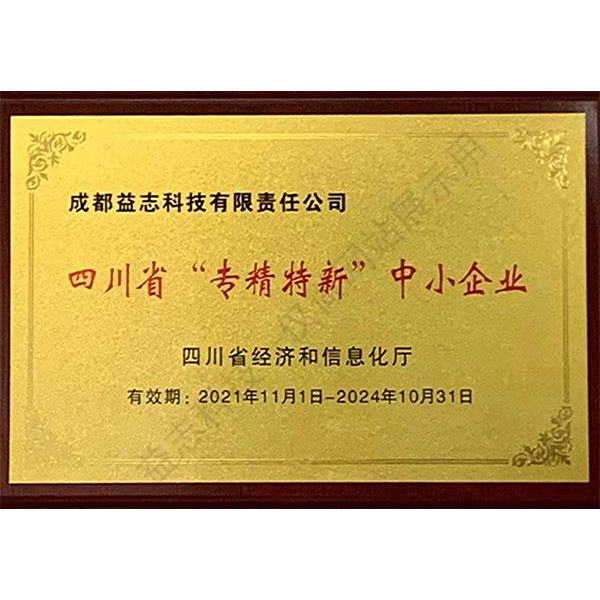
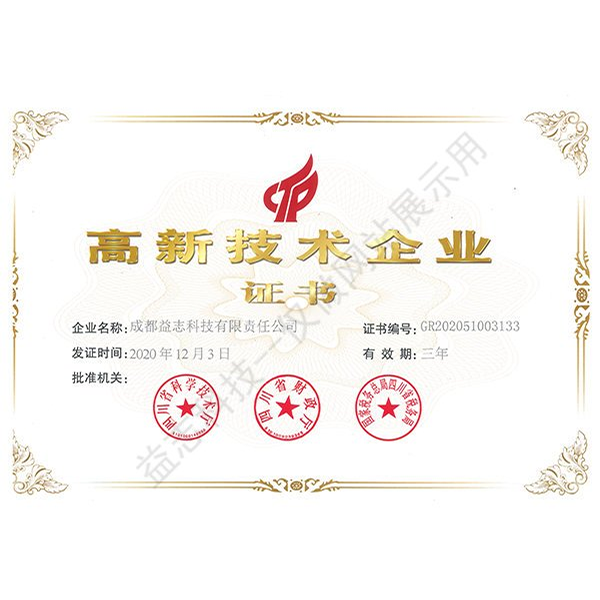
The second is actuators. Many Chinese factories focus on valves, and purchase pneumatic or electric actuators externally. Docking is a headache. Inconsistency of moments, backlash, non-standard adapter flanges. The real innovation here comes from those who have their own drive assembly line and proven interfacing protocols. Companies such as Chengdu Yizhi Technology Co., which originally grew out of a design institute at a chemical holding company, often have the advantage of thinking systemically: valves + actuators + control systems.
The third point is testing. Standard factory testing for leaks and strength is the norm. But what I would call an innovation is the presence in production of stands for cyclic testing (opened and closed) and for simulating working environments. I haven't seen this happen to everyone. On the websiteyzkjhx.ruYizhi Technology, by the way, mentions testing facilities for simulating long-term resource tests in its capacity description. If this is truly the case and not marketing, then this is a serious claim.
Case: when is ?standard? didn't work
I’ll tell you about one bad experience that taught me a lot. The order was for a batch of valves for a water recycling system at a metallurgical plant. The medium is warm water with a suspension of scale. The pressure is low, the temperature is up to 80°C. It would seem like a simple task. We chose standard cast iron valves with EPDM seals from a trusted, mediocre supplier.
After four months, there were complaints about leaks along the rod and difficulty in controlling it. They opened it. The problem turned out to be two things. First, the fine abrasive suspension got into the seal groove, turning into an abrasive paste that wore out the rod. Secondly, the rod itself is made of “stainless steel”. 2Cr13 proved to have low corrosion resistance under conditions of constant moisture and vapor. This was not a defect, but a discrepancy between the material and real, more stringent conditions.
A solution was found with another manufacturer. Offeredbutterfly valvewith a design where the rod was protected by a sliding sleeve (removal sleeve), excluding contact of the medium with the stuffing box area. And the rod material was replaced with AISI 316. And the key disc sealing ring was made of EPDM, but with the addition of Teflon impregnation to reduce friction and adhesion of particles. It cost 40% more. But the equipment has worked for three years without any complaints. Is this innovation? Rather, it is the competent application of known solutions in a non-standard combination.
The role of design institutes and specific manufacturers
This is where, in my opinion, lies the main shift. Previously, the plant did what it could, and the customer tried to adapt. Nowadays, requests are increasingly being generated by engineering companies or, as in the case of Chengdu Yizhi Technology Co., Ltd., design institutes embedded in industrial holdings. Their registered capital of 120 million yuan is not just a number, it is an opportunity to invest in R&D for the purposes of their own group of companies.
Such a manufacturer initially thinks differently. He sees not just a valve, but a node in the technological chain: what kind of water hammer there will be, how maintenance will be carried out, what compatibility with neighboring equipment. Therefore, their catalogs are often not just size tables, but sections with recommendations for use for different industries: chemistry, pharmaceuticals, pulp and paper production.
It is from such players that we can expect real improvements. For example, the development of valves with a full bore disc, but with a lightweight design due to the optimization of stiffeners using the finite element method (FEA analysis). Or the introduction of a system of RFID tags on each large valve, where data about the material, production date and test conditions are recorded. This is not space technology, but it is a significant step towards digitalization and traceability for the industry.
Results: so where is the innovation?
Let me return to the title question. Innovation in Chinese butterfly valves today is a rarity in the form of breakthrough technology. More often it is innovation of process and approach. This is the ability to quickly adapt the design and materials to a non-standard technical order. This is the integration of production with engineering. This is an investment in quality control and testing facilities that were previously considered overkill.
Buying Chinesebutterfly valveToday, it is no longer possible to say unequivocally: “cheap and reliable?” or “cheap and unreliable?”. It all depends on the specific manufacturer and his philosophy. If this is a factory driving volume, the risks are high. If this is a company with a serious design and engineering background, like the mentioned Yizhi Technology, the chances of getting not just a product, but a technical solution are much higher.
So yes, there is innovation. But they have become less noticeable and more practical. They do not shout about themselves with loud headlines, but hide in the details: in the specification of the rod alloy, in the formula of the rubber compound of the seal, in the acceptance test report. And it is precisely by these details that they should now be assessed.