Chinese butterfly valves: trends?
2026-01-25
When you hear “Chinese butterfly valves?”, the first thing that comes to mind for many is the price. And immediately after this, alas, doubts about quality. Having worked with the supply and implementation of fittings for chemical and industrial facilities, for a long time I myself treated this segment with lukewarmness. There were too many samples where the seal “floated?” after a couple of cycles, and corrosion on the body appeared faster than the warranty period expired. But about five to seven years ago, something began to change noticeably. And it’s not just that the products have become more expensive. There are players who don’t just churn out hardware according to someone else’s drawings, but seriously invest in engineering and materials. And now this is interesting.
From ?iron? to an engineering solution: a paradigm shift
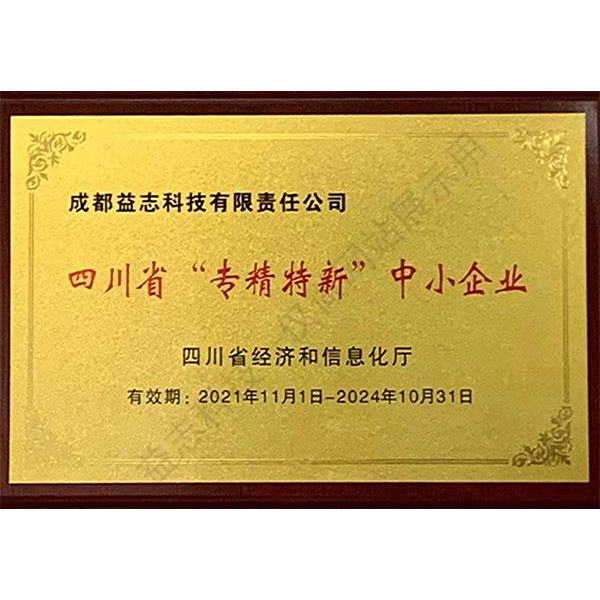
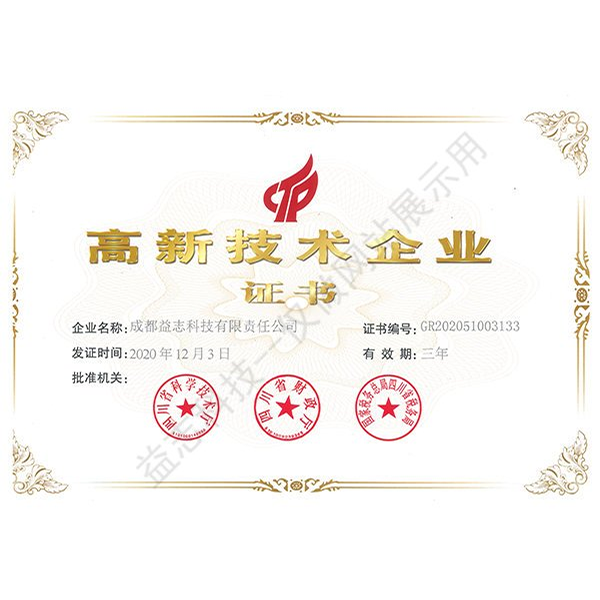
In the past, a Chinese action was often just a copy made from whatever was cheaper. Now some manufacturers, especially those that grew out of large design or technology holdings, are taking a different approach. They see the entire technological cycle of the customer. Let's take for exampleChengdu Yizhi Technology Co.- this is not just a plant, but a design institute created by the chemical technology company Huaxi. Their websiteyzkjhx.ru- this is not just a catalogue, there is a technical bias there. When the manufacturer initially understands how the environment in the pipeline will work - aggressive, abrasive, at high temperatures - this changes the approach to designing the valve itself. It’s no longer about “doing it like DeZURIK”, but about solving a specific problem for a specific installation.
In practice, this translates into details. For example, the choice of saddle material. Standard - EPDM, NBR. But for certain solvents or media with finely dispersed inclusions this is not enough. I have seen versions of them with seats made of polished Hastelloy or with special coatings based on fluoroplastic. This is not a mass product, it is a custom solution. And the price, accordingly, is no longer “budget”, but competitive in relation to European mid-segment manufacturers. But then you get not just a device, but a guarantee that their engineers have calculated the operating modes and selected the configuration. This is the main trend - the transition from selling hardware to selling engineering solutions.
Of course, not everyone works this way. The market is still flooded with cheap stampings. But it is the presence of companies like Yizhi, which declare a registered capital of 120 million yuan and have a serious technology company behind them, that changes the perception of everything “Chinese?” segment. They set the bar. And now, when the client asks for “something cheaper?”, you have an argument: “Either we take a conditional no-name with the risk of frequent replacements, or we consider an option from an engineering company, where it is a little more expensive, but they will give calculations and adapt the unit to your task?”. That's a different conversation.
Materials and bottlenecks: where is the real progress?
If we talk about case materials, the progress here is obvious. Nodular cast iron (GGG-40, GGG-50) has become virtually the standard for medium pressure applications, displacing brittle gray cast iron. Stainless steel 304/316 - also no surprises, but WCB for hydrocarbons has begun to be offered more often. But what has really changed is the quality of casting and subsequent processing. In the past, internal sinkholes or uneven surfaces were common. Now leading manufacturers are strict about this. I myself saw how at the acceptance stage they measure the roughness in the contact area between the disk and the seat - they use instruments, not by eye.
The weakest link in any butterfly valve isseal. And here Chinese manufacturers took two paths. The first is licenses and cooperation. You can often find valves with seats from well-known European manufacturers of sealing materials. This immediately removes a lot of questions from the customer. The second way is to develop our own composite materials. I have heard about developments based on PTFE with various fillers (carbon, graphite, stainless steel chips) to improve wear resistance and anti-friction properties. In tests, some show themselves to be very worthy, especially in conditions of dry bulk media or weak acids.
But there are also pitfalls. Once we supplied a batch of valves with a “unique”? fluoroplastic seat from a new supplier for a line with low pressure steam. The manufacturer swore that it would hold up. But in fact, after six months the saddle began to “leak”. - not along the perimeter, but as if microporosity appeared. It turned out that the material was not designed for constant thermal cycles. I had to urgently change it to proven EPDM with heat-resistant additives. Conclusion: even the most advanced materials require confirmation in real, not laboratory conditions. And now we always ask not just for a certificate, but for references with similar working conditions.
Drives and automation: integration as a challenge
The shutter itself is half the battle. It needs to be opened and closed. Previously, Chinese manufacturers often offered ?naked? valves, and the drive was installed whatever was needed, usually the cheapest pneumatic or electric. There were problems with mounting dimensions, backlashes, and setting limit switches. The trend now is to offer comprehensive solutions. The sameChengdu YizhiOn its website it positions itself as a supplier of complete solutions for piping systems, which is logical for a design institute.
In practice, this means that they often select or even manufacture actuators that are ideally matched to their valves in terms of torque, speed and interfaces. This is a huge plus. Because when problems arise, you don't have to figure out whether the valve manufacturer or the actuator manufacturer is at fault. There is only one responsibility. I saw their control cabinets for entire groups of gates - the assembly is neat, the logic is clear, Siemens or Schneider components are used. This suggests that they think in terms of industrial control systems, and do not just sell mechanics.
However, automation is also a matter of communication standards. Not everything is going smoothly here yet. Many are willing to supply a drive with Profibus or Modbus, but when it comes to more modern protocols such as Profinet or wireless interfaces, the choice narrows. The most common options are standard 4-20 mA analog signals and discrete I/O. For most applications this is enough, but for modern “smart” ones. There are already not enough factories. I think this is the next milestone they have to take.
Price vs. Cost of ownership: what are they talking about with the customer now?
Previously, the conversation began and ended with the price per piece. Now, thanks to more advanced vendors, we are increasingly moving the discussion towards total cost of ownership (TCO). A cheap 300 euro valve that needs to be replaced every two years due to seat wear or stem leakage is inferior in the long term to an 800 euro valve that will last 10 years with scheduled maintenance only every few years.
This is especially critical for facilities where stopping the line means huge losses. Chemical production, pulp and paper mill, thermal power plant. Here no one takes risks for the sake of immediate savings. And this is where Chinese manufacturers from the premium segment begin to win. They can provide detailed calculations for the service life, maintenance schedules, and a guarantee not only for the housing itself, but also for the uninterrupted operation of the seal under the stated conditions. This is a level of service that was previously associated only with Western brands.
Let me give you an example from practice. For one food factory (syrups, high purity requirements), we compared a standard European valve and an analogue from a Chinese engineering supplier. The price differed by 35% in favor of Chinese. But the main argument was not the price tag, but the fact that the Chinese quickly redesigned the flange to fit the existing pipe routing (non-standard center-to-center size) and offered a version with polishing of the entire internal surface to Ra 0.8 microns without increasing the cost. The Europeans requested a separate period of 16 weeks for this. The solution was obvious. The shutters have been operating for four years now, with no complaints.
What's the result? Not trends, but reality
So are there any trends? I think these are no longer trends, but an established reality. The Chinese butterfly valve market is sharply divided. On the one hand, there is a sea of cheap, often low-quality products that find their buyers in irresponsible areas or where the main criterion is “if only it works today.”
On the other hand, there is the emergence of strong, technologically advanced players who no longer compete on price, but on competence, flexibility and an integrated approach. Companies likeChengdu Yizhi Technology Co., with their design and technology base, is a prime example of this segment. They don't just make valves, they solve problems of controlling the flow of media in industrial settings. And this changes the rules of the game.
For us, as specialists, this means that now we cannot be guided by stereotypes when making a choice. We need to look deeper: who the manufacturer is, what is his background, whether he has his own developments, how he behaves when solving non-standard problems. The Chinese shutter is no longer synonymous with risk. In some cases, it has become synonymous with optimal, balanced and technological choices. And this is perhaps the most important result of recent years. It will only get more interesting - competition will force everyone to develop.