Chinese butterfly valves: innovations and trends?
2026-01-19
When you hear about “Chinese butterfly valves,” the first thought for many is still “cheap and cheerful,” but somehow they don’t think about innovation. But this is no longer the case, if you do not take into account the lowest price segment, where really anything can happen. I have been working with fittings for ten years, and during this time Chinese manufacturers have gone from copying to completely meaningful design. Now the main trend is not just to make a reliable piece of hardware, but to integrate it into smart systems. But even here there are pitfalls, which are rarely written about in glossy catalogues.
From copies to our own developments: evolution under pressure
Previously, years before 2015, the bulk of products were replicas of European or Japanese models. They took a drawing, simplified the material of the saddle somewhere, the thickness of the disc somewhere - and off to the market. Did it work? Often yes, especially in less critical systems. But the problems were systemic: instability of quality from batch to batch, problems with complete tightness under cyclic loads, and the service life of the seals left much to be desired. Many of my clients then stepped on this rake, trying to save money on large projects.
The turning point, in my opinion, came when large Chinese energy and chemical holdings began to tighten their internal procurement standards. They needed fittings for their own new, modern production facilities. This created a demand for quality, not just price. Manufacturers appeared who began to invest in their R&D, inviting engineers with experience working for such giants asFlowserveorVelan. This is not a public story, but it can be seen from the product.
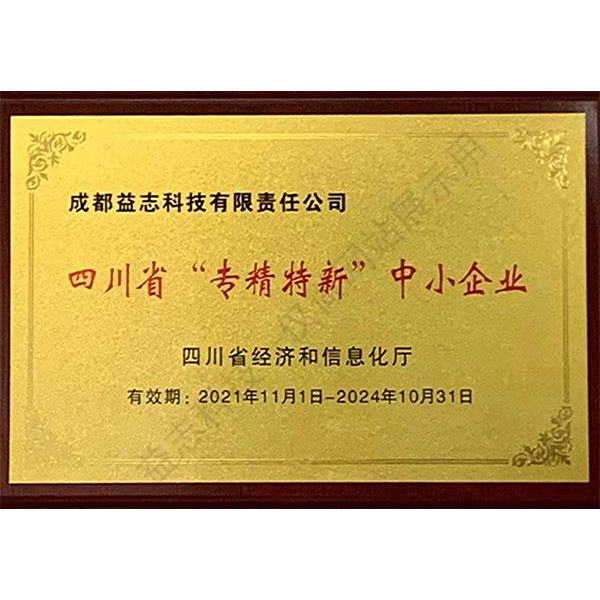
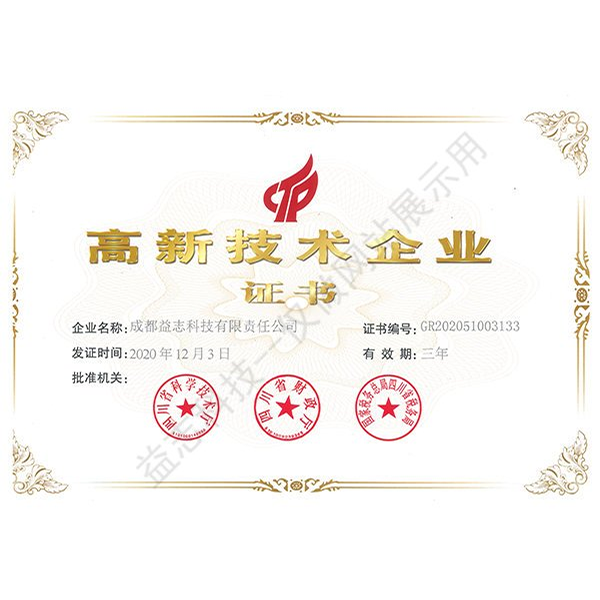
A striking example is the companyChengdu Yizhi Technology Co.(their website, by the way,yzkjhx.ru). This is not just a plant, but a design institute created by the chemical holding Huaxi Technology. When you have a registered capital of 120 million yuan, you can afford not only casting and assembly, but also serious strength calculations and selection of materials for aggressive environments. I have seen their valves for transporting slurries in the mining industry - they have a reinforced disc design and a combined seal that withstands abrasive. This is already a level competing with the second tier of European brands.
Where are innovations heading: not only “smart”, but also “enduring”?
Now everyone is talking about IoT and “smart” technology. fittings Yes, this is a trend. Chinese manufacturers are actively offering valves with position sensors, torque sensors, and even with residual life prediction. But there is an important nuance here. Often ?smart? the filling is a collaboration with local IT companies, and the mechanics are our own. Sometimes the integration is lame: the sensor works, but the protection from moisture or vibrations on a real pipeline is rather weak. I had to deal with a situation where the ?smart? the module failed before the first maintenance of the shutter itself was required.
Therefore, in my opinion, more significant innovations lie in the area of materials and design solutions. For example, more and more mid- and high-end models come with a full bore EPDM or PTFE seat, but with a metal restrictor ring to prevent extrusion at high pressure. Or the use of disc coatings such asnickel-phosphorus (Ni-P)not just “for show”, but with clearly controlled thickness and hardness for specific environments - this is already serious.
Another direction is lightweight but durable structures for large diameters (DN600 and above). Replacing a massive gray stocking with a high-strength alloy or optimizing the shape of the body using finite element analysis (FEA analysis) can reduce weight by 20-30%. This is a direct saving on installation and supporting structures. At the sameChengdu YizhiThe portfolio includes solutions for water treatment where weight and corrosion resistance were critical.
Market trends: what the customer wants and what he gets
The main market trend is consolidation. There are fewer small artisanal workshops; they are being replaced by large players with a full cycle, from melting to final testing. This is good for quality stability. The customer now wants not just a shutter, but a solution: a full package of documentation (including 3D models), a 5+ year warranty, technical support and spare parts availability in ten years.
Chinese market leaders understand this. Their websites, like the one I mentioned, are no longer just business cards with a price list. There are sections with CAD files, installation guides, and even selection recommendations for non-standard conditions. This shows the maturity of the approach. But the trap is different: to get this “complete solution”, you need to clearly formulate the terms of reference. If you just ask for a “DN150 butterfly valve”, they will send you a basic model. And if you specify the environment, pressure, cycling, fire safety requirements (for example, according to API 607) - then the engineering department will get involved and can offer a customized option.
The second trend is environmental friendliness and energy efficiency. Demand is growing for valves withlow torque, which can be installed on electric drives of lower power. This is savings during the operation phase. Requirements for zero stem leakage are also being tightened, which stimulates the development of glandless designs with bellows seals. Chinese factories have not yet adopted this technology en masse, but have already mastered this technology.
Problems and pitfalls that are not written about
Despite all the success, problems remain. The main thing is that there is still a gap between the best samples and average products. You can order a batch from the same manufacturer and get different quality welds on the hulls. Output control sometimes fails. My advice is to always inspect critical batches, especially for chemical plants or thermal power plants. It’s better to spend money on a specialist visit or demand a detailed photo/video report from tests at the factory.
Another nuance is logistics and documentation. Sometimes material certifications (for example, GG-25 cast iron) can be “vague”. It is necessary to clearly stipulate what kind of test reports are required: factory ones or from an independent laboratory. There were cases when the shutter worked perfectly, but the bolts included in the delivery set rusted after six months. A small thing, but unpleasant.
And, of course, ?innovation? for the sake of marketing. For example, a sticker ?nanocoating? to disk. I always ask: what exactly does it protect against? What is the composition? Are there tests? Often there is nothing behind this. True innovation is rarely loud, it's usually in the details: in the geometry of the disc for better laminar flow, in the composition of the filler in the Teflon seat for resistance to a specific solvent.
What's the result? A look into the near future
So where is everything going? Chinese butterfly valves are no longer just a cheap alternative. For standard tasks (water, air, non-aggressive environments) they have long been reliable and have displaced many European mid-price segment products from the market. Their strength lies in the optimal price-performance ratio for 80% of applications.
The future, in my opinion, lies in further diversification. On the one hand, reducing the cost and simplifying the “smart” ones. functions so that they become standard even for budget lines. On the other hand, deepening into special applications: cryogenics, ultra-high temperatures, environments with a high content of solid particles. Here, Chinese manufacturers will catch up with the leaders, actively adopting experience through joint ventures and attracting foreign specialists.
Companies likeChengdu Yizhi Technology Co., it’s simpler here - they initially grew out of the needs of the serious chemical industry (Huaxi Technology), which means they have an understanding of complex technological processes in their DNA. Their path is indicative: from meeting the needs of the parent holding to entering the foreign market with competitive engineering solutions. This is, perhaps, the main trend - the transformation from an equipment manufacturer into a supplier of technology solutions. And the disc valve is no longer just a piece of metal, but a part of this system.