Chinese butterfly valves: reliability?
2026-01-19
This is a question that constantly comes up in conversations with customers, especially those who are accustomed to European brands. Let me tell you right away: the answer is never a simple yes or no. If you are expecting simple Chinese food - it means unreliable or, on the contrary, cheap and cheerful, you don’t have to read any further. The reality, as always, is in the details, in understanding what exactly you are buying and for what conditions. I went through this myself, filling a lot of tires.
Where does skepticism and first impressions come from?
Previously, about ten years ago, skepticism was absolutely justified. They brought samples - outwardly it seemed okay, but little things began to happen: the rubber seal was dull in the cold, the coating on the disk came off after six months in an aggressive environment, and there was nothing to say about the fit of the shaft into the bearings - play appeared catastrophically quickly. This created a lasting reputation. Many people still have this picture in their heads.
But the situation is changing, and quickly. Nowadays, the brand of Chinese valves hides a huge range: from outright consumer goods from the Yuwan market to factories that seriously invest in engineering and control. The problem is that it is not always easy to distinguish one from the other based on a photo in a catalog or even a turnkey sample. You need to know what to look for.
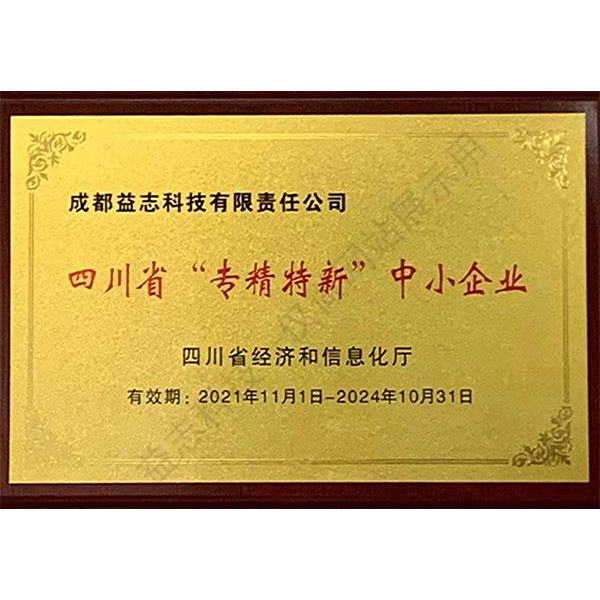
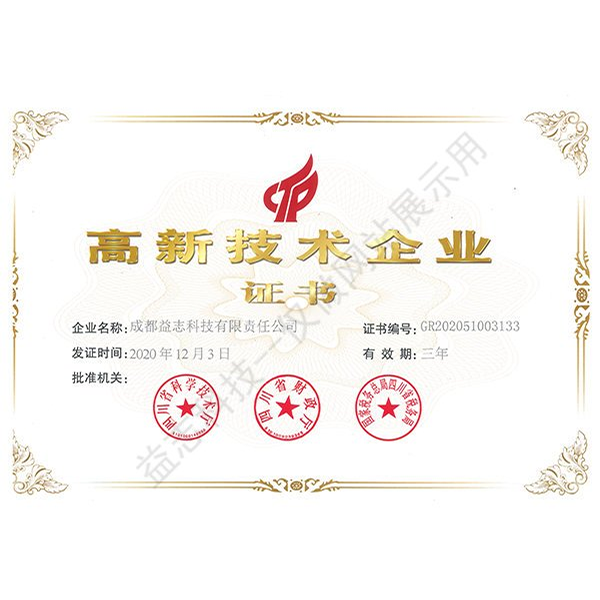
For me personally, the turning point was working on one project where it was necessary to equip several nodes on auxiliary lines. The budget was tight; there was no point in installing expensive European valves. We began to look for options and came toChengdu Yizhi Technology Co.. This is not just a trader, but a design institute with authorized capital, which already hints at serious intentions. Their websiteyzkjhx.ru- this is not just a showcase, the technical background is visible there. We decided to take a risk.
Key failure points: what to look for first
Experience suggests that the reliability of the shutter is determined not by the disc material (they usually do well with steel), but by the periphery. The first isseal. What tires? EPDM, NBR, Viton? One thing is stated, but in fact? Yizhi, for example, had a clear connection between the rubber brand and the standards in its specifications, and based on the first sample they sent the material to the laboratory - it worked out. This is a good sign.
The second is the disk mount on the shaft. This is where the main nightmare used to be. Cheap valves use a primitive keyed drive or even just a beaded fit. Under load it begins to chew, the shaft breaks the seat, and a leak appears. In more serious designs, as I saw from the same Chinese suppliers of the Chengdu Yizhi level, there is a solid shaft with a figured spline or a polygonal fit, and the disk is clamped by a flange. The difference in resource is an order of magnitude.
Third - bearings and rod seal. Often they install the simplest ones, without dust protection. In a dusty workshop this is death. The issue can be resolved, but it must be discussed at the order stage as an option. No one will silently supply you with premium SKF or at least worthy analogues.
Case study: when everything went wrong
In order not to look like an apologist, I’ll tell you about the failure. Once we purchased a batch of inexpensive DN200 butterfly valves for circulating water (temperatures up to 80°C, neutral environment). They did. After three months, complaints began: the flywheel was difficult to turn. We disassembled one - and there, under the oil seal, in the bearing cavity, it was like a plasticine mass. The lubricant they used simply flowed and thickened, mixed with fine abrasive dust, which was abundant in the air.
The manufacturer shrugged his shoulders: they say it will do for water. But they did not take into account real conditions - not clean water, but water in an industrial workshop. This is a classic mistake: the declared parameters do not correspond to actual operation. Since then I always ask: What kind of lubricant is in the gearbox/seal assembly? What temperature range? If the response is silence or general phrases, this is a red flag.
I compare it with how technical specialists withyzkjhx.ruwere negotiating. They immediately sent a questionnaire with a bunch of points about the environment, cycling, the presence of abrasives, and temperature changes. This speaks of a systematic approach. As a result, for another object, for slightly aggressive vapors, they took valves with a hollow disk and an FKM seal. They have been working for two years without any complaints, but, honestly, the period is still short for final conclusions.
Price vs. Cost of ownership - where's the catch?
A cheap factory price is just the beginning. To this we must add possible downtime due to breakdowns, the cost of replacement, repairs, and logistics. Sometimes a cheap bolt inserted into a critical area costs more than a gold one. Everyone knows this, but at the procurement stage price often wins.
With Chinese suppliers who position themselves as engineering companies (like Chengdu Yizhi Technology Co., Ltd.), we can talk specifically about the cost of ownership. They are ready to discuss design changes for a reasonable price: a different disk coating (for example, nickel plating instead of cheap epoxy), a different type of oil seal, a reinforced drive unit. This is no longer a product item, but a solution to a problem.
But even here you need to keep your eyes open. Ready to discuss does not mean they will do it perfectly. All changes and specifications must be recorded in the contract and drawings, which form an integral part of it. Acceptance according to these drawings is mandatory. Without this, there will be no reliability; you will receive a standard with incomprehensible content.
Final thoughts: So are they reliable?
I return to the initial question. The reliability of Chinese butterfly valves is not a given, but a variable. It depends on:
1. Manufacturer level (look not just for an assembly shop, but for enterprises with their own design bureau and control, like the Chengdu Yizhi Design Institute).
2. The depth of development of the technical specifications on your part and the willingness of the supplier to dive into it.
3. The correct choice of model and materials for specific, and not average, conditions.
You can find very worthy and reliable products that in certain segments successfully compete with second-tier brands from Europe. But this requires work, expertise, and abandoning the buy-cheap-set-and-forget mentality.
For non-critical areas, drainage, process water - yes, many Chinese valves today are more than reliable. For aggressive environments, high cycles, critical lines - you need to carefully select a supplier, test samples and be prepared to pay not the minimum price, but an adequate price for the required quality. In this sense, the market has become much more mature. The main thing is not to fall for the bait of a cheap imitator, of which, alas, there are still many.