Chinese valves: innovation and market?
2026-01-19
When you hear “Chinese shutters?”, many people still have a picture of something cheap and dubious. I thought so myself ten years ago. But now, if you're in this business and don't follow what's happening in China, you're simply out of the game. This is not about simple copying, but about how they now set the tone in certain segments. But even here everything is ambiguous - innovation is innovation, butmarketdictates its own, sometimes strict, rules.
From ?iron? to the “brains”: the evolution of the approach
Previously, everything came down to price. They brought a sample and asked to do the same thing, but cheaper. And they did. Quality? Well, it worked. Now the request is different. Clients, especially those who build serious projects, ask about materials, resources, and management systems. Chinese manufacturers have caught on to this. Theirinnovationnow it is often not a breakthrough in fundamental science, but competent engineering and adaptation. They take a proven design, but use modern casting technology, such as the V-process, to reduce the internal stresses in the casting. Or they put position and wear sensors as standard, which are optional for Europeans.
I remember about five years ago we were testing valves from a new factory in Zhejiang. On paper, everything is brilliant: the Teflon coating, the double-sided seal, and the stated cycle life are above average. But in practice, at low temperatures, problems with “sticking” began. saddles It turned out that the spindle lubricant was not designed for our range. Trifle? For the end user - a critical failure. This was the moment of truth: you can do it beautifully, but without a deep understanding of operating conditions, innovation hangs in the air.
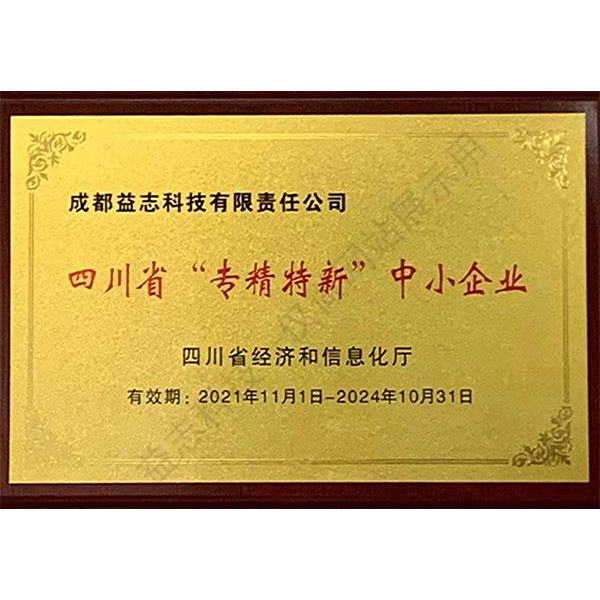
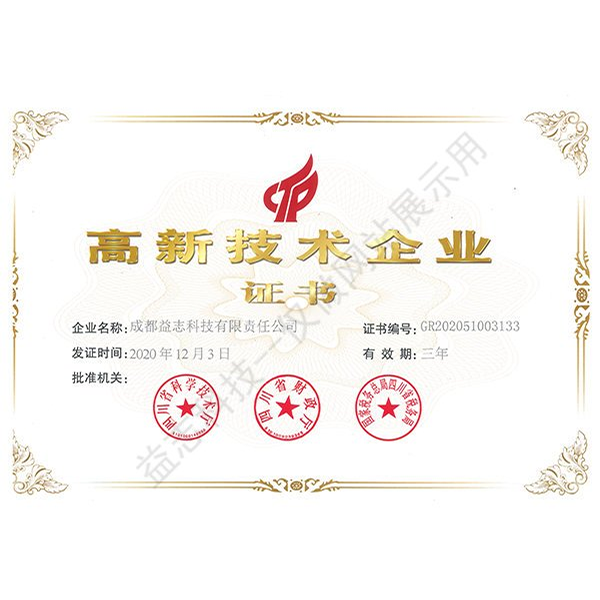
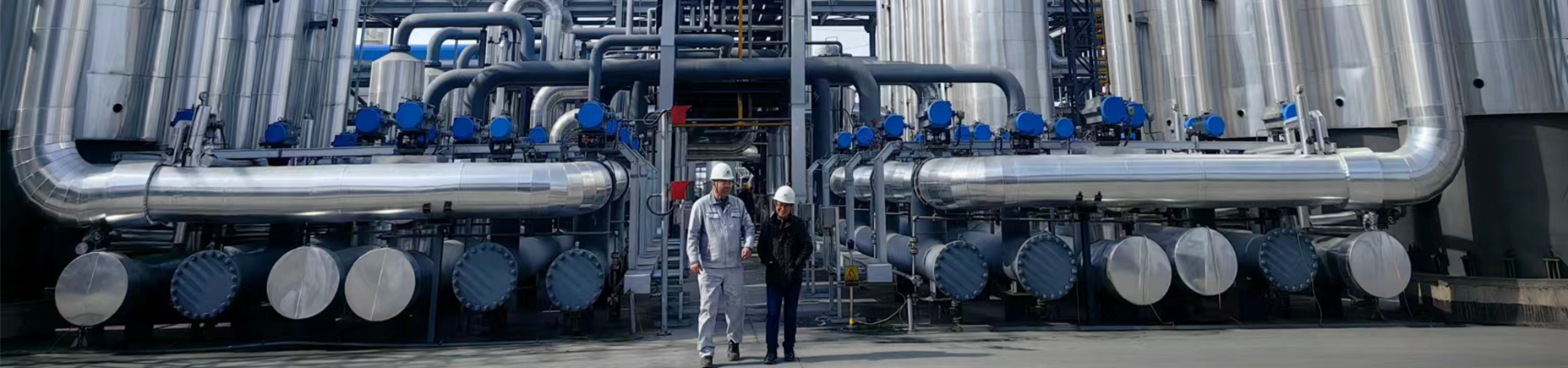
Now they seem to have worked out this error. Many serious players have opened engineering centers that not only sell, but design for the task. Here, for example,Chengdu Yizhi Technology Co.- this is not just a plant, but a design institute created by a chemical holding. When they come to them with the problem of shutting off an aggressive environment at a thermal power plant, they consider not only the valve itself, but the entire system: corrosion resistance, material compatibility, operating modes. This is already a different level. Their websiteyzkjhx.ru- this is not just a catalog, it shows that they are working on specific projects. The authorized capital of 120 million yuan is also a signal to the market about the seriousness of intentions.
Market: between niche solutions and mass demand
This is where things get interesting. The Chinese valve market is gigantic, but it is segmented to an impossibility. There are hundreds of small workshops that produce simple valves for the domestic market. And there are those who purposefully target exports and high-margin niches. Their strategy is not to compete head-on with Velan or Cameron in oil and gas. in all positions, but to find windows.
For example, medium-sized energy in developing countries. Or the chemical industry, where special alloys are needed, but in smaller volumes than in giant refineries. For a European giant, making a batch of 50 pieces is unprofitable, but the Chinese plant, already having experience working with similar material for the domestic market, will take it and offer an acceptable price. This is their strength - flexibility.
But there is also a downside. This very flexibility sometimes leads to chaos in logistics and quality control. You order a batch, receive samples - everything is perfect. And in the main delivery it suddenly turns out that the certificate material is slightly “floating”. It’s not that this is a defect, but there is a deviation. This is explained by “different batches of metal”. This can only be combated by strict technical supervision at the production site and fines specified in the contract. Without this there is noinnovationwill not save your reputation.
Price vs. Cost of ownership: where the stereotype breaks down
This is the main battle in the minds of purchasing engineers. Is the Chinese product cheaper? Yes, almost always. But we have all learned to consider not the purchase price, but the total cost of ownership (TCO). And here the picture is mosaic.
For non-critical applications where downtime is not critical, their products are the ideal choice. Saved 40% - and good. But if we are talking about a valve on a main pipeline, where replacement requires a shutdown for a week, saving on the price of equipment can result in millions of losses. However, the Chinese have realized this and are now actively playing in the field of service and guarantees. They offer not just to sell, but to conclude an agreement for diagnostics and maintenance. The warranty is being increased from the standard 12 to 24 months. This changes the equation.
I had experience at a paper mill. We installed Chinese gate valves for the supply of lye. The medium is heavy and abrasive. The European analogue cost three times more. We decided to take a risk. The manufacturer (I won’t name it) sent its engineer for commissioning. Having seen the real conditions, he recommended changing the prevention schedule - cleaning and lubricating not once every six months, but once every three months. And he provided a diagram with additional fittings for this. The valves have been working for five years without any surprises. This is real added value, which breaks the stereotype. They didn't just sell hardware, they sold a solution for a specific problem.
Weak points that are still visible
Despite all the progress, weak links remain. And they are systemic. The first is personnel. At giant factories that work for export, the engineers are strong, often with experience of internships abroad. And in medium-sized enterprises, the sales manager who communicates with you on WeChat may have a very superficial technical understanding. He knows the catalog by heart, but when asked an in-depth question about the metallography of the sealing surface, he begins to get lost. This creates a barrier of mistrust.
The second is standardization and patent purity. Sometimes you see a product and realize that it is almost a one-to-one copy of a famous brand, with minimal changes. This creates risks for the buyer, especially if the property is being built with international financing. Now, however, this is being corrected. Big players like the one mentionedChengdu Yizhi Technology Co., are developing their own patent portfolios, as can be seen from their materials. They position themselves precisely as an engineering company, and not a copyist.
And third is pre-sale preparation. There are still situations when equipment arrives not preserved, but simply lubricated. Or with documentation only in Chinese and poor English. This kills the entire professional reputation created by modern equipment in the factory. The fight against this is going on, but slowly. For now, this is a marker by which one can distinguish a serious supplier from a “garage” one. workshop that went out for export.
What's next? Looking to Tomorrow
The trend is obvious: further diversification. Chinese manufacturers no longer want to be just an “alternative”. They create products for digital control systems - with integrated sensors, with the ability to connect to IoT platforms. Their next step is to offer not just fittings, but a “smart node?” with a forecast of residual life.
But their main trump card, in my opinion, is the speed of reaction. While a European concern is holding meetings on the feasibility of developing a valve for a new biotechnological plant, a Chinese company with connections in the chemical industry (Huaxi Technologyjust from this environment), can assemble an engineering team and issue a prototype. Risky? Yes. But in a rapidly changing world, such speed sometimes outweighs.
So, to answer the question from the title: yes, there is innovation, and it is market-oriented. And myselfmarketChinese gates are no longer a monolith, but a complex, multi-level system. It contains outright rubbish, competitive mass-produced products, and truly niche high-tech solutions. Understanding this is now a must-have skill for any technician. Both blind denial and unbridled delight are equally harmful here. You need to look at a specific product, a specific plant and its real competencies, and not at the country of origin in the “made in” column.