Chinese butterfly valve exports: innovation?
2026-01-19
When you hear “Chinese butterfly valves?”, the first thought for many is cheap and cheerful. But over the past seven or eight years the picture has changed a lot, although the stereotype is tenacious. I myself constantly encounter this: clients from the CIS are first looking for simply a “low price”, and then they are surprised that they can get a completely different product. The question of innovation here is not idle; it is rather about how the very logic of production and export has changed. I won’t say that all manufacturers have rushed forward, but the trend is obvious.
From ?iron? to the project: paradigm shift
Previously, about ten years ago, everything was simple: there is a specification, usually some outdated GOST or European one, we make it according to it, load it and send it. Innovations were reduced to a minimum - choose a cheaper seal, slightly change the thickness of the disk. Now many serious players, especially those working with chemistry or energy, have moved towards design solutions. This is not just the sale of fittings, but participation in the scheme.
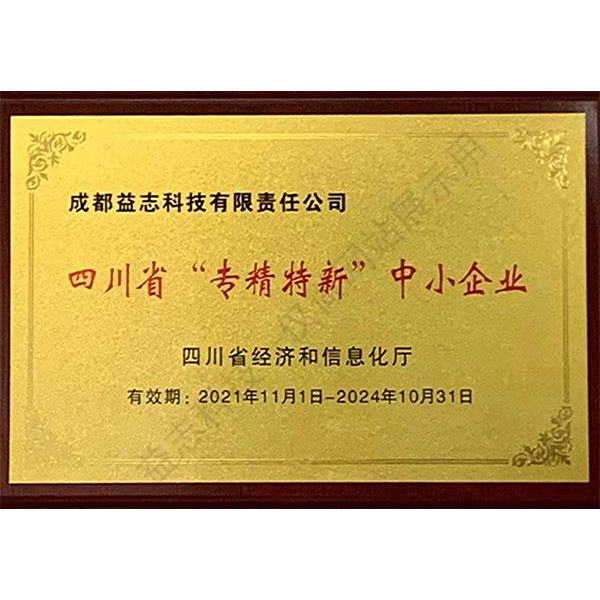
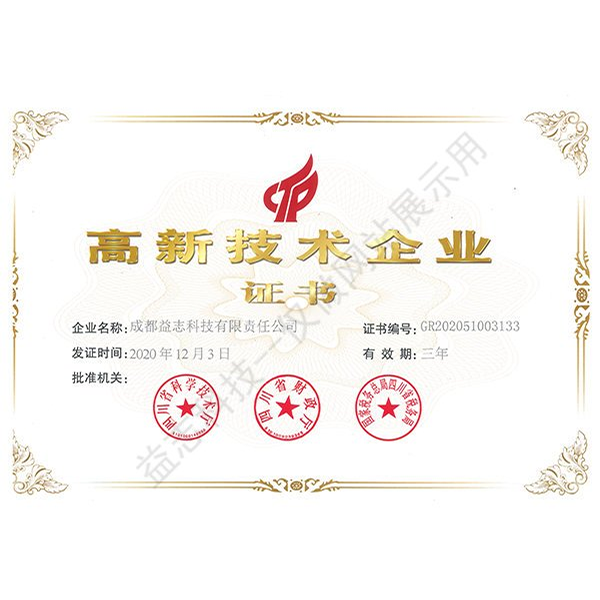
For example, Chengdu Yizhi Technology Co. — their approach is typical. This is not just a factory, but a design institute established by Huaxi Technology. When you see their websiteyzkjhx.ru, you understand that they do not sell valves individually, but competence in tying the units. The registered capital of 120 million yuan is a signal of serious intentions in R&D. For export, this is critically important: you come to the customer not with a catalog, but with an engineer who can adaptbutterfly valvefor a specific, say, flow of suspension with abrasive.
I personally saw how such a scheme worked on supplies for the modernization of a workshop in Kazakhstan. Local engineers gave only environmental parameters and the desired service life. The Chinese side (I won’t say that it was Yizhi, but from the same segment) offered three options for the saddle and two options for covering the disc, taking into account different budgets. This is no longer trade, but joint development of a node. And this, it seems to me, is where the main innovation of recent years lies - the readiness and ability for deep customization.
Materials and coatings: where is the real breakthrough?
If we talk about “hardware,” then the main advances are in materials and coatings. CF8M steel (analogous to 316) is almost the basic level for an export product. It’s more interesting when they start using duplex and super-duplex steels for aggressive environments. But their use is a double-edged sword. Yes, corrosion resistance is higher, but the price also soars, and most importantly, there are problems with welding at the customer’s site. More than once we received complaints where cracks appeared precisely along the welded seam on a super-duplex body, which was welded with conventional electrodes.
Therefore, now I see the more popular innovation not so much exotic alloys as advanced coatings. For example, spraying nickel alloys or chromium carbide onto the disc and seat. This allows a cast iron or regular stainless steel valve to work in conditions where previously only expensive all-metal valves were installed. The key is consistency of the application process. I remember a story with one batch, where the coating began to peel off after six months of working in hot water. It turned out that the technology for sandblasting surface preparation had been violated. So innovation is innovation, andtechnological disciplineat the factory - the basis of the basics.
Another point is seals. EPDM, Viton are the standard. But now there are increasing requests for PTFE (Teflon) or its combinations, especially for the pharmaceutical or food industries, where purity is important. Or vice versa, for high temperatures. Developing the optimal O-ring profile that will provide a seal with minimal wear is a quiet but important innovation effort carried out by the best manufacturers.
?Smart? Shutters and digital: more marketing for now?
In the last couple of years, everyone has been actively talking about ?Industry 4.0? and ?smart? fittings Position sensors, integrated modules for remote control and diagnostics. Looks great in presentations. But in practice, in our export region (CIS, Middle East, partly Eastern Europe), the demand for this is very specific.
The main problem is not the technology itself, but its redundancy for 80% of applications and, more importantly, issues of compatibility and subsequent maintenance. If a large, say, petrochemical complex has a unified control system such as Siemens or Honeywell, then integrate a Chinese “smart” system into it. a gate with its own protocol is a separate headache for local system integrators. It is often easier and more reliable to install a regularelectric drivewith analog signals.
Where it really works is on the new, “green” ones. projects, for example, in solar energy or desalination plants, which are built from scratch? and immediately under digital control. But this is still a niche market. So, in my opinion, innovations in mechanical, reliability and environmental resistance still provide more real benefit and value to the customer than digital bells and whistles.
Logistics and post-sales: the hidden component of success
Innovation is not just about the product. Equally important is the support infrastructure. Previously, the main pain was delivery times and the complete lack of service. Now market leaders understand this. Creating regional warehouses for spare parts (at least the same sealing kits, seals, bearings) is a powerful competitive move.
Same siteyzkjhx.ru- this is no longer just a business card, but a portal with a technical library, 3D models for downloading (which is highly valued by designers), and a form for requesting specifications. This saves a lot of time. Another point is packaging. It would seem like a small thing. But switching from a simple wooden box to vacuum packaging with silica gel for all critical parts has dramatically reduced the incidence of surface corrosion during sea transport. This is also innovation, mundane, but critical to maintaining quality.
Failures? Were. They tried to promote a very complex modular valve system several years ago, where you could change the seat without removing the body from the line. The concept was great, but the production cost was high and the installation instructions were too complex for local plumbers to handle. As a result, assembly errors occurred at the facilities, leading to leaks. We had to cancel the project, concluding that the innovation must be adequate not only to the environment of application, but also to the qualifications of the personnel who will work with it on site.
What's in the bottom line? Context is everything
So are Chinese butterfly valves innovative? The answer, as always, depends on the context. To replace a standard valve on a water supply system - perhaps not. But for a specific task in a chemical process, where resistance to a mixture of acids and abrasives is required at variable temperatures, here Chinese manufacturers, especially Chengdu Yizhi Technology Co., offer solutions that five years ago would have been either unavailable or would have cost many times more from European brands.
Their strength now is flexibility. It’s not about inventing some kind of breakthrough technology from scratch (although they have made great progress in the field of coatings and composite materials), but about quickly and adequately adapting known technical solutions to specific, sometimes very stringent, customer requirements. And back this up with design expertise and growing attention to the product life cycle.
Therefore, when people now ask about Chinese shutters, I no longer talk about the price in the first place. I’m talking about dialogue with the engineering department, about test samples tailored to the customer’s environment, about the availability of calculations for cavitation or water hammer. This is the main change.Exportceased to be just an export of metal. It has become a transfer of a technologically rich service. Slowly, unevenly, but the process is underway. And this is perhaps the most important innovation.