Where are Chinese butterfly valves for gas used?
2026-01-18
I often hear the question - where can these Chinese gas butterflies even work? Many people immediately think about high-pressure main pipelines, and this is the first misconception. In fact, their niche is often in another area, more specific and demanding on price, but not on extreme parameters. From my own experience, I will say this: if you see a project with moderate pressure, an aggressive environment or strict requirements for residual lubrication, you should take a closer look at the proposals from China, but with a clear understanding of where and how to install them.
Not a main line, but a branch: key points in gas distribution
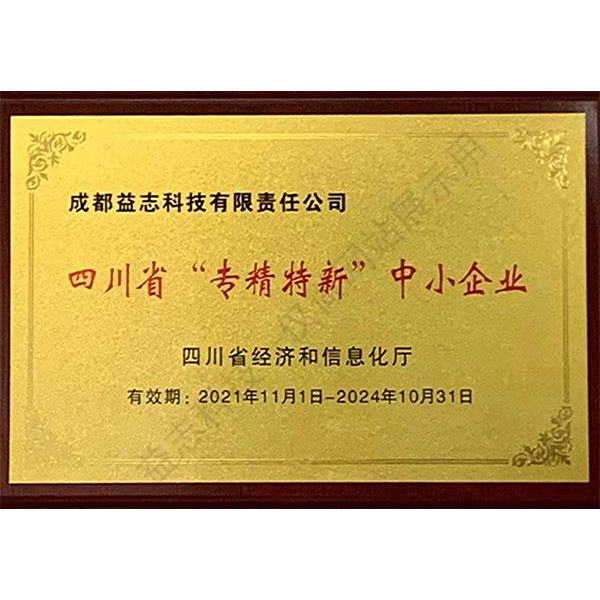
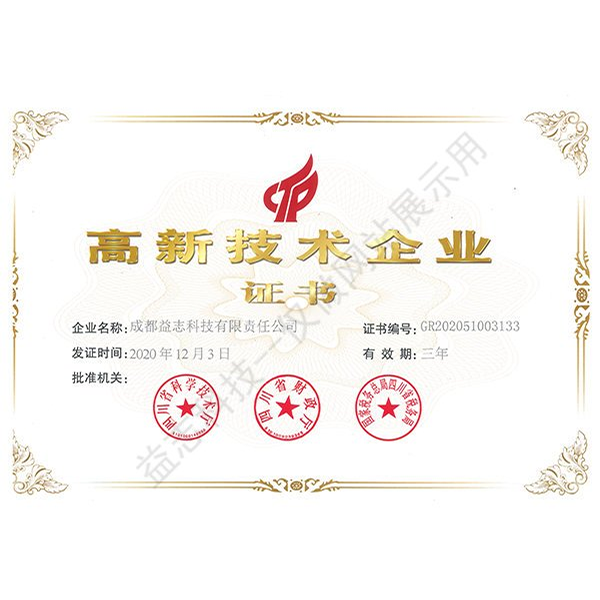
The main field where I met them was gas distribution networks, but not those giant lines, namely shutdown and regulation nodes on branches to consumers, in gas distribution centers and gas distribution centers. The pressure here, as a rule, is up to 1.6 MPa, less often up to 4.0 MPa. What is important here is cut-off reliability, compactness and, critically, cost of ownership. Chinese manufacturers, like those I worked withChengdu Yizhi Technology Co(their websiteyzkjhx.ruI sometimes look through the assortment for guidance), they cover this segment well.
A specific example is installation on branches to medium-power boiler houses. A gate valve is more expensive and bulky, a ball valve is more expensive, and a butterfly valve with a fluorine rubber or EPDM seal is often a compromise solution. But there is a nuance: it is mandatory to check for complete blocking of the flow under pressure upon acceptance. Once there was a case when, due to a slight deformation of the disk on cold gas, the shutter seemed to hold, but with a seasonal drop in temperature and a change in the density of the medium, a small leak appeared. I had to tighten the barrel.
Another point is bypass lines and piping of mud filters. There the switching cycle is infrequent, but the ability to quickly cut off is needed. Ease of control is a plus here. Although I would not recommend them for constant flow adjustment, the life of the seal decreases quickly.
Industrial installations: where there is aggression and specificity
This is where Chinese valves sometimes fail - in production lines in chemical or metallurgical plants, where gas is not a fuel, but a raw material or by-product. We can talk about coke oven gas, various process gases with impurities. This often requires a corrosion-resistant, coated or stainless steel design.
I worked on a project at one of the processing plants that used gas containing hydrogen sulfide. The valves were installed with a 316 stainless steel disc and barrel and Viton seals. The requirement for residual lubrication was key - many European manufacturers use lubricant in the valves, which can pollute the environment, and Chinese suppliers, upon request, provided models with a dry barrel and special seals that do not require lubrication. This was the deciding factor.
But the risks are also high. Somehow they put a batch on the exhaust gas line, where the temperature was at the limit of the declared range (+120°C). Six months later, problems with compaction began - the material floated. It turned out that the manufacturer stated standard EPDM, but in fact it was not designed for constant operation in this mode. Lesson: For non-standard environments, always require test reports for the seal material specifically for that environment and temperature.
Energy and recycling: turnkey projects
Chinese valves are often supplied as part of complete equipment - for example, as part of mini-CHP plants using biogas or associated petroleum gas recovery plants. Design InstituteChengdu Yizhi Technology Co., Ltd., this is exactly the case - they often offer turnkey solutions, where the fittings are one of the integrated elements. In such cases, the choice of shutter is dictated by the overall logic of the project and its budget.
In biogas plants, resistance to humid environments is important. I have seen the use of valves with epoxy coating on the disc and body and NBR seals. They work in areas of primary gas purification, where the pressure is low, but there is a risk of condensation. Plus, the price of the entire line is competitive.
The disadvantage of this approach is that you are tied to one supplier for the entire package. If the bolt itself fails, finding one that is absolutely similar in flange dimensions and barrel length from another manufacturer may be a problem. I always advise you to include a small margin in the project in terms of dimensions in the harness in case of replacement with an analogue one.
Installation and maintenance issues: what is often missed
The most common mistake is installation without taking into account the orientation of the trunk. For gas environments, especially with the possible content of condensate, an installation with a horizontal barrel is preferable so that moisture does not accumulate in the cavity under the disk. Many installers, accustomed to water, install as necessary. Then in winter - ice, deformation, leakage.
Another point is management. Pneumatic actuators, which are often offered as kits, can be a weak link. The requirements for the quality of compressed air on site are increasing. I installed electric shutters from a Chinese manufacturer - the operation was reliable, but in cold weather below -30°C, malfunctions began in the end position. I had to install additional heating cables on the drive gearbox. There was not a word about this in the instructions.
Maintenance is simple - visual inspection, checking for smooth operation. But the main thing is to change the O-rings in time, without waiting for them to wear out completely. It is better to purchase a supply of seal kits immediately when purchasing a batch of valves. Then looking for exactly the same geometry is another task.
Choosing a supplier: not only price, but also documentation
When you look at a site likeyzkjhx.ru, you see the directory, parameters. But for gas, the decisive factor is often not the availability of a GOST certificate, but rather the factory test reports for class A leakage (zero leakage) according to GOST 9544-2016 or a similar standard. Many Chinese factories now do this, but protocols must be required and verified so that the data corresponds specifically to your conditions (pressure, environment).
Pay attention to the company's history. The sameChengdu Yizhi, established by Huaxi Technology with a registered capital of 120 million yuan, is not a reseller, but a design institute. With such structures it is often easier to solve technical issues; they understand the specifics of system design. But there is a greater demand for responsibility from them.
As a result, there is application, and it is wide. But this is not a universal solution. It is a tool for specific applications in low and medium pressure gas systems where the balance of cost, corrosion resistance and moderate cycling requirements is important. The main thing is to clearly define these tasks on shore, check the equipment according to critical parameters and not skimp on little things like proper installation. Then they work for a long time and without problems.