Chinese butterfly valves: trends and innovations?
2026-01-18
When you hear about “Chinese butterfly valves?”, many people immediately have an image of something cheap and simple. This is perhaps the biggest stereotype we encounter in the market. Yes, ten years ago it was often like this: basic models operating in relatively gentle environments, with seals that were afraid of sudden changes. But now the situation has changed dramatically, and those who do not see this are simply losing opportunities. About five years ago, I myself was prejudiced against them, until I had to deal in detail with a project for a petrochemical enterprise that required valves with large diameters, but with a strict budget limit. I had to dive in and a whole world opened up.
Evolution of materials: not only stainless steel
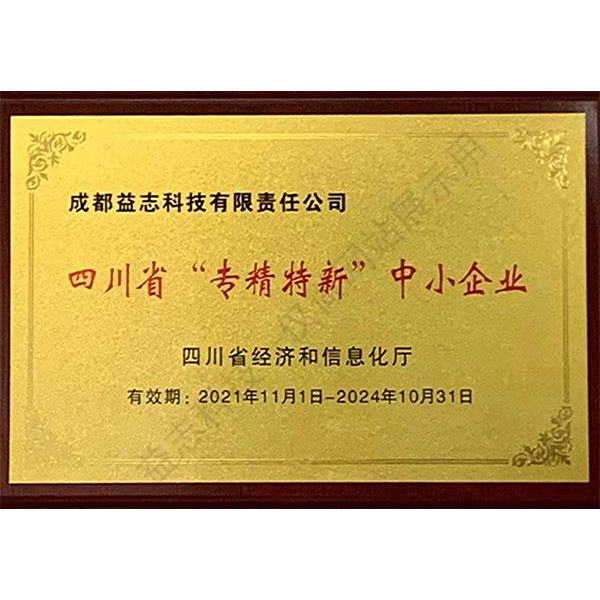
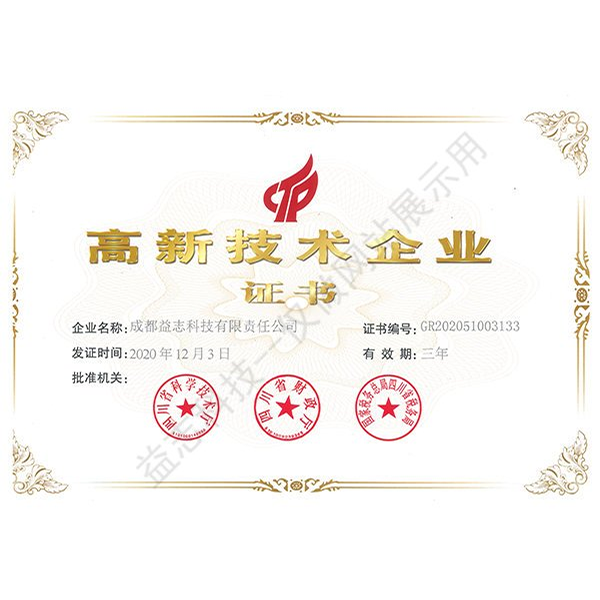
It used to be all about carbon steel and 304 stainless steel. Now Chinese manufacturers are actively working with duplex and super-duplex steels and nickel-based alloys. This is not marketing, but a response to real requests. I remember how, for a project with sea water, we considered a European super-duplex valve - the price was steep. Colleagues fromChengdu Yizhi Technology Co.(their website, by the way,yzkjhx.ruwell structured for technical requests) offered their own version. At first there were doubts, but the metallurgical report and test samples showed compliance. The key thing is that they don’t just cast metal, but take heat treatment seriously to avoid intergranular corrosion, which used to be a weak point.
But progress with polymers is enormous. EPDM, Viton are already standard. More interesting are the combined saddles, where the metal base is lined with wear-resistant elastomer or even PTFE. This gives an advantage in shut-off valves where both tightness and abrasion resistance are required. At one thermal power plant they installed these on the ash and slag removal line - the service life was comparable to expensive analogues, and replacing the seat, if anything, is simpler and cheaper.
It would be a mistake to think that all this is available only from giants. It is design institutes, like the aforementioned Chengdu Yizhi, created by Huaxi Technology with substantial authorized capital, that often act as drivers of such decisions. They do not work on a flow basis, but for specific complex tasks, which allows them to experiment with materials.
Constructive findings and pitfalls
The trend is, of course, lightweight structures without loss of strength. But there is a nuance here. I have seen models where, in order to reduce weight, they made the disk wall too thin on a large diameter - as a result, problems with deflection and vibration at high flow rates. Successful designs use stiffeners calculated by the finite element method (FEA), and not “by eye”. This is already a level.
Another point is the design of the rod. Solid or hollow? Hollow is lighter, but critical for corrosive environments. Chinese manufacturers now often offer a hollow stem with anti-corrosion coating as an option, which makes sense. But it is important to look at the quality of welding between the rod and the disk - this is the point of stress concentration. Once, when opening a failed valve, I noticed a lack of penetration - claims were made, and the manufacturer, characteristically, did not argue, and improved the technology. This is an indicator of maturity.
The shaft seal system is also evolving. The seal package is almost archaic for critical applications. Bellows units are being replaced. Making a reliable stainless steel bellows that will withstand thousands of cycles is a non-trivial task. Not everyone copes. I know thatChengdu Yizhi Technologyis just developing this direction for its chemical valves, which is logical, given their profile as a design institute that grew out of chemical technology.
Drives and control: integration becomes key
Previously, it was often like this: the shutter was bought from one, the drive from another, and the control system was assembled on site. Fuss - the sea. Now the trend is integrated solutions. Chinese manufacturers are increasingly offering valves completely assembled with an electric or pneumatic drive, and with pre-installed and configured positioners and controllers.
It's not just convenience. This is a guarantee that the drive torque exactly matches the valve torque, that there are no distortions. We implemented such “ready-made nodes” on modernization of water treatment. Savings on installation and commissioning – up to 30%. But there is also a risk: if the drive is “original”, but of a weak brand, then if it breaks, problems with replacement may arise. Therefore, now many, including major players, are taking the path of cooperation with well-known drive manufacturers (such as AUMA, Rotork) or licensed production. This is a reasonable compromise.
Digitalization has not been spared either. Built-in position, temperature, and torque sensors are no longer exotic. Data can be integrated into SCADA. True, here I still see some gap between the supply and the real needs of many Russian enterprises. Often they just need reliable mechanics, and “smart” ones. functions are idle. But the trend has been set, and this is becoming a must-have for new projects.
Adaptation to markets: not only copies, but also localization
Many people think that China is only copying. In some ways, yes, but now it’s more often an adaptation to standards. I have seen valves that come from the factory with flanges to DIN, ANSI, and even to GOST (yes, exactly to our good old GOST!). This is a huge benefit for replacement in existing facilities.
Moreover, some manufacturers are ready to change the design for specific conditions. There was a case in the north: a valve for low temperatures with an extended stem for installation in an insulated box was required. The Europeans set deadlines and prices. A Chinese company (I won’t name it, not an advertisement) promptly made a 3D model, agreed on the changes and delivered a prototype. It worked. This speaks of flexibility.
But there are pitfalls here too. Sometimes ?adaptation? means simplification. For example, we made a flange according to GOST, but the thickness and material were taken according to the minimum tolerance. This should always be checked. True adaptation is when the entire calculation for pressure and temperature is carried out according to the customer’s standard, and not just changing the flange drawing.
Service and attitude towards defects: is the paradigm changing?
This is perhaps the most sensitive issue. In the past, the guarantee was often a fiction. The situation is better now, but not everywhere. A critical factor is the availability of engineering support in the region. If there is a representative office or a competent distributor who understands the product and does not just resell, this solves 90% of problems.
A positive example: supply of a batch of valves for a chemical plant. One of the products was found to have a substandard seal during incoming inspection. Contacted the supplierChengdu Yizhi Technology Co., Ltd.. The response was immediate: not just a replacement, but a full report on the batch of materials for the seals with heat numbers. This is worth a lot and shows the systematic approach expected from a design institute with a serious authorized capital.
There were also negative experiences. Valves from another supplier, cheap, were supplied to an irresponsible line. Six months later they started leaking. The claim was considered for a month, then they sent new rings, but of a different brand of rubber. I had to redo it. The bottom line: Cost savings often come at the cost of downtime. Therefore, now we always look not at the price tag, but at the total cost of ownership. And here, Chinese mid- and high-segment manufacturers have become very competitive.
In general, to summarize informally: the Chinese butterfly valve market is experiencing a stage of qualitative growth. This is no longer just a “cheap alternative”, but in many segments it is a full-fledged, technologically advanced product with interesting innovations. The key is in choosing the right supplier who understands the essence of the problem, and does not just sell hardware. And there are more and more of these on the market.