Chinese butterfly valves: trends and innovations?
2026-01-18
When you hear “Chinese butterfly valves?”, the first thing that comes to mind for many is the price. Cheap. And immediately after this - doubts about quality, thoughts about a short service life, about problems with seals. I thought so myself ten years ago. But now, to be honest, the picture has changed radically. Yes, price pressure remains their main trump card, but the conversation has long been not only about price. Now it’s a question of how deeply local producers understand whatreliabilityin our, often not ideal, conditions - with temperature changes, aggressive environments, vibration. And the most interesting thing is how they approach innovation. Not for the sake of showing off “we have a smart shutter?”, but to actually solve the customer’s problem. This is what is most worth talking about.
From ?iron? to the system: evolution of the approach
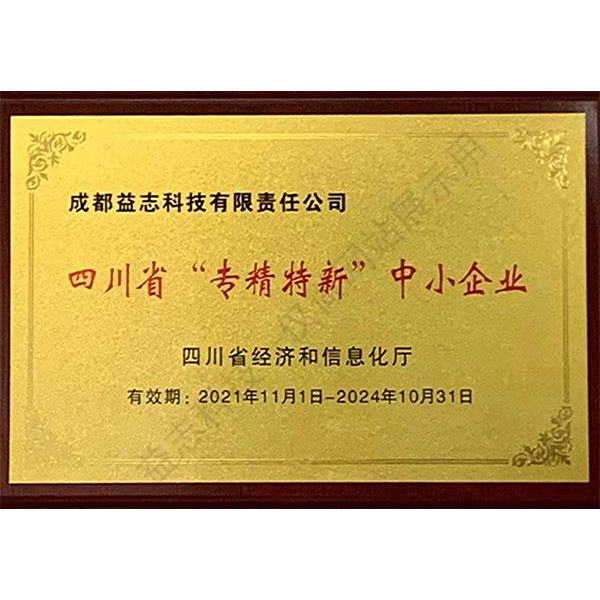
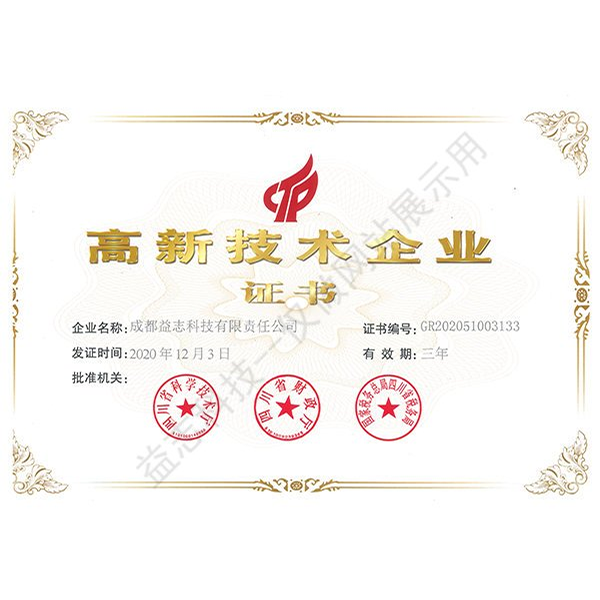
Previously, everything was simple: casting, processing, assembly. The quality depended heavily on the batch of steel and the honesty of the quality control department. Now, for the leading players, the process begins with designing for a specific task. I saw how engineers fromChengdu Yizhi Technology Co.literally ?interrogated? our technologists about the composition of the medium - not just “water”, but what kind of impurities, suspensions, temperature cycles. Their institute, created specifically for in-depth study of projects, allows this. This is not just a plant, it is a design institute with a substantial authorized capital, which for China is an indicator of serious intentions.
That’s why the first trend: the shutter is no longer a universal piece of hardware. It becomes part of the production line, and its parameters are set at the stage of calculating the entire system. This applies to both the thickness of the disc and the configuration of the seal - now they often take the path of combined materials, where one layer is responsible for elasticity and primary contact, and another, more rigid one, for durability and resistance to abrasive.
By the way, about abrasive. Classic pain. Early models of Chinese suspension or slurry valves failed catastrophically quickly. Now there are solutions with seals made of special grades of polyurethane or with metal welded seats for the most severe conditions. This is not an innovation on a global scale, but for their price segment it is a serious step. They learned not to copy, but to adapt.
Materials: not only stainless steel
Everyone is used to the fact that if the environment is aggressive, then only 316L. And the Chinese, of course, pour it on. But the question is the quality of smelting and uniformity of structure. Progress is noticeable here, but not everywhere. From experience, it is better to work with those who specialize in specific industries - chemistry, food industry, water and wastewater services. They have more proven coatings.
But with coatings there is an interesting story. Epoxy and polymer coatings on the inside of the housing have become almost standard for moderately aggressive environments. This reduces the cost of the entire product compared to the all-stainless version. But the key is surface preparation. I saw a batch where the coating peeled off in flakes after six months. The reason is that sandblasting was carried out somehow. For the same Yizhi Technology, the process is strictly controlled, because for their parent company Huaxi Technology, which works in chemical technology, this is critically important. Their own production experience becomes an advantage for the affiliated design institute.
Another point is the use of nodular cast iron (high-strength cast iron) instead of regular gray. For large diameters and pressures this gives better strength and resistance to water hammer. Previously, they did not pay attention to this, they saved on everything. Now, in order to compete in markets where not just a valve, but a critical component is needed, they are switching to such materials. This is no longer a blind reduction in cost, but meaningful engineering.
Drives and “smart” functions: necessity or marketing?
There is room for debate here. Electric or pneumatic drive - often installed locally, and this can cause problems, especially with control modules. Our lesson: it is better to install a drive from a well-known brand, although it is more expensive. But what the Chinese are really developing is the integration of position and force sensors directly into the design. Not as a separate expensive option, but almost as a basic package for the mid-price segment.
And this is where their “innovation” comes in. seem to me the most pragmatic. They are not chasing the creation of a “digital twin?” each shutter (although I’ve already heard this at exhibitions). They do a simple but useful thing: output “open/closed” signals, torque alarms and the possibility of remote control via dry contacts or through a simple protocol such as Modbus RTU. For modern automated process control systems, where you need to collect data from hundreds of points, this is a huge plus. The shutter ceases to be a blind mechanism.
But there are also pitfalls. This "intellectuality" sometimes raw. For example, setting the trigger moments through a primitive menu on the local panel may be disrupted by a power surge. Or the built-in temperature sensor for monitoring the condition of bearings produces an error of 5-7 degrees, which makes its readings meaningless. That is, the function is there, but bringing it to fruition is still in the process. This is exactly the same “working” one. a stage of innovation that you won’t see in a glossy catalogue.
Weaknesses that are rarely written about
With all the evolution, weak links remain. And they are often not in the gate itself. The first is standards. They can claim compliance with ISO, API, but in practice the tolerances, especially on the geometry of the flanges and the quality of the threads for the spindles, can “float”. Party to party. Therefore, incoming control is critical. Don't rely on certificates blindly.
The second is packaging. It would seem like a small thing. But I saw how valves with excellent characteristics arrived with rusty stems because they were wrapped in oiled paper, which tore in transit, and condensation did its job. Preservation for sea transportation and for land transportation are different things, and not all manufacturers take this into account.
Third, and most important, is maintainability. The design of many Chinese valves is made as monolithic as possible in order to reduce the cost of assembly. But when the seal needs to be replaced without completely dismantling it and sending it to the factory, problems arise. No repair kits, no instructions for field disassembly. This is the downside of their efficient production. Now some companies, especially those that are aimed at a long-term presence in the market, likeChengdu Yizhi Technology, begin to work on it, realizing that ease of maintenance is also part ofreliability.
What's the result? Price vs Value
So, back to the beginning. Yes, price is still the main argument. But today this argument is reinforced. Backed up by smarter design, an expanded choice of materials for the task, attempts (albeit not always ideal) to add diagnostics and controllability. Chinese manufacturers have stopped simply making cheap analogues. They started creating products for their niche markets.
For whom is this relevant? For projects where you need a lot of the same type of fittings with a good price/quality ratio, for not the most critical areas, for environments with clear parameters for which you can accurately select a model. And this is where a partner is important, who will not just sell from a warehouse, but will be able to understand the task. The same design institutes, like the one mentioned, are created for this purpose.
The trend is a movement from quantity to reasonable sufficiency and specialization. Innovations are not breakthrough, but applied, aimed at solving specific operational problems: wear, management, adaptation. And most importantly, they learn from mistakes, their own and others. The next five years, I think, will show further convergence in quality with European brands in the middle segment, but the gap in the premium segment, where extreme parameters and an impeccable reputation are needed, will remain. For now it will remain. And then we'll see.