Chinese butterfly valves: innovation and reliability?
2026-01-18
This is a question that constantly comes up in conversations with customers. Many people still wince when they hear “Chinese?” in the context of industrial fittings, imagining something cheap and unreliable. But the reality, especially over the last 7-8 years, has changed a lot. We are no longer talking about simple copying, but about completely conscious engineering, where innovation is not a marketing slogan, but a response to specific market challenges. Although, of course, there are enough nuances.
Where do the legs of stereotypes come from?
Previously, about ten years ago, the main argument was the price tag. And behind it, often not the best was hidden: unpredictable casting quality, problems with disk geometry, seals that behaved as expected. I remember a batch of 150 mm valves where the flanges did not actually comply with the declared DIN. The installers complained about everything - they had to put in gaskets that were not in the specifications. This created long-term risks for the system. Back then, many suppliers worked on the “sell and forget” principle, and technical support was fictitious.
Now a driver is not just a price, but a cost of ownership. Large Chinese manufacturers, especially those serving the domestic energy and chemical markets, are forced to comply with strict standards. Their products undergo the same tests for tightness, service life, and corrosion resistance. Keyword -large. The gap between top factories and small workshops is colossal. When you buy ?no-name?, you are still playing the lottery.
Interesting point about the materials. I often hear: “Their steel is worse?” This is no longer an axiom. Many use imported steel from Japan or Korea, and for casting they work with certified foundries that also cast for European brands. The problem is often different - control at all stages. I saw how one plant introduced 3D scanning of castings for comparison with a digital model. It's expensive, but it's a direct path to geometry stability. This is the innovation at the process level that ultimately leads to reliability.
Where innovations are real, and where they are just words
Real breakthroughs are seen in adaptation to specific environments. A classic example is valves for seawater or systems with abrasive suspensions. Chinese engineers did not reinvent the wheel, but are very actively experimenting with coatings. Combinations like ?epoxy coating + cathodic protection? or spraying tungsten carbide onto the disk and seat show a very decent resource in field conditions. At the same time, the price of the solution remains competitive.
Another area is flanged designs and actuators. They have learned to make compact gear-pneumatic drives that fit well with their own valves. Previously, it was a pain to buy a shutter and then spend months trying to find a compatible actuator for it from another manufacturer. Now they offer ready-made “packages”. From a designer's point of view, this saves a lot of time. But there are also pitfalls: sometimes, in the pursuit of compactness, the maintainability of the drive is sacrificed. Disassembling it to replace the seals can be a non-trivial task.
Digitalization - everything is the same here as everyone else. Position sensors, intelligent controllers. It looks modern, but my skepticism concerns the durability of these electronics in harsh industrial environments (high humidity, vibration). So far, “iron” mechanics inspires more confidence. Innovation for show is when a flimsy sensor is installed on a standard shutter for extra money, which fails after six months. The reliability of a system is determined by its weakest link.
Case study: chemical production
We had a project for a Central Asian chemical plant; we needed valves for lines with weak acids and alkalis. European options were also considered, but the budget was tight. We settled on a manufacturer from China, which initially made equipment for its own market. It is important that this was not a random supplier from Alibaba, but a plant with its own design bureau, with which it was possible to conduct technical discussions.
The main issue was compaction. Standard EPDM was not suitable for temperature conditions. They offered an option with a specially marked fluoroelastomer (FKM) seal, not just rings, but a “seat-in-body” configuration. with additional labyrinth seal on the rod. We sent samples for testing in our environment - the result was comparable to expensive analogues. We took a batch for testing.
After three years of operation, two out of forty valves developed a leak along the stem. Upon opening, it turned out that the stuffing box was worn out. The advantage is that the design made it possible to replace the stuffing box on site, without dismantling the entire assembly. The downside is that the padding itself was not of the highest quality. We replaced it with a more resistant material from a third manufacturer - and the problem went away. Conclusion: the basic design was competent and repairable, but one of the components let us down. This is a typical story that shows both progress and areas of growth.
The role of design institutes and specific players
To understand the landscape, you need to look beyond the factories. In China, the role of design and engineering companies is strong, acting as a link between the customer’s technological process and the equipment manufacturer. They are often the drivers of customization.
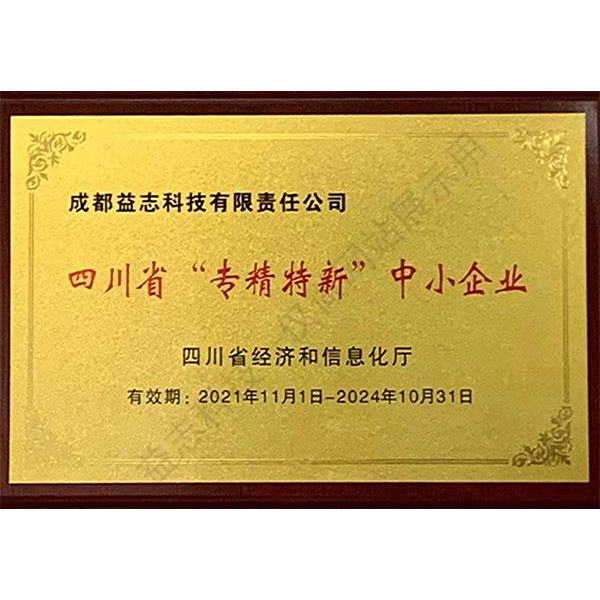
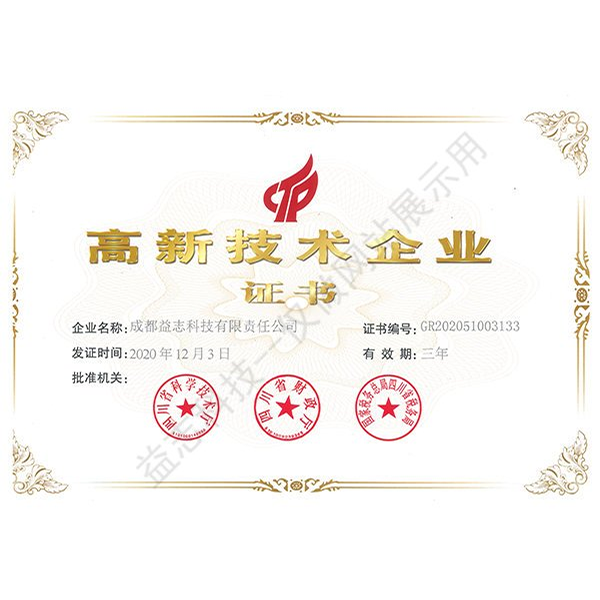
Here, for example,Chengdu Yizhi Technology Co. (https://www.yzkjhx.ru). This is not a pure plant, but a design institute created by a chemical technology company. Their capital of 120 million yuan shows serious intentions. Such structures are interesting because they think not as individual gates, but as systems. They can undertake the analysis of the customer’s technological scheme, propose the optimal types of fittings, sealing materials, control interfaces, and then order their production at proven factories under their control.
Working with such a partner is a different level of dialogue. They can, for example, offer a solution for a valve in a slurry line where the angle of rotation of the disc is critical to minimize water hammer and abrasive wear. Their website, by the way, is in Russian - this is a signal that they are purposefully working with our market. For complex, non-standard tasks, this approach is often more advantageous than buying from an “iron” company. a plant that makes a million standard valves and does not want to delve into private problems.
But here, too, verification is needed. The design institute is an intermediary. Reliability is ultimately determined by the production facility and under whose supervision the body is cast and the disc is machined. You should always request information about the production base and audit it, if not in person, then by requesting certificates and test reports.
So are they ultimately reliable?
There is no clear answer. This is not about the country of origin, but about a specific manufacturer, its competence and control. A Chinese butterfly valve can be a model of reliability if it is made for demanding applications with the appropriate level of engineering and quality control. And it can also disappoint if it is a product of dubious origin, purchased on the basis of the lowest price.
My selection algorithm is now like this. First, I look at the portfolio: do they have experience in projects similar to mine? Secondly, I request a full package of documents: certificates for materials, factory test reports (not only for tightness, but also for cycling). Thirdly, I ask for a sample or links to working objects. And most importantly, I evaluate how much the supplier’s technical specialists delve into my task, ask clarifying questions, or simply nod, agreeing to everything.
Innovation is visible in the details: in the design of the stem, in the method of fixing the seat, in sealing options. Reliability comes from a combination of good design, good materials and strict control. Many Chinese manufacturers today have both, and the third. But you need to trust not a brand or a country, but documents, tests and, ultimately, your own experience and verification. Blind denial is as short-sighted as unbridled enthusiasm. You need to work with those who understand that reliability is not a parameter, but a reputation that has been earned over the years.