Chinese export of butterfly valves: trends?
2026-01-18
When people talk about Chinese butterfly valves, many people immediately think about the price. And this, of course, is a key factor, but if you dig deeper into real exports, everything turns out to be not so straightforward. Price is just a door that people knock on. But to enter and stay, especially in markets such as the CIS or the Middle East, you need something completely different. Now, looking at the numbers, it is clear that volumes are growing, but the structure is changing. Previously, tons of simple cast iron valves were sent under water, but now they are increasingly asking for specifications for specific environments - say, for the chemical or food industry, with special coatings or seals. This is no longer just a “valve”, it is an engineering unit. And here many suppliers stumble because they think that since they did it according to GOST or ANSI, then everything will work out. In practice, especially in turnkey projects, not only certification is important, but also an understanding of the customer’s process. It happened that we delivered a batch with EPDM seals for a conditionally neutral environment, and at the site there were vapors of solvents that “ate” the material. in six months. We learned, including from such mistakes.
From cast iron "workhorses" to specialized solutions
If ten years ago the main export product was, without exaggeration, a cast iron valve on PN10/16 with a manual gearbox or lever, now the picture is different. Yes, the demand for them remains huge, especially in infrastructure projects (water supply, heating), but the margin there is minimal, and the competition is prohibitive. The trend that I have been observing for the last 3-4 years is a shift towards stainless steel (AISI 304, 316) and increasingly frequent requests for exotic alloys, such as duplex, for oil and gas applications. Moreover, it is important not just the presence of such a product on the website, but the willingness to provide a full package of documents: certificates for the material, test reports (not only for pressure, but also for chemical resistance), a CV (flow coefficient) report for critical sections of the pipeline.
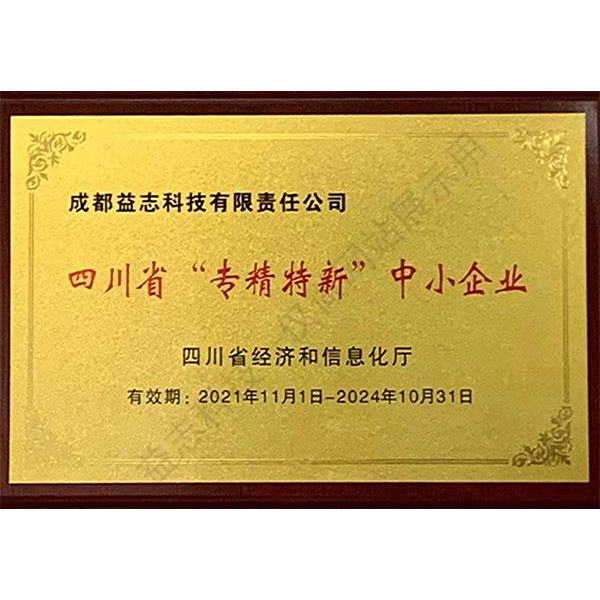
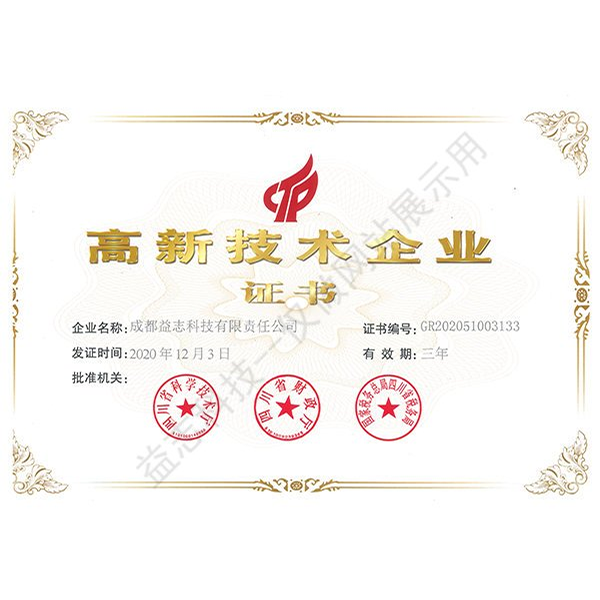
This is where the difference between a manufacturing plant and a trading company manifests itself. The former are often slower to respond to non-standard requests, but can guarantee the traceability of each casting. The latter are faster, but the depth of technical support may be lacking. The ideal partner is, conditionally, a design institute or an engineering company at the plant. They speak the same language with the customer’s engineer. For example, I know a companyChengdu Yizhi Technology Co. (yzkjhx.ru), which was originally created as a design institute at a technology company. Their work often involves not just selling a valve, but selecting a solution for the parameters of the production line, which is critically important for the end client from the same chemical industry. Their website is not just a catalog, it is clear that they delve into the process.
What else has changed? Demand for management. A manual drive is the base, but more and more often there is a request directly for electric drives or pneumatic drives, and with the requirement to supply assembled, adjust and configure limit switches. Previously, they were often transported “naked?” the shutter, and the drive was installed locally. Now this is ineffective - the risks of warranty and compatibility increase. Major players now offer complete units assembled and tested on their site. This adds costs, but seriously reduces the time and risks of installation on site.
Logistics challenges and pitfalls certification
The cost of a container from China is a separate matter, which greatly influences the final price. Especially for heavy products such as large diameter steel valves (DN500 and above). Here you can no longer send a lot in one container; calculations are carried out based on piece-weight characteristics. There were cases when the price of the plant, which was favorable at first glance, was completely “eaten up”. logistics due to suboptimal packaging or the need for special fastenings. Now we always ask the supplier in advance for the dimensions and weight of the packaged item, calculate it accurately, and only then give a commercial offer. Otherwise, you can go into the red.
Certification is generally a battlefield. There is TR CU 010/020 (Customs Union), there are local standards like GOST, there are requirements of specific oil and gas companies. Many Chinese factories have ISO, API 609, CE certificates, but this is often not enough. For example, to work at Gazprom facilities. We need our own additional approvals. And this is where the role of the supplier company as a filter and conductor is important. A good supplier will not just say “we have TR CU?”, but will be able to explain exactly which products and with what parameters it applies, and will help with the preparation of missing documents. This is the same “added value” for which the client is willing to pay a little more than for an offer from Alibaba.
Another nuance is after-sales service and availability of spare parts. Delivery of the shutter is the beginning of the story. After 2-3 years, a repair kit (seal, seat, spindle) may be required. If the supplier disappears or does not maintain a spare parts warehouse, the customer finds himself in a difficult situation. Therefore, now we increasingly see that serious exporters, including the mentionedChengdu Yizhi Technology, organize not just sales, but create logistics hubs or partnerships with local service centers in the CIS countries. It's a long game, but it builds a reputation.
Price pressure and exit from the “red ocean”
The competition at the lower end of the butterfly valve market is not just intense, it is deadly. New small factories are appearing that are ready to reduce the price to the impossible, saving on everything: on wall thickness, on the quality of painting, on packaging, on documentation. Working with such people is like playing Russian roulette. One successful delivery can give way to five problematic ones. Therefore, the trend among proven exporters is to leave this “red ocean?” towards the middle and upper segment.
What does this look like in practice? Firstly, emphasis on the full cycle of quality control. Not just a final inspection, but control at the stages: casting, machining, assembly, testing. The client is provided with photo and video reports of these stages. This eliminates many questions and complaints on the shore. Secondly, the willingness to make small batches to order with modifications. Not every factory will produce 10 pieces of DN150 valves with flanges according to GOST, and not according to ANSI, or with an extended stem for insulation. And if he does, he will set an astronomical price. Suppliers that strike a balance between flexibility and cost-effectiveness win.
Thirdly, transparency. Instead of vague formulations of “high-quality steel?” the proposal specifies the specific grade of steel, indicating the metal manufacturing plant (if possible), the grade of sealing material (say, NBR from Lanxess or EPDM from ExxonMobil). This immediately separates professionals from amateurs and attracts serious customers for whom reliability is more important than immediate savings of 5-7%.
The role of digitalization and changing promotion channels
Previously, everything was decided by exhibitions and personal meetings. Now, especially after the pandemic, a huge part of the work has gone online. But not in the format of a simple business card website. We are talking about technical channels. For example, the presence of a detailed, well-structured catalog in PDF with drawings, dimensions, weights and tables of pressure and temperature tolerances for each model. Or pages with frequently asked technical questions (FAQ), where real cases are dealt with: “what to do if the valve leaks after installation?”, “how to choose a seal for pumping alkali?”.
Websiteyzkjhx.ruis a good example of this approach. It is clear that it was not made for show, but as a working tool for engineers. There are sections with descriptions of projects, technical articles (albeit a little), which immediately inspires more trust than a site with only a price list and contacts. Activity in professional communities and forums related to pipeline fittings is also beginning to play a role. Customers are not just looking for a product, they are looking for expertise.
At the same time, the classic channels have not gone away. Participation in specialized exhibitions in Almaty, Moscow, and Baku still provides valuable contacts. But now the goal is not to distribute a thousand catalogs, but to conduct ten, but in-depth negotiations with potential partners or end customers of large projects. Digitalization and ?live? communication now work in tandem.
Looking to the future: what's next for exports?
To summarize, the trend is complication. Exporting butterfly valves from China is no longer just a commodity business. It becomes a business of providing engineering solutions and services. Price remains an important factor, but it is no longer the only and often not decisive factor for projects where the cost of downtime is measured in thousands of dollars per hour.
I expect further consolidation in the supplier market. Small traders who are unable to provide technical support and documentation will leave or remain in the niche of very small, “garage” traders. demand. Large factories will strengthen their presence through the creation of subsidiary engineering divisions or close alliances with local companies, as didHuaxi Technology, creatingChengdu Yizhi Technology Co.precisely as a design institute with a solid authorized capital. This is a signal to the market about the seriousness of intentions.
Secondly, the growing demand for “smart” fittings This is not yet a massive trend for butterfly valves, but requests for valves with position sensors, with the possibility of integration into automated process control systems, are already appearing. And here, Chinese manufacturers, having a strong electronic component base, can provide interesting combined solutions at a competitive price. But this is a question for the next stage. For now, the main thing is reliability, compliance with specifications and willingness to be a partner, and not just a sender of the container. This is exactly how, in my opinion, Chinese exports in this segment will develop.