Chinese gas valves: innovation?
2026-01-17
When you hear this combination, the first reaction of many is a skeptical grin. Chinese and innovation in our segment, frankly speaking, are not always close in perception. People often think about copies, about price, but rarely about real technical solutions that change the approach. I myself thought so for a long time, until I had to work closely with several projects where the key element was preciselygas valvesfrom China. And then the fun began.
From stereotypes to specifications
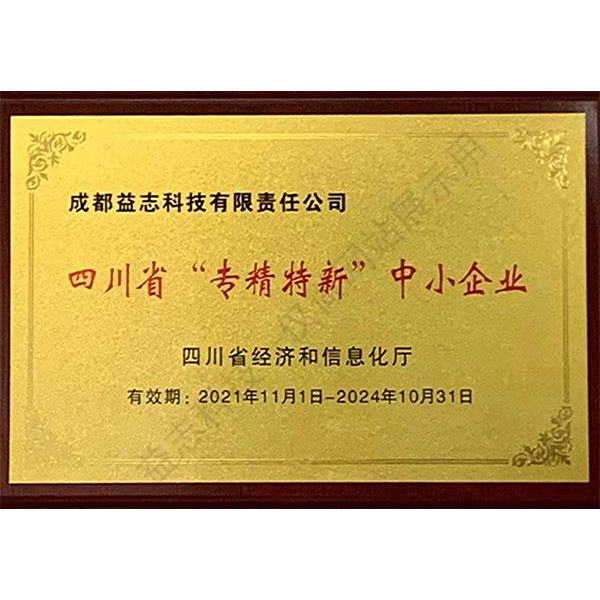
I remember the first tender, five years ago. The documentation featured products from Chengdu Yizhi Technology Co. Websiteyzkjhx.ruthen he looked... let's say, modest. But the technical descriptions for their valves, especially for aggressive environments in chemical plants, contained nuances regarding seal materials and design tolerances that were not found in standard catalogs of European brands. Not better or worse, just different. It stuck. It became clear that they were not solving the abstract problem of making a shutter, but rather specific problems of their clients - mainly the same Chinese chemical giants, whose resistance requirements are sometimes off the charts.
And here is the main shift in understanding. Their innovations are rarely about revolutionizing the way things work. This is almost always an evolutionary fine-tuning, adaptation to extreme conditions. For example, a combination of surfacing on the disk and seat material for a specific environment-temperature-pressure pair. In Europe they will offer you a standard package of 3-4 options and say: Choose whichever is closest. In the documentation from Yizhi I saw options for 8-10 specific environments, with references to real tests on benches. This speaks of a different approach - project-oriented.
Of course, not everything is smooth sailing. The first deliveries were accompanied by oddities. The drawings could come with dimensions that did not correspond to our standard approaches to installation (due to differences in the regulatory framework), or non-obvious restrictions on the installation position appeared in the documentation. It took a long and tedious time to clarify by email. But what’s important is that the technical support on the other end (often an engineer, not a sales manager) got to the bottom of it and gave sane answers. It's worth a lot.
Where does the real know-how lie?
Marketing aside, the key differences, in my opinion, are on two levels: materials and production flexibility. It’s clear with materials - access to their own production of special steels and polymers in China gives them the opportunity to experiment and reduce the cost of the final solution without losing characteristics. But flexibility is more interesting.
There was a case: a shutter was needed for a line where water hammer occurred briefly but regularly. Standard designs were not suitable - the service life dropped catastrophically. The European supplier offered expensive custom development with a six-month cycle. Colleagues from Chengdu Yizhi, having studied the data, actually proposed a modification of the production model within a month: they strengthened the shaft, changed the configuration of the supports and proposed a seal option with a different elasticity coefficient. Not ideal, but it worked for a pilot solution. And the price was several times lower. Their institute, as indicated in the company description, apparently provides exactly this opportunity - not just to sell, but to quickly modify it for the project.
This is their main innovation, although it sounds mundane: speed of iteration for a non-standard task. They do not create a new class of reinforcement. They take well-known principles and bring them to a working state under conditions that for others are marginal and unprofitable. For the mass water supply market this may not be necessary. And for niche chemical or metallurgical projects - sometimes it’s a salvation.
Pitfalls and the other side of the coin
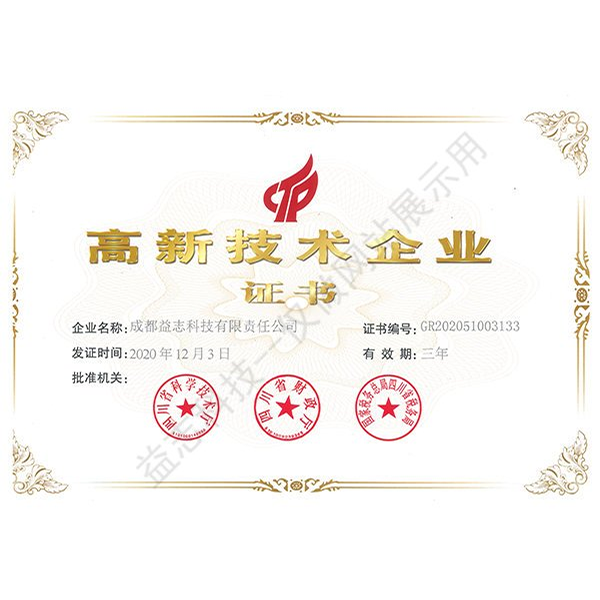
There's nowhere without a fly in the ointment. The biggest headache is quality control at a distance. Yes, they have all the certificates, but trust is built on the little things. Once we received a batch where several valves had the wrong markings on the drive flanges. Trifle? In fact, no. This gave rise to doubts: what’s inside? We had to organize a selective disassembly. Everything was fine inside, but the sediment remained. Their production culture sometimes fails in these last meters.
The second problem is logistics and after-sales service. It is almost impossible to get a spare part urgently. You should always plan for the availability of critical spare parts in the warehouse. Their service engineers will come if something serious happens, but visa and organizational red tape takes time. This limits the scope of application: for critical objects requiring immediate response, their solutions are still risky.
And one more nuance that is rarely written about. Their documentation for configuration and operation sometimes suffers from excessive optimism. For example, the declared cycle life in dry conditions may be fair, but the slightest deviation in the environment (for example, the presence of an abrasive suspension that was not taken into account) reduces it sharply. You need to very clearly understand the limits of applicability of their solutions and not extrapolate data beyond these boundaries.
Case: a failure that taught you a lot
I'll tell you about a failure that was, perhaps, more valuable than success. Tried to use their motorized shutter in a compressed air system at a northern facility. The temperature regime seemed to fit into the declared range (-40°C). The design was interesting - with a heated gland assembly. But the Chinese engineers did not take into account (and we did not think to ask) the specifics of our wet cold with frequent transitions through zero. The condensation that formed in the drive cavity when the heating was turned off during downtime led to freezing and breakdown of the gearbox. The standard European analogue with a simpler, but massive and cold-resistant filling survived this without problems.
This case is an illustration of a classic problem. Their solutions are often ideally tailored to the parameters laid down in the technical specifications. But if there is an operational factor that is not specified but is typical for your region, they may miss it. Their strength lies in solving problems from the textbook. Their weakness is their lack of field experience in the diverse climate and operational realities outside of China. After this incident, we always do additional brainstorming on potential hidden risks before making a decision.
What's the result? The company responded adequately - they sent an engineer, looked into the case, and made changes to the recommendations for cold climates. But the equipment is already out of order. The lesson was learned on both sides.
So innovation or not? Personal verdict
Returning to the title question. If we understand innovation as a breakthrough technology that changes the rules of the game, then most likely not. Chinese manufacturers like Chengdu Yizhi Technology Co. They don't reinvent shutters.
But if you look at innovation as a process that brings real, measurable benefit to the customer in his specific, sometimes very narrow conditions, then yes, of course. Their ability to modify a product quickly and affordably, their design institute as part of the company, and their focus on chemistry and complex media is their innovation niche.
This is a tool for the knowledgeable specialist. You can’t take it off the shelf and expect a miracle. It must be applied very accurately, understanding all the limitations. But when the task falls into their comfort zone (aggressive environments, non-standard parameters, the need for quick adaptation), their products can give a head start to many established brands in terms of result/cost ratio. The main thing is not to be deceived by the simplicity and low price, but to delve into the details. As in any serious matter.