Chinese butterfly valves: innovation and reliability?
2026-01-17
This is a question that constantly comes up in conversations with customers and colleagues. Many people still perceive Chinese fittings as something uniformly cheap and dubious. But over the past ten years the picture has changed dramatically. We are no longer talking about simple copying, but about completely conscious engineering, where innovation is not a marketing slogan, but a response to real, sometimes very specific, market challenges. And reliability... Well, with it everything is more complicated and interesting.
Where legs grow from: evolution instead of revolution
I remember about fifteen years ago, when I just started working closely with Asian suppliers, the butterfly valve was extremely simple: a cast iron body, a rubber insert, a steel disk on the shaft. Did it work? Yes, in conditional irrigation systems. But as soon as the pressure or temperature was given above the rated value, or the environment was aggressive, problems began. The main one is the seal resource. The rubber “floated” and the disc began to jam.
Now Chinese manufacturers, especially those exporting to the CIS and Europe, place great emphasis on the materials and design of the sealing unit. This is not just one breakthrough technology, but a lot of small but critical improvements. For example, the transition from standard EPDM or NBR to special compounds that are resistant to changes and specific environments. Or the geometry of the seat - now you often see not just a rubber ring inserted into a groove, but composite structures where the elastomer is reinforced or combined with a polymer base. This dramatically reduces the risk of extrusion and increases the service life.
Or take the drive. Previously, they often put on anything, just to keep it spinning. Now, serious factories have their own lines of gear drives or are tightly integrated with electric drive manufacturers, offering ready-made, calibrated solutions. This is already the level of a systematic approach, and not just selling hardware.
Where does the “devil” lie: practical observations and pitfalls
With all the evolution, the key point is to understand exactly what tasks the valves are suitable for. The most common mistake is to use a standard flanged valve with a rubber seal in systems with long downtimes. The disc may get stuck. to the saddle, especially if there are suspensions in the environment. Solution? Look for models with anti-friction disc coatings (for example, nickel plating or epoxy coating) or designs with the possibility of “breaking” - small eccentricity of the disk axis.
Another nuance isbutterfly valvesfor low temperatures. It would seem that steel, cast iron... but the seat material behaves differently at -30°C and below. Some Chinese manufacturers are now actively offering options with seats made of modified fluoroplastic or special frost-resistant elastomers. But here it is important to demand not just a certificate, but a report on real cold cycle tests. I personally came across a situation where the shutter, after a month of working outside in winter, lost its tightness - the material of the seat is “doubel”? and did not regain its shape.
And, of course, quality control. The weakest element in the chain is often not production, but logistics and storage. I have seen boxes of valves arriving at the site with already deformed flanges or scratches on the sealing surface of the disc due to improper installation. The reliability of the final product is a chain, and Chinese suppliers who have understood this create serious packaging and provide clear handling instructions.
Case study: non-obvious application and lesson
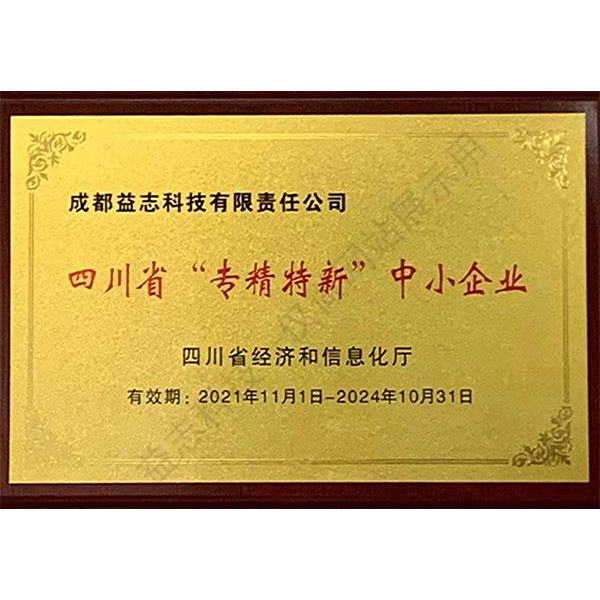
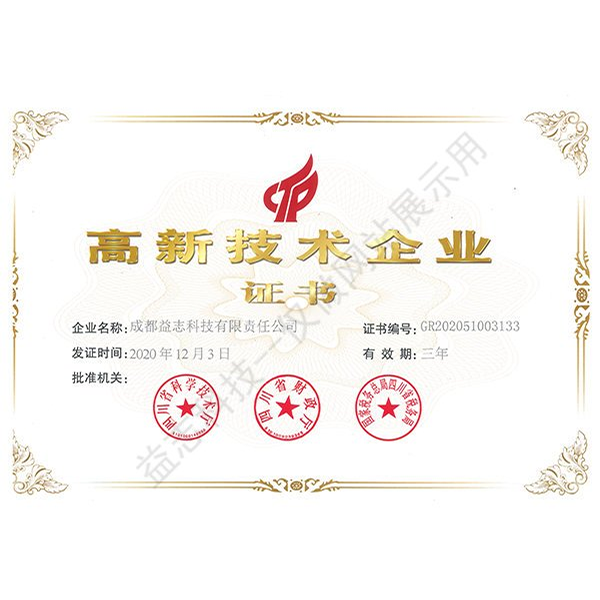
We had a project to modernize a section of a process pipeline at a chemical plant. The medium is a slightly aggressive suspension with abrasive particles. Classic valves jammed within six months. We decided to trybutterfly valves, but not standard, but with a disc and seat completely covered with wear-resistant ceramics. We settled on an offer from one Chinese engineering institute - Chengdu Yizhi Technology Co. Their specificity lies precisely in the fact that they are not just sellers, but a design institute, which is felt in their approach.
They did not immediately offer a catalog, but asked for a detailed composition of the medium, granulometry, and temperature chart. As a result, they proposed a custom solution: a shutter with a disk made of aluminum oxide, but not sputtered, but all-ceramic, assembled according to a special pattern on a metal hub to avoid cracking from vibrations. And the saddle is composite, with ceramic inserts.
Did it work? In general, yes, the resource has increased to 3 years versus six months for valves. But there was also an unpleasant surprise: during the first hydrotest on site, a slight leak was discovered along the flange connection of the valve itself. It turned out that the supplier, following European practice, supplied flat flanges for the tongue-and-groove gasket, but our old pipeline had ordinary projections. I had to urgently mill the gaskets. Lesson: Even with an advanced product, the details of the installation interface need to be coordinated down to the screw. Innovation in one does not cancel routine in another.
By the way, the website of this institute isyzkjhx.ru- quite revealing. There is not just a catalogue, there are many technical articles and case studies. It feels like this is a platform for engineers, and not just for buyers.
Innovation or adaptation? Focus on specifics
People often talk about innovation in the context of “smart?” fittings, with sensors and IoT. This is certainly developing in China. But in my opinion, the more significant innovations are in the field of hybrid materials and casting methods. For example, obtaining high-density stainless steel injection molding for housings, which reduces weight and improves the metal structure without expensive machining.
Or combined shaft seals. The standard is an oil seal or “O-rings”. Nowadays, designs with two or three lines of protection are increasingly common: for example, a Teflon ring + sealing gland + boot. This is a direct consequence of working with stringent environmental regulations in Europe, where stem leaks are unacceptable.
But it is important to understand: these solutions are often an adaptation and competent compilation of the world’s best practices for a certain price category. This is their strength. The Chinese manufacturer is not reinventing the ball valve, but it can optimize its design for mass production in a way that maintains reliability but significantly reduces cost. This is process innovation, not product innovation.
Final considerations: is it reliable or not?
Returning to the title question. Yes, modern Chinesebutterfly valvesfrom serious manufacturers can be extremely reliable. But with a huge caveat: they cannot be bought “blindly”. The key is choosing the right supplier. You need to look not for a giant plant (although there are such), but often for engineering companies or design institutes, like the mentioned Chengdu Yizhi Technology Co., which are able to understand the problem.
Reliability is now not an abstract characteristic, but the result of precise selection for conditions: environment, pressure, temperature, cyclical operation, installation nuances. The Chinese market offers a huge selection here, from budget universal solutions to highly specialized products.
The main conclusion that I have made over the years is that I stopped dividing the fittings into “Chinese” ones. and “not Chinese?”. Now I divide by “suitable for the task?” and “inappropriate?”. And in the “suitable” segment solutions, Chinese proposals based on competent engineering and adaptation of technologies occupy an increasingly strong and, importantly, predictable place. But you can’t relax - testing, requesting real test reports, checking details is always necessary. Trust but verify, especially when it comes to technological security.