Chinese butterfly valves: trends and innovations?
2026-01-17
When you hear “Chinese butterfly valves?”, the first thought for many is that they are cheap and cheerful, suitable for irresponsible systems. But this has been irrelevant for five years, if not more. I thought so myself until I started working closely with supplies to one of the petrochemical plants near Nizhny Novgorod. There we had to figure out where the real state of affairs was and where were just outdated stereotypes.
From ?iron? to “intelligence”: where the design is moving
Previously, the main argument was the material - cast iron, steel, sometimes stainless steel. Now the conversation begins withtightnessand resource in specific environments. For example, the classic double-eccentric (double-offset) valve has become practically the standard for aggressive environments. But Chinese manufacturers have gone further in detail: they are not just copying European saddle geometry, but are experimenting with composite coverings. I saw samples where a layer of nickel and PTFE was sprayed onto a steel seat - for acidic environments with abrasive. The resource compared to conventional fluoroplastic has increased significantly, but the price, of course, is different.
A trend that is noticeable to the naked eye is the integration of sensors directly into the housing or onto the drive. It's not just about limit switches. Nowadays they are increasingly offering “smart” kits with torque and bearing temperature sensors, with the ability to transmit data via the HART protocol or even wirelessly. This is no longer just a shut-off valve, but an element of a monitoring system. However, there is a nuance here: this option is often available “on order”. and requires a clear technical specification, otherwise they will send a basic version with a potentiometer.
I remember an incident during the installation of a carbon dioxide line. The valves were European, and on the branches they installed Chinese butterfly valves with “similar” ones. pressure characteristics. Everything worked until cyclical temperature changes began. Six months later, the stuffing box packing on two valves began to leak. We took it apart - it turned out that the packing material was universal, but not designed for constant compression and expansion at our -30°C and +50°C on the line. I had to change it to a specialized graphite cord. Conclusion: innovation is innovation, but no one has canceled the basic calculations for operating conditions. Chinese suppliers are now willing to engage in dialogue on such specifics if they are announced in advance.
Market and niches: where Chinese manufacturers are really strong
It is a mistake to think that they occupy only the lower price segment. Their strength lies in flexibility and speed. Do you need 50 pieces of DN300 valves with flanges according to GOST, not DIN, and painted according to RAL 5010? The European manufacturer will say: wait 4-6 months, this is not standard. A Chinese factory, especially through a competent local representative, often takes 8-10 weeks. This is their main trump card in projects with tight deadlines or the need for quick replacement.
There are also narrow niches where they have taken the lead. For example, valves for pneumatic transport systems for bulk materials. The wear of the disc and seat is critical there. The Chinese are actively using methods of laser cladding of hard alloys (such as stellite) onto the edge of the disk. According to our own measurements at the grain processing plant, the service life of such valves was comparable to well-known Italian brands, with a price difference of 1.8-2 times. But there is a pitfall: the quality of the surfacing needs to be checked selectively by ultrasonic testing, otherwise cavities are possible.
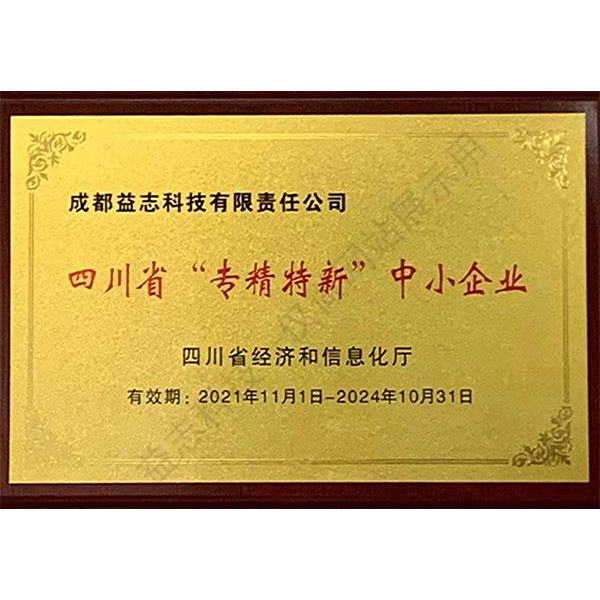
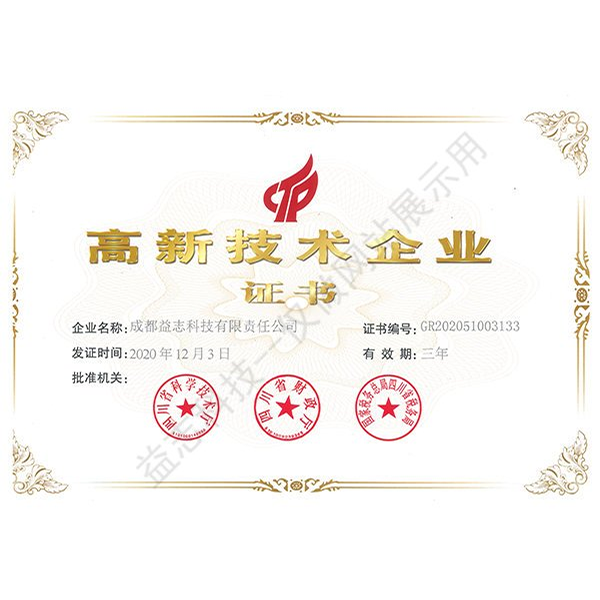
It is worth mentioning separately about design institutes that work as a connecting link. They don’t just sell hardware, but can adapt the product to the customer’s standards. Here, for example,Chengdu Yizhi Technology Co.is just such an institute, created on the basis of a chemical technology company. You go to their websiteyzkjhx.ruand you see that the emphasis is on engineering and selection for specific technological processes, especially in chemistry. This is a different level of interaction, when you can be offered a modification of a standard product, and not just a price list. The registered capital of 120 million yuan (this is a lot) indicates serious intentions in the market.
Innovation or marketing? We analyze real cases
You often see big terms in catalogs: “nano-coating”, “digital twin”, “revolutionary geometry?”. We must separate the wheat from the chaff. The real innovation I encountered was the improvement of the lubrication system. Standard valves have one grease nipple. In new models from advanced factories, two circuits are made: one for lubrication of bearings, the second for sealing surfaces. This seems like a small thing, but in practice it increases the service interval, especially when the medium is prone to polymerization and can “coke”. saddle.
Another practical trend is the transition to solid cast (not welded) stainless steel wheel hubs for critical applications. Welds are always a potential site for stress corrosion cracking in certain environments, such as those containing chloride ions. Chinese foundries have now reached a level where they can offer such quality castings and subsequent machining that porosity defects are minimal. They checked it with an x-ray and the result was fine.
But with “digital twins?” more hype for now. Yes, some manufacturers attach a QR code to the product with a link to the 3D model and passport. This is convenient for installation and accounting. But I have not yet seen full-fledged predictive maintenance, where data from sensors in real time is analyzed by algorithms, in serial deliveries from Chinese brands. This is still the prerogative of large Western players. But the direction of thought is correct, and they are actively following it.
Pitfalls of ordering and logistics
The biggest mistake is ordering from a catalogue. without specifying all the details. Package. Does it seem like nonsense? No matter how it is. We received a batch of valves, each of which was in an individual plastic bag with silica gel, packed in a wooden box with slats. And we received a batch where five pieces were simply wrapped with stretch film on a pallet. The result is dents on the flanges and disc beating at the first time. Now we always include packaging and labeling in the specifications.
Logistics are a different story. Production deadlines can be met, but delivery times will slip? due to delays at customs or shortage of containers. You need to work through suppliers who have warehouses in the Russian Federation or the EAEU with preliminary delivery of popular standard sizes. This relieves a lot of headaches. Those who likeChengdu Yizhi Technology, position themselves as a design institute, often offering turnkey logistics. within the framework of the contract, which is critical for large projects.
And the last thing is certification. Most large Chinese factories are now in order with TR CU 010/2011 (for pressure) and 032/2013 (for explosion safety). But always ask for valid certificates, and those issued by accredited bodies on the territory of the EAEU, and not internal Chinese ones. I have seen cases where they provided a certificate, which was actually a declaration of conformity from the factory itself. This won't work at customs.
What's the result? A look into the near future
So where is everything going? Chinese butterfly valves are no longer just a cheap alternative. They are becoming a technologically advanced, flexible product for certain segments: chemistry, food industry, medium-sized energy, water and wastewater services. Their strength lies in their ability to quickly close the niche of non-standard orders and in the aggressive introduction of new materials science solutions.
Innovation will follow the path of hybridization: Western engineering solutions (in terms of reliability and standardization) plus Chinese speed of adaptation and production flexibility. We can already see how European engineering companies are beginning to place orders for OEM production in China, but under their own quality control.
For us, as specialists, this means that the approach to selection should be more detailed. Not “let’s take Chinese ones because they’re cheaper,” but “let’s select a specific manufacturer with proven experience in our environment, request a sample for testing, and write down all the details in the technical specifications.” In this case, you can get an excellent price-functionality ratio. And the question “trends and innovations”? will be decided not in the catalog, but in direct dialogue with suppliers who understand the essence of the technological process, and do not just sell hardware.