Where to find a Chinese butterfly valve exporter?
2026-01-17
A question that sounds simple until you really start looking. Many people immediately go to Alibaba and think that the job is done. But there is an ocean of offers, and 80% are traders, resellers or simply bad producers. Find someone who really makes qualitybutterfly valvesand at the same time ready to work for export with a full package of documents and technical support - this is another level. I’ll share what I went through myself, with mistakes and findings.
Why not all manufacturers are producers
The first and main pitfall. You see a beautiful website, catalog, contacts. You write. The manager answers with perfect English. Everything seems fine. But when you start digging into the details—environment-specific seal material, API 609 or ISO 5211 certification, body molding details—the answers become formulaic, and the request for a drawing is delayed. This is a classic sign of a trading company. They are not bad, but they add their own percentage, and most importantly, they shift technical responsibility to a factory that you cannot get to.
I had a case: we ordered a batch of carbon dioxide valves. The supplier (as it turned out later, a large trader) swore that the EPDM seal was suitable. But in fact it came with regular EPDM, not for aggressive environments. Conflict, courts, loss of time. The whole problem is the lack of direct engineering dialogue with the plant.
So now my first filter is a request for a video from production. Not a beautiful video, but a live session in the workshop, where you can see the machines, the assembly process, and the casting warehouse. If they refuse or delay, it’s an immediate red flag.
Where to really look: non-obvious entry points
Alibaba and B2B platforms are just the door. The real search begins afterwards. Here's what works:
1.Industry catalogslike Made-in-China.com - but not just a search, but a filter by Verified Manufacturer with verified legal status. Often the websites of real factories are outdated, but the catalogs contain data on the area of workshops and the number of machines.
2.Specialized exhibitions. This is a gold mine. I personally went to the China International Fluid Machinery Exhibition. There you see the product live, you can spin the flywheel, see the quality of the paint, talk with an engineer, not a sales manager. I made contacts with two excellent factories from Zhejiang just like that. They are almost not in the top searches, but they make valves for European brands on an OEM basis.
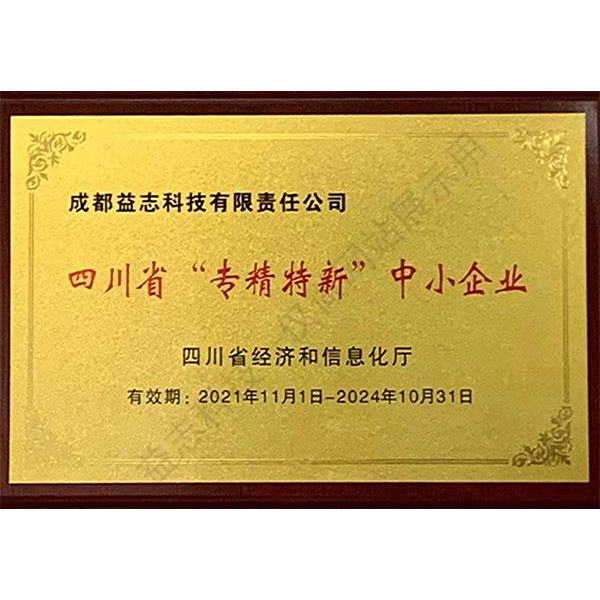
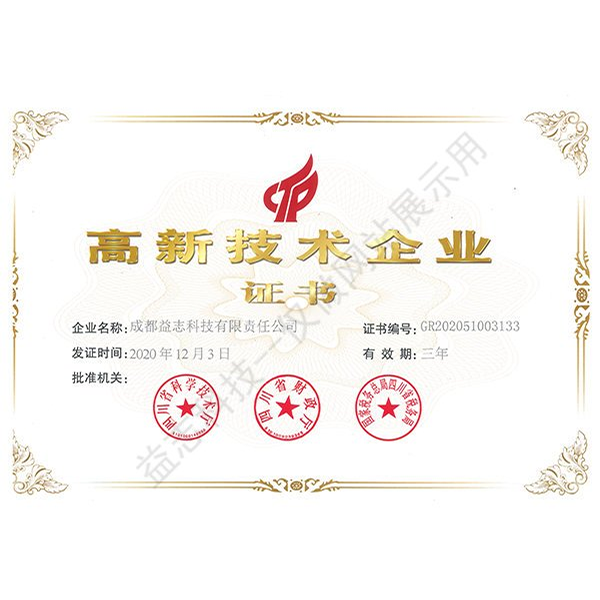
3.Referrals from logisticians . It sounds strange, but experienced freight forwarders, who have been transporting equipment from China for years, know who packs and ships consistently and does not create problems with customs. One of them recommended a factory in Tianjin to me - we still cooperate. Let's say we found several candidates. How to choose? Price is not the first factor. First -technical documentation. A real manufacturer easily, often immediately on the first day, sends full GA drawings in PDF/DWG, a product passport, and certificates for materials. If they only send you a beautiful PDF catalogue, this is a trader. Second -flexibility in modifications. Do you need a flange not according to ANSI, but according to GOST? Or another arrangement of flanges for welding? A real factory will say: Yes, we did, here’s an option, plus 10% of the cost and 15 days. The trader will go away for a week to check with the factory. Third -packaging and logistics. From experience, if the plant itself offers packaging options (wooden box, steel frame for sea transportation) and knows the nuances of marking according to GOST or EU, this is a huge plus. This means they have experience in exporting to the CIS. I came across this supplier when I was looking for reliable valves for an oil and gas project. Their websiteyzkjhx.ruI was initially attracted by the fact that it was in Russian and structured specifically for engineering needs - there were sections with technical articles and detailed diagrams. Chengdu Yizhi Technology Co., Ltd. is not just a factory, but, as indicated, a design institute created by the chemical company Huaxi. This is an important point. When I spoke with their technical department, I felt that they understood the processes for which valves were needed. We don’t just sell the valve, but we can discuss working with suspensions and abrasive media. What I noticed in practice: they sent the full package of certificates (including leak test reports) the fastest. We met the production deadlines. In terms of quality, the painting was of high quality, without smudges, and there were no burrs on the flanges. The downside is that initially their manager slightly overestimated their capabilities in terms of shipment time, so they had to push it. But in general, for complex design tasks this is a serious option. Their profile as a design institute with a registered capital of 120 million yuan explains this approach. To summarize the bitter experience, here are the brake lights for me now: 1. The price is significantly lower than the market price without clear explanations. This means they save on the disc material (for example, they use 304 steel instead of 316) or on the thickness of the body. 2. Reluctance to provide contact information for an engineer or technical department. All communication is only through the salesperson. 3. Template certificates without material lot number, issued by our own laboratory. Third-party certificates such as TUV, API are required. 4. Too quick and vague answers to specific questions. A real specialist will often ask again and clarify, because he knows that a mistake in selecting a seal is costly. If I were to start searching now, my path would look like this: 1. Decide on specific parameters: DN, PN, medium, temperature, flange standard. Without this, dialogue is useless. 2. Look not for a Chinese exporter, but for a Chinese manufacturer of butterfly valves in catalogs with the Factory filter. Immediately look at the age of the company (preferably from 10 years). 3. The first request should not be sent with a request for a price, but with a technical question about your project and a request to provide a drawing of a similar product. Weed out half. 4. Request a video conference with the workshop for the remaining 3-4 companies. After that, request a commercial offer. Compare not only the price, but the entire package: packaging, terms, payment terms, warranty. And yes, companies like the mentioned Chengdu Yizhi Technology are a good starting point for complex tasks. But you always need to do your own checking. The market is huge, and sometimes the best manufacturer sits in an industrial park somewhere in Jiangsu and does not promote much on the Internet. They are also worth looking for - through exhibitions, industry reports, recommendations. Good luck in your search.Evaluation criteria: what to look for after first contact
Case Study: Working with Chengdu Yizhi Technology Co.
What to Avoid: Personal List of Red Flags
Instead of a conclusion: an algorithm for a quick start