Chinese butterfly valve exporters?
2026-01-17
When you hear this question, the first thing that comes to mind is, of course, Shanghai, Jiangsu, Zhejiang. There really are a lot of them, from giants to small workshops. But if you dig deeper, it turns out that geography is much more interesting. And the quality... it can be very different, it does not fit into the simple scheme “cheap = bad?”. For a long time I thought that everything came down to price and certificates, until I started working directly with factories like the one in Chengdu.
Not only the coast: where to look for a supplier
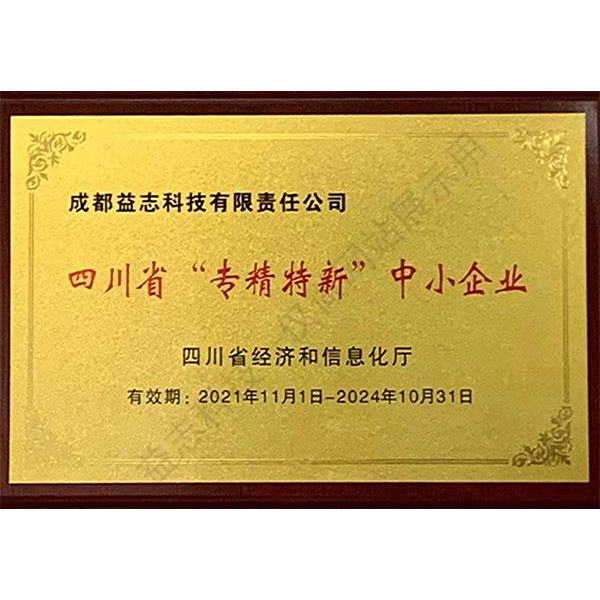
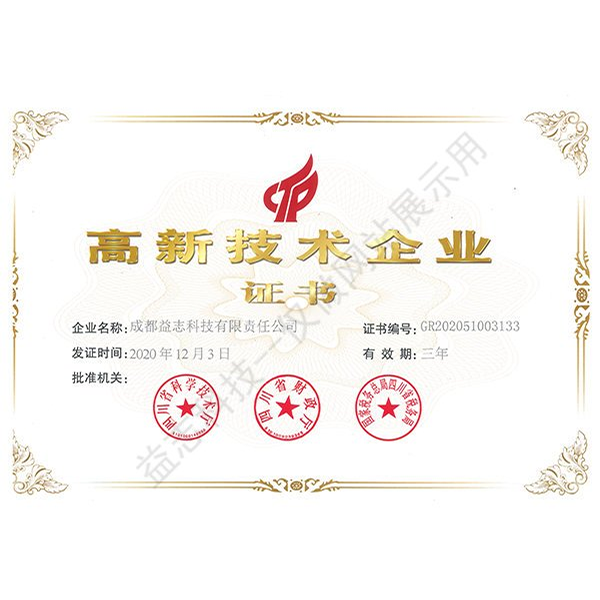
Everyone is looking in a row on the coast - logistics are simpler, ports are nearby. But in recent years, some serious players have emerged domestically. Take, for example,Chengdu Yizhi Technology Co.. On their websiteyzkjhx.ruit is clear that this is not just a trading company. They are positioned as a design institute created by a chemical technology company. This is an important point.
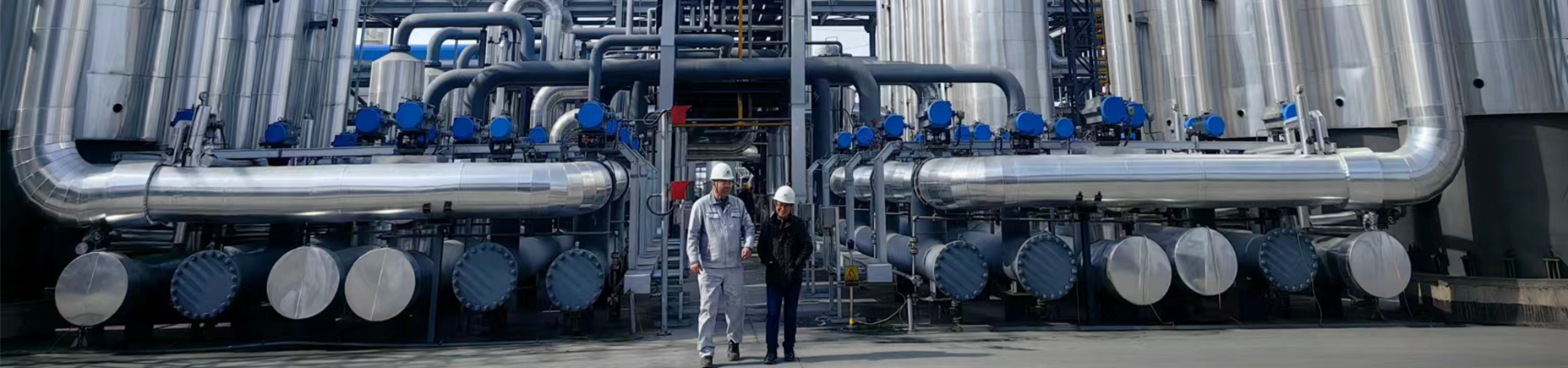
Why? Because a manufacturer that initially grew out of the needs of a specific technological complex (in their case, apparently,Huaxi Technology), often has a deeper understanding of product applications. He knows what environments, what pressures, what operating cycles actually exist at the facility. Its engineers could walk through the pipelines themselves and solve problems. This is not a guarantee, but a signal.
It is more difficult to negotiate with such factories on small batches, they may be less flexible in communication in English, but their technical support and approach to valve design are sometimes a cut above. I checked it personally: they sent calculations for a non-standardbutterfly valvefor a mixture with abrasive, they offered sealing options that standard factories from the coast did not even think about - they should have been handed a catalog.
Price vs. Design: What Really Matters
This is the main trap for the buyer. Everyone looks at the price per piece and the thickness of the disc. But you need to look at the shaft, its connection to the disk, and the type of bearings. Cheap valves save money here - they use weak studs, make the groove for the disk shallow, and use simple bushings instead of corrosion-resistant bearings. After six months of intensive work, backlashes and leaks begin.
One Jiangsu supplier had a painful experience. The valves seemed to match the drawings, the price was excellent. But the design used a standard carbon shaft, just coated, and a regular circlip. Under conditions of frequent partial opening and vibration, the ring broke the groove and the shaft began to shift. The manufacturer, of course, said that we were not operating according to the conditions. But the conditions were spelled out... In general, they didn’t sue, they learned their lesson.
Now I always ask for diagrams of the “shaft-disc-seal” assembly. and a technical passport with approvals. If the plant is like the sameYizhi Technology, can provide strength calculations or recommendations for use in different environments (their website shows a bias towards chemistry), this immediately changes things. Their capital of 120 million yuan is not just a number, it often means in-house foundry and machining rather than assembling from purchased components.
Certification: a piece of paper or a process?
CE, ISO 9001, API 609 are a must-have for an exporter. But here's the trick: in large factories these systems often actually work. For small ones, it’s just a folder for the auditor. How to check? Ask not “do you have a certificate?”, but “can you provide test reports for a specific tightness class according to ISO 5208?” or “how do you control the welds on the body?” The reaction will be revealing.
Working with suppliers from China, I began to pay attention to their portfolio. Not on the list “we supplied to 50 countries?”, but on specific objects. If the company is part of a design institute, as in the case of Chengdu Yizhi, there is a high probability that their products were first tested in internal, perhaps even government, facilities of the parent company Huaxi Technology. This is a serious test.
I once saw how they were testing at a factory in Xi'anbutterfly valvelarge diameter. Not just water under pressure, but cyclic opening and closing under load, with torque measurements. The manager then said: “This is for our own peace of mind, so that the client does not have problems at the site.” This attitude is worth a lot, but the price will be higher than the market price. And here you need to understand what project you are buying for - for a temporary construction site or for an oil pumping station for 20 years.
Logistics and ?hidden? complexity
It would seem that he bought it, loaded it, sent it. But no. If you take equipment from a plant in the depths of China, like in Sichuan, you need to clearly calculate the timing. It takes more than one day to get to the port. Plus, there may be difficulties in obtaining export documents if the plant does not have extensive experience in independent exporting. They can work through a trader, and this is an extra link.
Websiteyzkjhx.ru, judging by the .ru domain, is clearly aimed at the Russian-speaking market. This is a plus - it means that they have at least a minimal infrastructure for support: a Russian-speaking technical specialist (or translator), an understanding of our GOSTs and standards, perhaps a spare parts warehouse. This makes life a lot easier. I remember how I struggled with the supplier from Guangzhou, explaining that we needed just such a flange and a GOST certificate, and not their internal standard. We spent a month just getting the technical documentation approved.
Another point is packaging. For sea transportation, especially in winter, a wooden box with enhanced waterproofing is not a whim, but a necessity. Some factories save on this too. As a result, you get a rusty shaft and a broken handle. Moreover, according to the contract, they may not be at fault - Incoterms FOB, the risks transferred to you at the port of shipment. Therefore, now in the specification I write down the requirements for packaging, down to the type of film and the amount of silica gel.
Results: what to look for when choosing
So, to summarize the scattered thoughts. Chinese exportersbutterfly valves- this is not a monolith. This is a layer cake. At the top are well-known brands with impeccable logistics and standard quality, but also standard (not always suitable) solutions. In the middle are project-oriented factories, as in the Chengdu example. They may provide a better technical solution, but will require more time and money. Below is a sea of clones, where the game is based only on price.
The choice depends on the task. For a standard water supply, you can take it from the coast according to the catalogue. For a production line with an aggressive environment or special conditions, it is worth looking for those who understand the process. Look not only at the business card website, but also ask for photos of workshops and videos of tests. Ask about specific cases.
And yes, you should never neglect a personal visit or video inspection if the order volume is worth it. Seeing a worker tighten bolts on a butterfly valve body with a torque wrench rather than a regular wrench is a better guarantee than any fancy brochure. It's details like these, not big claims, that ultimately determine whether a piece of equipment will work or become a headache for years to come.