Chinese butterfly valves: innovations and trends?
2026-01-16
When you hear “Chinese butterfly valves?”, many people still have an image of something cheap and dubious. I thought so myself ten years ago. But now, looking at the specifications that come from designers, or at the equipment that has been operating at our own facilities for a decade, you understand that it’s time to change stereotypes. The question is not whether they are “cheap or not?”, but where the industry is heading and what real innovations are behind it, in addition to the banal reduction in price.
From ?iron? to “intelligence”: where the focus is shifting
Previously, the whole race was based on body and disc materials: cast iron, stainless steel, duplex. Now this is, of course, a base. But the real difference began to appear elsewhere. Over the past five years, a clear trend has been integrationelectric drivesand control systems. It's not just about a motor that opens and closes. I have seen projects where Chinese manufacturers, especially those that grew out of large holdings, offer valves with built-in torque and position sensors, with communication protocols directly on the terminal block. This is no longer just a fitting, but a unit for an automated process control system.
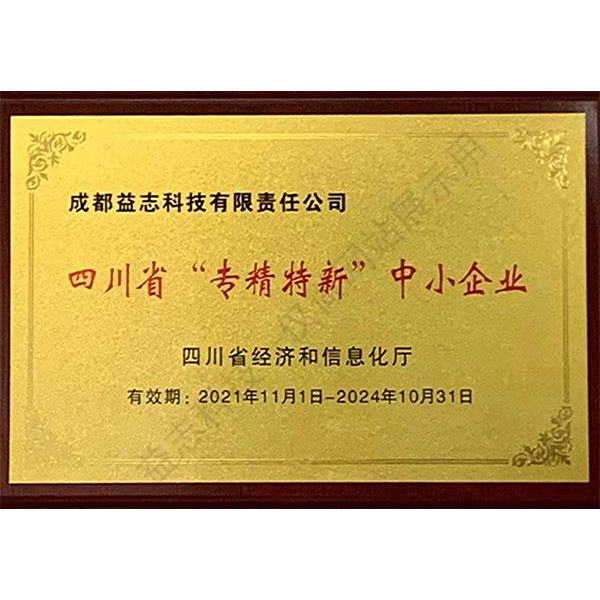
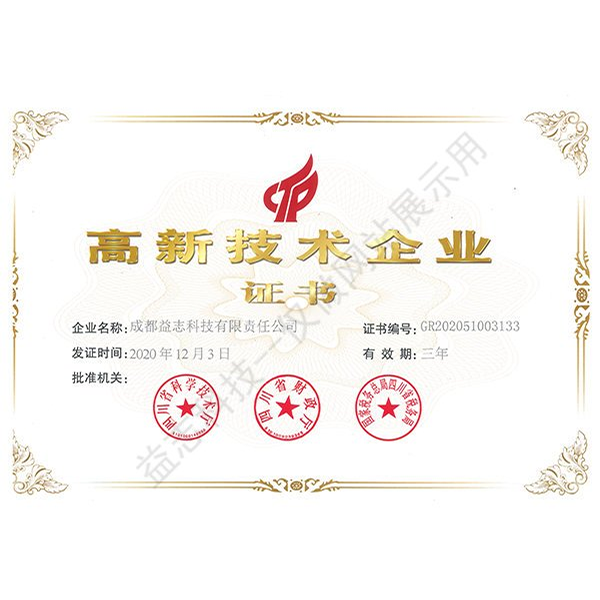
I remember in 2018 we tried to install such “smart” VCUs on one of the installations. valves from Chengdu Yizhi Technology Co. They took risks, of course. But it worked. Their institute background (they are also a design institute at Huaxi Technology) was felt - they sent not just a catalog, but a whole integration scheme into our existing system. The registered capital of 120 million yuan is, of course, not a guarantee, but it hints at serious investments in R&D, and not just in foundries.
The problem was different - the qualifications of our installers. I had to tinker with setting up the protocol. But the very fact that the Chinese manufacturer is ready to advise in detail on such issues, and not just ship boxes, is the main innovation in the approach. Websiteyzkjhx.ruBy the way, they have become much more informative over the past couple of years; technical notes have appeared there, and not just price lists.
Materials and environment: no longer just water
Classics - water, air, neutral media. Now requests are for aggressive chemicals, suspensions, and high temperatures. And here, Chinese manufacturers are actively working with coatings. Not just “epoxy”, but specific solutions: for example, polymer coatings based on ETFE for highly aggressive environments or special EPDM seals with improved abrasion resistance.
I had a bad experience with one supplier about seven years ago. Valves for lines with lime slurry. After three months, the seals sat down and began to leak. We looked into it - it turned out that the rubber material was “universal”, and not specialized for abrasive media. Now in the specifications of the same Chengdu Yizhi Technology Co. you see not just “EPDM”, but a gradation according to ASTM standards for different types of media. This indicates deeper engineering work.
The trend here is customization. Are they willing to make a batch of 50 pieces with a special coating? More often - yes, if the volume is justified. This greatly distinguishes them from giants like European brands, where the minimum batch can be many times larger.
Constructive little things that make all the difference
Innovation is often hidden in details that are not visible in the picture in the catalog. For example, the design of the rod. An option is increasingly common where the rod has no protruding parts, and the drive is mounted on an overlay. This is not cosmetics. This is a solution for rooms with strict sanitation requirements or for environments where any snag is a place for dirt to accumulate.
Or support bearings. Previously, this was a sore subject - they quickly broke down during frequent cycles. Now many manufacturers have switched to needle bearings or even combined supports, which has significantly increased the service life. At one of the liquor pumping facilities, valves with this design have already served two between-repair cycles, although according to the schedule they should have gone into repair after the first.
Another point is the flanges. Increasingly, they offer execution not only according to GOST or DIN, but also according to ASME, and without doubling the price. This is a response to a market request where equipment can be international.
Logistics and Availability: The Hidden Growth Driver
This is not a technical trend, but it directly affects why Chinese fittings are becoming more common. We are talking about the availability of warehouses and services in the EAEU. Previously, you had to wait 3-4 months for a replacement or spare parts. Now many major players, including the aforementioned Chengdu Yizhi Technology Co., are organizing logistics hubs, for example, in Russia or Kazakhstan.
This is a game changer. When you know that a critical gasket or drive can be delivered in a week rather than a quarter, the decision in favor of a Chinese supplier is easier to make. Their websiteyzkjhx.ru, by the way, often indicates availability in regional warehouses, which is very convenient for urgent purchases.
But here is the main trap. Availability of a warehouse does not mean availability of the entire range. Often there is a standard size available there, but for a non-standard one you still have to wait for production. It is important to understand this and clarify it in advance.
What's the result? Trends as a vector of movement
So, to summarize. Innovation in Chinese butterfly valves today is not a breakthrough in metallurgy, but a systematic effort to integrate, adapt to environments and improve service.Butterfly valvescease to be an isolated product, becoming part of a larger technological chain.
The main trend is flexibility. Flexibility in drive configuration, seal materials, and performance standards. And this is exactly what the modern, rapidly changing market needs. It would be a mistake to think that they are catching up with Western brands. They go their own way, often offering more practical and faster solutions for specific, not very simple tasks.
The future, as I see it, lies in further digitalization. I wouldn’t be surprised if in a couple of years, valves with a QR code on the body will become commonplace, leading to a page with a full production history, passport and 3D model for installation. And Chinese manufacturers, with their speed of implementation, may well be the first here. Wait and see. But the fact that their products now need to be monitored not out of curiosity, but as part of professional necessity is a fact.