Chinese butterfly valves: reliability?
2026-01-16
This is a question that constantly comes up in conversations with customers and colleagues. Often sounds with a fair amount of skepticism. Many still live by the stereotypes of ten years ago: they say, Chinese means cheap and unreliable, for irresponsible areas, “set it and forget it until it starts leaking?” But the reality, in my experience, is much more complex and interesting. Let's understand it without gloss.
Where the legs grow from: the evolution of the approach
Previously, 10-15 years ago, skepticism was largely justified. A stream of outright consumer goods poured into the market. Thin cast iron that burst when tightened, rubber seats that lost elasticity after the first cycle with steam, shafts made of unknown steel that jammed. I remember that at one of the boiler houses they installed such valves on the return line - after six months, half of them had to be changed: either they were leaking along the stem, or the disk simply stopped turning. It was then that a strong opinion emerged.
But the situation was changing. Large Chinese manufacturers who worked for the domestic market with its strict requirements of thermal power plants and chemical plants began to go outside. Their products were already different. We are not talking about thousands of nameless factories, but about factories with their own metallurgical and foundry production, with serious quality control. The key point is that they becamebutterfly valvesnot as a cheap alternative, but as a full-fledged product for specific environments.
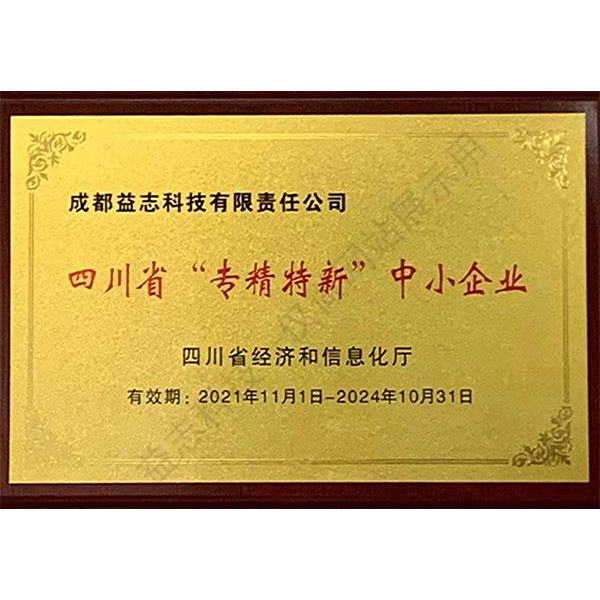
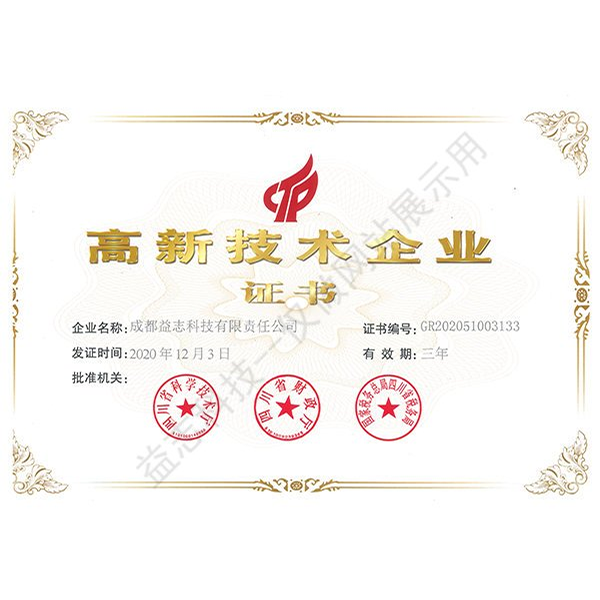
A striking example is Chengdu Yizhi Technology Co. This is not just a trading house, but a design institute with a registered capital of 120 million yuan, created by the chemical holding company Huaxi Technology. When does a manufacturer have such a ?mother? company in chemical technology, this says a lot. They understand what is needed for aggressive environments, what pressures and temperatures they will have to work with. Their websiteyzkjhx.ru— this is already a specialized resource for the CIS, which is also an indicator of serious intentions.
Where the dog is buried: design and materials
The reliability of the shutter is determined not by the country of origin, but by three pillars: design, manufacturing materials and assembly control. This is where the Chinese market leaders made a qualitative leap.
Let's take the body. We moved from gray cast iron to nodular graphite (ductile iron), and for critical applications to carbon or even stainless steel. Casting has become better quality, there are fewer shells. The shaft was often the main problem. Good manufacturers now use 420 or 304 stainless steel for it, often with surface hardening. This is critical to preventing galling and corrosion.
But the main “pain point”? - this is a saddle. Elastomeric seal. Cheap valves use regular EPDM or NBR, which age quickly. Reliable suppliers offer a whole range: EPDM for water, Viton for high temperatures and hydrocarbons, PTFE for aggressive chemicals. And it is important that they seat it correctly in the body - they don’t just press it on, but use combined methods, sometimes even a metal seat paired with an elastomeric one for high pressures. I once saw a specification from Chengdu Yizhi for valves for acids - there was a PTFE seat reinforced with stainless mesh. This is already a level.
Field tests: where and how we do them
Theory is theory, but practice decides everything. Where, based on experience, can we risk installing a Chinese shutter, and where - under no circumstances?
They have proven themselves well in general industrial applications: water supply (cold and hot up to 120°C), ventilation, non-aggressive technical fluids. Here, their resource is often comparable to European analogues in the mid-price segment, at a significantly better price. For example, they installed it on the circulation lines in the heating system of a shopping center - they have been working for the fifth year without any complaints.
A more complex case is the food industry or pharmaceuticals. Not only the material is important here (most often 316 stainless steel and an EPDM or PTFE seat), but also the quality of polishing and the absence of stagnant zones. Some Chinese manufacturers already have the necessary certificates (like the FDA), but each time you need to request documents and, if possible, a sample for verification. You can't trust blindly.
But for critical processes in chemical production, for high-pressure steam (16 bar and above) or for environments with abrasives, I still prefer proven European brands. The risk is too great, and the cost of the consequences of a shutter failure is not comparable with the savings on its purchase. Although I have seen projects where Chinesebutterfly valveswith a full metal seat (triple offset) have successfully worked in oil refineries. But this is a piecemeal, very detailed selection.
Pitfalls: what to look for when ordering
Let's say you make up your mind. How not to miss? The first thing is not to chase the lowest price. If the offer is twice cheaper than the market average, this is an alarm bell. Most likely, they will save on wall thickness, rubber quality, or shaft processing.
Be sure to request a complete package of documentation: certificates for materials (especially for cast iron/steel and elastomer), drawings with tolerances, factory test reports (usually these are tests for tightness and pressure strength). A self-respecting manufacturer, such as the aforementioned Chengdu Yizhi Technology Co., provides this without any problems.
Pay attention to the package. A good sign is that when the valve is supplied with a standard type (ISO 5211) actuator flange, this gives flexibility in actuator selection. And a little thing that decides a lot: the quality of the brief. Rough, uneven paint is an indicator of the general attitude towards quality.
And the main tip is to ask for a sample. Before a large batch, buy one or two valves, disassemble them, look at the quality of casting, surface treatment, and check the thickness of the seat. We did this, and it saved us from several unsuccessful purchases.
Results: are they reliable?
I return to the original question. The answer is ambiguous, like life itself. Chinese butterfly valves are no longer synonymous with unreliability. In their segment - for medium and low pressure systems with non-aggressive media - they offer excellent value for money. Their reliability, with the right choice of manufacturer and model, is quite sufficient for most applications.
But ?Chinese? - this is not a monolith. This is a huge spectrum: from outright rubbish to products that compete with global brands. The problem has shifted from the question of ?country of origin? to the question “competence and reputation of a specific manufacturer?”.
So yes, they can be reliable. But this reliability does not come automatically. It is achieved by careful selection, study of documentation, and sometimes testing of samples. This is no longer a lottery, as before, but a conscious engineering choice. And in this choice, the presence of a serious design and technological base from the supplier, likeChengdu Yizhi Technology Co, is one of the most powerful arguments. At the end of the day, trust in a bolt comes from trust in the people who designed and made it. And this is already a universal category that does not depend on borders.