Chinese wafer valves: innovation?
2026-01-16
When you hear about “Chinese wafer valves”, the first thought for many is “cheap and cheerful”. But behind this cliche lies a much more complex picture. Three years ago I probably would have chuckled skeptically myself. Now, after dozens of projects using them and several, to put it mildly, “instructive?” moments, I’m ready to talk about it differently. It's not that they all suddenly became perfect. It's about where the focus has shifted and where to really look for those sameinnovation- not in big words, but in metal and engineering.
From ?copies? to your own decisions: evolution of the approach
It used to be pretty straightforward. They took a proven European scheme, simplified it where possible, reduced the cost of materials and production - and the result was a product for undemanding markets. Problems began in complex media: abrasive suspensions, cyclic temperature loads, long-term partial opening modes. The oil seals leaked, the discs jammed, and in such conditions it was better not to think about the service life.
Now the vector has changed. Leading manufacturers, those who export to the CIS countries and beyond, are no longer just copying. They adapt. A prime example is the approach to compaction. More and more often you see not just a standard elastomer, but combined solutions: an EPDM or Viton sealing ring with an additional anti-friction insert that reduces the friction torque when turning the disk. This is not a revolution, but an important evolutionary step born from failure analysis.
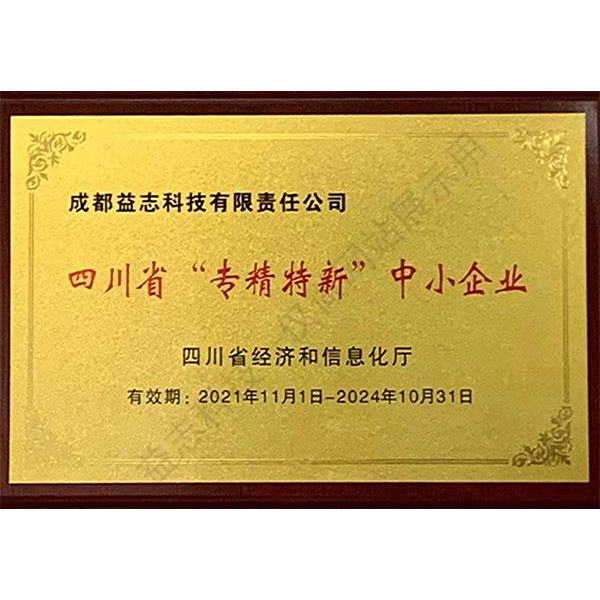
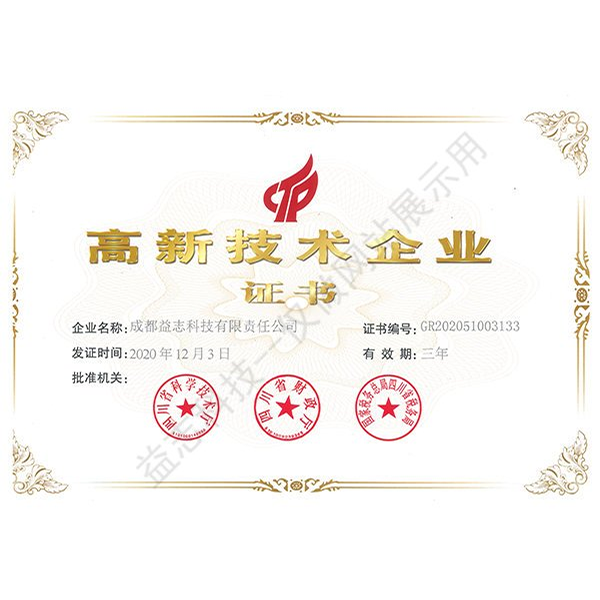
Here, by the way, to the question of manufacturers. Nowadays there is a lot of talk about Chengdu Yizhi Technology Co. — their website yzkjhx.ru often appears in thematic searches. They are positioned as a design institute with a significant authorized capital. What is important: this status often means not just the sale of hardware, but the possibility of an integrated approach - selection, calculation, adaptation to the specifics of the production line. This is a different level, although, of course, statements need to be verified by projects.
Materials: where is real progress hidden?
If you look for innovation, this is the first place to look. It's not just a matter of switching from carbon steel to 304 or 316 stainless steel. This is already the norm. Another thing that is more interesting is the use of cast duplex and super duplex steels for housings and disks in aggressive environments. Yes, it is more expensive, but some Chinese factories have mastered their casting at a quite competitive price level. The key point is quality control of casting and heat treatment. I remember a project with a chlorine-containing environment, where they experimented with a Chinese shutter on S31803. The resource before the first revision turned out to be comparable to the European analogue, with a difference in price of 1.8 times. But this was a product from a factory with a serious laboratory, and not from the “market”.
Another layer is coatings. Spraying titanium nitride or tungsten carbide onto the disc edge and seat for working with abrasives. This is not a unique technology, but its availability as standard options from many suppliers is a trend. Previously, this was offered only to order and with a huge markup.
Nuances that are not written about in catalogs
But there are also pitfalls with materials. The most common problem is that the certificate does not correspond to reality. You order 316L, but in the spectral analysis it looks like 304 with a high molybdenum content. Or the declared Hastelloy C-276 turns out to be just a simpler nickel alloy. Therefore, selective independent analysis has now become a mandatory clause in contracts with a new supplier. Without this there is no way. This is not paranoia, this is experience.
Design features: copying vs. comprehension
Take a look at a modern Chinese wafer valve from a decent manufacturer. Externally - one to one like European brands. But the devil is in the details. For example, a shaft seal system. Increasingly, it is not the stuffing box that is found, but a mechanical seal of two or three rings, sometimes with a groove for supplying conservation lubricant. This is a clear response to requests to reduce operating costs.
Or the disk design. A solid disc is easy. But some make it lightweight, with internal stiffeners. The goal is not so much to save material as to reduce inertia and load on the drive during fast closing. For large diameters this is critical. I saw such solutions from the same Chengdu Yizhi in their specifications for thermal power plant pipelines. This means they think about application, and not just production.
But there is also a downside. The desire to complicate it, to add “features” sometimes leads to excess. For example, at one facility they installed valves with “innovative” technology. stuffing box heating system for working on viscous products. The design was cumbersome, and the heating element failed more often than the maintenance required. We returned to classic steam heating through a jacket on the body. Innovation for innovation's sake doesn't work.
Application in real projects: two cases
I'll tell you about two cases from practice. The first one is successful. We needed valves for the dry cleaning return; the medium was a weak solution of acids mixed with abrasive sludge. Temperature up to 85°C, high cyclical operation. European options did not fit into the budget. We chose a Chinese supplier (I won’t name it, but not Yizhi), with whom we made a “hybrid” one. specification: body and disk made of 316L with reinforced hardening of the disk edge by plasma spraying, but the drive and bearings were supplied in Europe. They were assembled at the supplier's factory under our control. Result: they have been working for four years now, replacement of o-rings on schedule, no wedges or scuffs. Savings on purchases are about 40%.
The second case is a failure. Order for a batch of simple water valves for general industrial use. We saved money and took the ?standard? from a new supplier at an attractive price. Six months later, complaints began about leaks at the seal. An autopsy showed: the stuffing box was cheap asbestos, quickly caked and crumbled; the shaft surface in the sealing area had a roughness worse than Ra 3.2, which accelerated wear. I had to change it on the fly. Conclusion: even for simple conditions, execution control at critical points cannot be ignored.
So, innovation or not?
Returning to the title question. I don’t see any global breakthroughs that change the paradigm in Chinese wafer valves. There is no “iPhone” there. But there is a very clear and pragmatic evolution. Innovation lies in the gradual improvement of materials, in the meaningful borrowing and adaptation of successful design solutions, in building up engineering potential for complex solutions.
The main change is in philosophy. From “we’ll do it like they did, but cheaper?” to “we will do it reliably for a specific task, while maintaining a cost advantage?”. This is already serious. The key to success is not in blind faith in the catalog, but in deep technical dialogue with the supplier, clear specifications and, of course, selective control. Like the same Chengdu Yizhi Technology Co. — their status as a design institute hints at their readiness for such a dialogue. But you can only check this in the field, near the pipeline, with the key in your hands. The rest is just words.